
UAE Sets Ice Maker Traceability Rules
by
Published
Views:
On 30 June 2026, the UAE Ministry of Human Resources and Emiratisation (MOHRE) announced mandatory traceability rules for food-contact components used in industrial ice makers, with the requirements set to take effect on 1 October 2026. The update merits close attention from equipment suppliers, component manufacturers, importers, customs-facing compliance teams, and commercial buyers because it links material disclosure, batch-level certification, and machine-readable labeling to market access and inspection readiness.
What the new requirement specifically covers
According to the information provided, MOHRE issued the requirement under its newly delegated authority over food equipment safety under Federal Law No. 12/2025. The measure applies to all food-contact components in industrial ice makers.
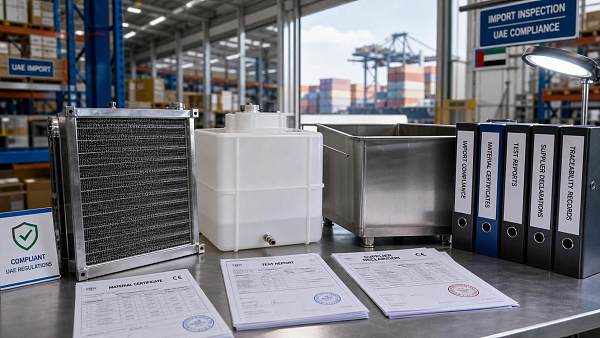
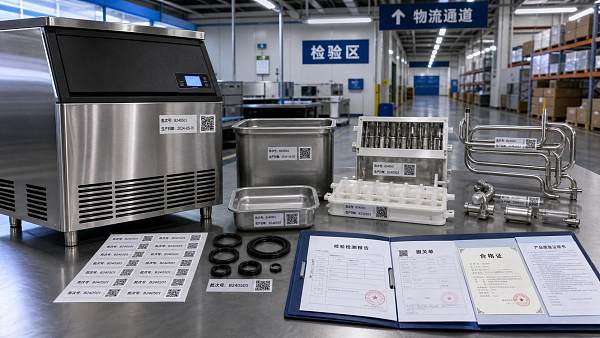
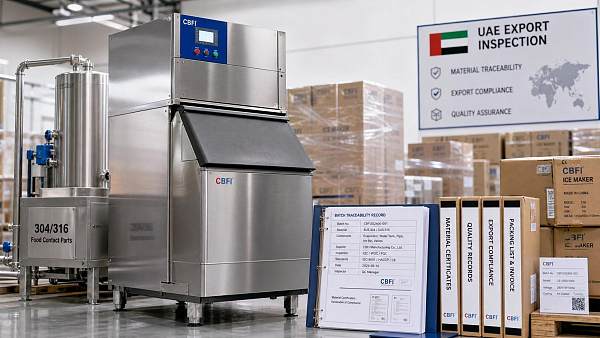
Suppliers are required to provide full material declarations compliant with EN 1186-1:2024, batch-level supplier certifications, and QR-coded component labels that can be read by Dubai Customs' AI inspection systems. The effective date stated in the announcement is 1 October 2026.
Where the operational impact is likely to appear first
Material and component suppliers move to the front line
From an industry perspective, suppliers of food-contact parts are likely to feel the most immediate pressure because the rule is built around component-level traceability. The practical impact may center on whether material declarations are complete, whether batch documentation is available in a usable form, and whether labeling can be matched to inspection requirements at the point of entry or delivery.
Import and customs-facing teams face a documentation test
Importers and compliance teams may be affected because the requirement does not stop at internal recordkeeping; it also refers to QR-coded labels readable by Dubai Customs' AI inspection systems. Analysis shows that this creates a direct connection between product documentation and border-facing verification, making labeling format, data consistency, and document retrieval more operationally important.
Industrial ice maker manufacturers may need tighter supplier coordination
For manufacturers assembling industrial ice makers, the likely impact is upstream and integrative. What deserves closer attention is whether every food-contact component entering the final product can be backed by the required declarations and certifications, rather than whether the finished unit alone meets a general compliance claim.
Buyers and procurement teams may raise pre-delivery checks
Commercial buyers, especially those sourcing equipment for regulated or quality-sensitive use, may also adjust their expectations. Observably, procurement reviews may place greater emphasis on document completeness, traceable component sourcing, and whether suppliers can support orders with batch-linked records before shipment or acceptance.
What companies should be reviewing now
Check whether current documents match the stated standard
Companies involved in supplying or sourcing relevant components should review whether existing material declarations align with the EN 1186-1:2024 reference stated in the announcement. This is a practical issue, not just a legal one, because a partial or outdated declaration may not support smooth compliance once the rule takes effect.
Verify batch-level traceability in supplier records
The requirement for batch-level supplier certifications suggests that traceability must be maintained at a more granular level than broad product approval language. Businesses should pay attention to whether their suppliers can produce batch-linked records consistently and within commercial timelines.
Assess QR label readiness for inspection use
The QR-code element deserves separate attention because it points to inspection usability, not only data storage. Companies should distinguish between having a label and having a label format that is actually readable within the customs inspection context described in the announcement.
Watch for further official clarification before implementation
Analysis shows that the announcement sets a clear direction, but businesses will still need to watch for any further official wording, procedural clarification, or implementation detail that affects documentation format, labeling practice, or the treatment of different food-contact parts within industrial ice makers.
Why this reads as more than a narrow paperwork change
Observably, this update can be read as a compliance signal with operational consequences rather than a routine administrative notice. The combination of material declarations, batch certification, and AI-readable QR labels suggests a stronger emphasis on verifiable component histories.
It is more appropriate to understand this as a near-term compliance change with longer-term signaling value. The near-term element is clear because an effective date has already been stated. The longer-term signal lies in how traceability expectations may become more structured at the component level, especially where customs inspection and product safety oversight intersect. That said, broader implications beyond industrial ice makers would still require further verified information and should not be assumed from this notice alone.
How the market is likely to interpret this update for now
At this stage, the announcement is best understood as a concrete regulatory development affecting the documentation and traceability chain around industrial ice makers in the UAE. Its significance does not come from headline value alone, but from the fact that compliance appears tied to material-level evidence, batch-level records, and label readability in an inspection setting.
For industry participants, the rational conclusion is not to overstate the scope, but to treat the requirement as an actionable compliance change and a signal to review supplier data discipline, documentation readiness, and customs-facing execution before 1 October 2026.
Basis of this article and points still to verify
This article is based on the user-provided news title, event date, and event summary concerning MOHRE's traceability requirements for food-contact components in industrial ice makers. For this type of development, commonly relevant source categories may include official government announcements, customs notices, company compliance updates, industry association communications, authoritative media coverage, and standards organization documents.
A specific official source link was not provided in the input, so the exact primary publication and any subsequent explanatory materials still need ongoing verification. What deserves continued attention is whether additional official clarification is issued on implementation details, inspection practice, document format expectations, or any scope interpretation related to covered components.
Recommended News
 Jul 02, 2026UAE Tightens Traceability Rules for Ice Maker ComponentsUAE tightens traceability rules for ice maker components from July 1, 2026. Learn what importers, manufacturers, and suppliers must prepare to avoid Jebel Ali shipment delays.
 Jul 01, 2026UAE Sets Ice Maker Traceability RulesUAE Sets Ice Maker Traceability Rules: Learn how the 2026 UAE update affects suppliers, importers, and buyers with new material declarations, batch certifications, and QR label compliance.
 Jun 30, 2026UAE Tightens Traceability Rules for Ice MakersUAE Tightens Traceability Rules for Ice Makers: learn how the new batch-level food-contact material requirements affect importers, suppliers, and hospitality compliance teams.
 Jun 28, 2026UL Solutions opens R290 path for ice makersUL Solutions opens R290 path for ice makers, creating a clearer certification route for export markets. Learn how this affects compliance, procurement approval, and delivery planning.
 Jun 27, 2026UL Solutions opens 72-hour R290 ice maker certificationUL Solutions opens 72-hour R290 ice maker certification, cutting the traditional 14-week CE+UL route. See scope, key safety checks, and what manufacturers and buyers should prepare now.
 Jun 26, 2026TÜV Rheinland Tightens CE Path for R290 Ice MakersTÜV Rheinland Tightens CE Path for R290 Ice Makers with new leakage simulation and explosion-protection tests. Learn how the 30-day transition could impact compliance, delivery, and exports.
 Jun 25, 2026TÜV Rheinland Tightens CE Path for Industrial Ice MakersIndustrial Ice Makers face a tougher CE path as TÜV Rheinland adds R290 leak and explosion tests from August 2026. See how this update may delay certification, exports, and delivery plans.
 Jun 24, 2026U.S. Trailer Duty Ruling Nears, Pressuring Ice Maker DeliveriesIndustrial Ice Makers face rising delivery pressure as the U.S. trailer duty ruling nears. See how logistics costs, lead times, and cross-border supply planning may change.
 Jun 21, 2026India Rice Tax Lifts Cold Chain Export Costs 12%India Rice Tax lifts export costs 12%, driving new demand for Industrial Ice Makers and CO2 cold storage systems in South Asia. See the risks, costs, and project opportunities now.
 Jun 17, 2026Amazon Expands SPN Zone to 600㎡ as Service Providers for Commercial Equipment Jump 37%Amazon expands its SPN zone to 600㎡ as commercial equipment service providers jump 37%, accelerating NSF, CE, and IEC60335 listing support. Discover what it means for sellers now.
 Jun 14, 2026SABIC Force Majeure Raises Ice Maker Input PressureIndustrial Ice Makers face rising input pressure after SABIC force majeure hit methanol and styrene, lifting R290 costs and signaling 12%–15% Q3 factory price increases. Read the key supply chain risks.
 Jun 08, 2026Panama Canal Draft Cut May Delay Ice Maker ShipmentsIndustrial Ice Makers face Panama Canal draft cuts that may delay shipments, raise freight costs, and extend lead times. See key risks, route impacts, and what buyers should review now.
![]() May 25, 2026USDA Corn Export Surge Fuels Industrial Ice Maker DemandUSDA corn export surge drives global demand for industrial ice makers — especially -30°C & explosion-proof units. Discover market impacts, certifications, and growth opportunities.
May 25, 2026USDA Corn Export Surge Fuels Industrial Ice Maker DemandUSDA corn export surge drives global demand for industrial ice makers — especially -30°C & explosion-proof units. Discover market impacts, certifications, and growth opportunities. May 24, 2026CA Chemical Tank Leak Disrupts Industrial Ice Maker Parts SupplyCA chemical tank leak disrupts industrial ice maker parts supply—ammonia valves & compressor controllers delayed 3–5 weeks. Act now to secure stock and reroute shipments.
 May 23, 2026Turkey Eliminates Urea Import Tariffs, Cooling System Cost Outlook ShiftsTurkey eliminates urea import tariffs (HS 3102 21 00) — a strategic shift impacting ammonia supply, industrial refrigeration costs, and CO₂ cascade system economics through Nov 2026.
 May 22, 2026Russia Streamlines Customs for Chinese Commercial Refrigeration ExportsRussia streamlines customs for Chinese commercial refrigeration exports—faster clearance, GB/T 21001.2–2025 compliance, green channel benefits. Act now!







Editor's Selection
The Archive Newsletter
Critical industrial intelligence delivered every Tuesday. Peer-reviewed summaries of the week's most impactful logistics and market shifts.