
EU Tightens F-Gas Rules: R290 Commercial Freezer Exports Face Narrower Window
by
Published
Views:
Effective 1 July 2026, the European Commission’s updated F-Gas Implementation Guidelines require all new commercial refrigeration equipment placed on the EU market—including ultra-low temperature freezers and CO2 cascade cold rooms—to demonstrate an R290 refrigerant leakage rate of ≤5 g/year via third-party testing, and to submit a safety report compliant with EN 378-2:2024. Non-compliant units will be denied CE marking, blocking customs clearance and retail placement. This development directly affects manufacturers, exporters, and suppliers of R290-based commercial refrigeration systems—particularly those serving the EU single market—and signals a material tightening of technical access requirements for low-GWP refrigerant equipment.
Event Overview
On 28 May 2024, the European Commission published updated F-Gas Regulation implementation guidance. It specifies that, from 1 July 2026, any new commercial refrigeration appliance placed on the EU market must meet two mandatory conditions: (1) verified R290 leakage rate of no more than 5 grams per year, confirmed by an accredited third-party laboratory; and (2) submission of a safety assessment report aligned with the 2024 edition of EN 378-2. Products failing either requirement will not receive CE marking, thereby preventing legal market access, customs release, and subsequent distribution or sale in the EU.
Industries Affected by Segment
Manufacturers of R290 Commercial Refrigeration Equipment
These firms face direct compliance obligations. Because the requirement applies to products newly placed on the market after 1 July 2026, production lines, design validation protocols, and pre-market testing workflows must align with EN 378-2:2024 and the 5 g/yr leakage threshold. Impact includes extended time-to-market, increased certification costs, and potential redesign of charge size, sealing architecture, or leak detection integration.
Exporters and Trade Intermediaries Serving the EU Market
Exporters handling R290-equipped cold rooms or ultra-low temperature freezers must verify upstream compliance before shipment. Absence of valid third-party test reports or outdated EN 378 documentation will result in CE marking refusal at border control. This increases pre-shipment verification burden and raises risk of cargo detention or rejection.
Component Suppliers (e.g., Compressors, Valves, Seals)
Suppliers providing critical parts for R290 systems may experience revised technical specifications from OEMs—for example, tighter tolerances on valve stem seals or enhanced compressor crankcase venting controls—driven by the need to achieve ≤5 g/yr leakage. Demand may shift toward components validated under EN 378-2:2024 test conditions, affecting qualification timelines and supply chain communication.
Testing Laboratories and Certification Bodies
Laboratories accredited for refrigerant system safety testing must confirm capability to perform leakage rate measurements meeting the precision and methodology stipulated in EN 378-2:2024. Capacity constraints may arise as demand surges ahead of the 2026 deadline, potentially lengthening turnaround times for test reports required for CE conformity assessment.
What Enterprises and Practitioners Should Monitor and Do Now
Track official updates to EN 378-2:2024 adoption status and national notified body interpretations
The European Commission’s guidance is binding, but national market surveillance authorities and notified bodies may issue supplementary interpretations. Enterprises should monitor communications from EU national competent authorities (e.g., Germany’s DIBt, France’s Cofrac-accredited labs) for alignment on measurement methodology, acceptable test duration, and reporting format.
Verify which product categories fall under the ‘commercial refrigeration’ scope—and whether legacy models qualify for transitional provisions
The regulation applies to new equipment placed on the market after 1 July 2026. However, the definition of ‘commercial refrigeration’ in the F-Gas context excludes domestic appliances but explicitly includes ultra-low temperature freezers and CO2 cascade cold rooms. Firms should audit current model portfolios to identify affected SKUs and assess whether any grandfathering or phased-in compliance options apply—though the guidance does not mention transitional allowances.
Distinguish between regulatory signal and operational readiness
This is not a proposal or consultation—it is an effective date embedded in binding implementation guidance. While enforcement capacity may vary across Member States initially, the CE marking gate remains firm: no valid EN 378-2:2024 safety report + ≤5 g/yr leakage verification = no CE mark. Companies should treat this as an enforceable technical barrier—not a future-risk scenario.
Initiate internal gap assessments and engage third-party labs early
Firms should map existing R290 product designs against EN 378-2:2024 clauses (e.g., Clause 5.3 on refrigerant charge limits, Clause 6.2 on leakage testing procedures) and schedule preliminary leakage tests with accredited labs. Lead times for full validation may exceed six months; delaying engagement risks missing the 2026 deadline.
Editorial Perspective / Industry Observation
Observably, this update reflects a shift from GWP-focused phase-down policy to performance-based safety enforcement. The 5 g/yr threshold is significantly stricter than previous industry benchmarks for R290 systems—many current designs operate in the 10–50 g/yr range under standard test conditions. Analysis shows the requirement functions less as a blanket restriction and more as a technical filter: it validates whether manufacturers have matured their R290 system engineering beyond basic charge reduction to include robust leak prevention, monitoring, and containment. From an industry perspective, this is not merely a compliance checkpoint—it is a de facto quality benchmark now codified into market access. Continued attention is warranted because enforcement consistency across EU Member States remains untested, and revision cycles for EN 378 are ongoing; further updates may follow before 2026.
This measure marks a concrete escalation in the technical expectations for flammable refrigerant deployment in commercial settings. It does not ban R290—but raises the bar for its safe application. For stakeholders, the immediate implication is not market exit, but a recalibration of design priorities, testing investment, and supply chain coordination. Current practice suggests that early adopters of EN 378-2:2024-aligned development workflows will hold a distinct advantage in maintaining EU market continuity post-July 2026.
Information Source: European Commission, F-Gas Regulation Implementation Guidance (updated 28 May 2024). Note: National enforcement practices and notified body interpretations remain subject to observation and may evolve prior to 1 July 2026.
Recommended News
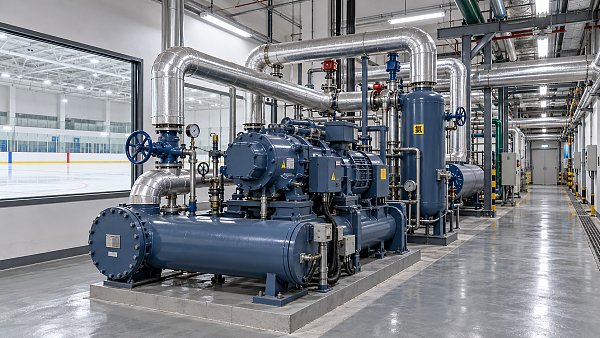
 Oct 26, 2026Missouri’s Kirkwood Ice Arena Replaces R-22 With Ammonia in $5.2 Million RenovationKirkwood Ice Arena replaces R-22 with ammonia in a $5.2 million renovation. Discover how the upgrade improves ice-making performance and energy efficiency.
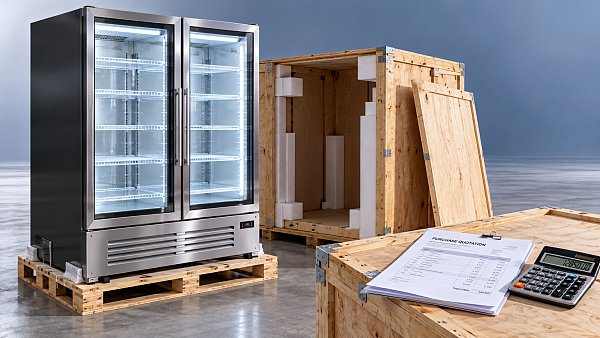
 Oct 26, 2026Private Label Sourcing Costs: Unit Prices, Agent Fees, and ShippingCompare private label sourcing price factors, from unit costs and agent fees to shipping and duties. Discover how to calculate landed costs and avoid hidden charges before you buy.
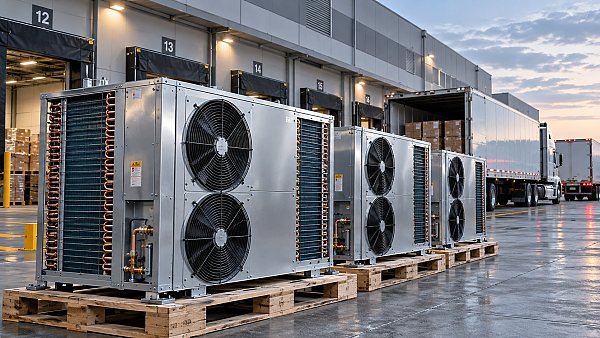
 Oct 25, 2026U.S. Removes 50% Tariff on Selected Canadian Refrigeration Equipment and MachineryU.S. tariff relief removes a 50% duty on selected Canadian refrigeration equipment and machinery. Explore product coverage and potential savings for your next equipment purchase.
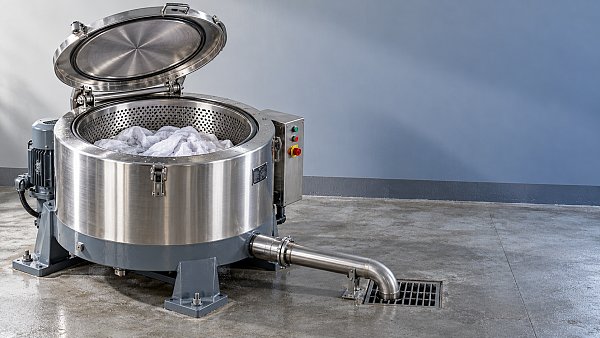
 Oct 25, 2026Commercial Centrifugal Dryer Prices: Capacity, Materials, and Setup CostsCompare commercial centrifugal drying price factors, from capacity and stainless steel to installation costs. Discover how to assess quotes, avoid hidden expenses, and choose the right laundry extractor.
 Oct 24, 2026Shanghai Aorun’s Inorganic Radiative Cooling Coating Earns “World First” CertificationShanghai Aorun’s inorganic radiative cooling coating earns “world first” certification. Explore its potential to reduce cooling loads in refrigeration and cold-chain facilities.
 Oct 24, 2026Choosing an Unmanned Retail Systems Supplier: Integration and Support ChecksChoosing an unmanned retail systems supplier? Discover integration tests, offline checks, and support requirements to reduce downtime and select a reliable partner before you scale.
 Oct 23, 2026TOMRA Signs to Become Preferred Reverse Vending Supplier for Major UK Retail ChainTOMRA signs a letter of intent for around 2,000 reverse vending machines for a major UK retailer. Explore what it could mean for procurement ahead of the expected 2027 deposit return scheme.
 Oct 23, 2026Industrial Tumble Dryers: Is a Stainless Steel Drum Enough for Your Laundry?Industrial tumble dryers with stainless steel drums need more than durable surfaces. Discover how airflow, moisture control, and lifecycle costs help you choose the right laundry solution.
 Oct 22, 2026Chemours Faces Investor Lawsuit Over US Sales of Opteon RefrigerantsChemours faces an investor lawsuit over US Opteon refrigerant sales. Explore alleged inventory risks tied to 2025 stockbuilding and questions over its 2026 earnings guidance.
 Oct 22, 2026Commercial Dry Cleaning Equipment in the Middle East: Utility and Service ChecksCompare commercial dry cleaning equipment Middle East suppliers offer. Check utilities, summer cooling, solvent compatibility and local service to avoid costly downtime. Buy with confidence.
 Oct 21, 2026Rivacold Introduces Patented ADAPTIX Technology for CO2 Refrigeration EfficiencyDiscover how Rivacold’s patented ADAPTIX technology enhances transcritical CO2 refrigeration efficiency, with claimed energy savings of up to 30% alone and 40% when combined with other solutions.
 Oct 21, 2026Choosing Department Store Checkout Systems: Inventory Sync and Returns ManagementCompare retail checkout systems for department stores to improve inventory sync, control returns, and reduce refund errors. Discover practical tests to choose the right solution.
 Oct 20, 2026Wiesbaden Supermarket Claims First All-CO2 Refrigeration, Heating and Cooling OperationWiesbaden supermarket claims all-CO2 refrigeration, heating and cooling. Explore what this approach could mean for retail procurement and the EU F-Gas transition.
 Oct 20, 2026Commercial Laundry Equipment in Europe: Comparing Total Cost of OwnershipCompare commercial laundry equipment Europe buyers can trust. Uncover installation, energy and service costs to find the lowest lifetime cost per kilogram and invest with confidence.
 Oct 19, 2026CO2, Ammonia, or HFO Blends: Choosing Refrigeration Systems for Cold RoomsExplore refrigeration system selection by refrigerant type: compare CO2, ammonia, and HFO blends for cold rooms to balance efficiency, safety, and lifecycle costs. Make a confident choice.
 Oct 18, 2026Retail IoT Interconnection Architecture: How POS and Sensors Exchange DataExplore retail IoT interconnection architecture to connect POS and sensors securely, prevent duplicate updates, and keep stores resilient during outages. Discover practical design strategies.
 Oct 17, 2026Cloud-Based Smart Retail Systems: Evaluating POS Integration and Offline ReliabilityCloud-based smart retail systems: compare POS integration, offline payments, and data recovery. Discover what to test before choosing a platform that keeps your stores selling.
 Oct 16, 2026Choosing Barcode Printers for Dispatch Hubs: Speed, Labels, and IntegrationExplore physical dispatch hubs equipment with our barcode printer guide. Compare speed, label durability, and integration to reduce downtime and keep shipments moving.
 Oct 15, 2026Edge AI Retail Systems: Choosing Hardware for In-Store Video AnalyticsChoose hardware for edge AI retail systems with confidence. Discover how to validate video decoding, model performance, latency, and cooling for reliable in-store analytics.
 Oct 14, 2026Retail Equipment for Store Fit-Outs: How to Budget Beyond the Purchase PriceCompare retail equipment solutions for store fit out beyond purchase price. Uncover installation, running and maintenance costs to budget smarter and avoid costly surprises.
 Oct 13, 2026Choosing Combi Ovens for Commercial Kitchens: Capacity and Utility RequirementsChoose combi ovens that match peak kitchen demand. Discover how to assess usable capacity, power, water, drainage, and ventilation to avoid costly upgrades and buy with confidence.
 Oct 12, 2026How to Size Gas-Heated Industrial Drying Machines for Laundry ThroughputIndustrial drying machines gas heated: learn how to size capacity for peak laundry throughput, moisture removal, airflow, and reliable operations.
 Oct 11, 2026Linen Processing Equipment Prices: Cost Drivers and Budget Benchmarks for BuyersLinen processing equipment price guide: explore cost drivers, budget benchmarks, throughput planning, utility needs, and smart buying tips for efficient laundry operations.
 Oct 10, 2026What to Evaluate in a Global Solution Comparison Platform Before Shortlisting VendorsSolution comparison platform global guide: evaluate TCO, compliance, integrations, reliability, and local service to shortlist vendors with confidence.

Editor's Selection
The Archive Newsletter
Critical industrial intelligence delivered every Tuesday. Peer-reviewed summaries of the week's most impactful logistics and market shifts.