
Why modern commercial civilization still shapes retail
by
Published
Views:
Why does modern commercial civilization still shape retail? From refrigerated display systems and unmanned vending to commercial laundry, kitchens, and POS networks, today’s retail infrastructure is built on invisible systems that keep goods safe, transactions seamless, and operations efficient. For researchers tracking industry change, understanding these interconnected commercial assets reveals how technology, hygiene, energy control, and automation continue to redefine global retail performance.
Why modern commercial civilization still matters in everyday retail
The phrase modern commercial civilization is not abstract theory. In retail, it refers to the operating logic that turns food, payments, hygiene, labor, and equipment uptime into a synchronized public service system.
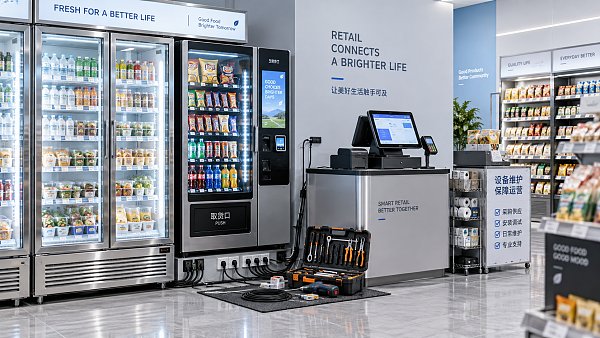
Consumers may only see shelves, checkout counters, and ready meals. Researchers and decision-makers, however, see cold-chain thermodynamics, sensor-driven vending, heat-and-wash sanitation cycles, barcode traceability, and real-time transaction processing working behind the storefront.
That is why modern commercial civilization still shapes retail: it organizes physical circulation with data discipline. It also defines whether operators can reduce waste, meet hygiene targets, survive labor shortages, and protect margins under rising energy costs.
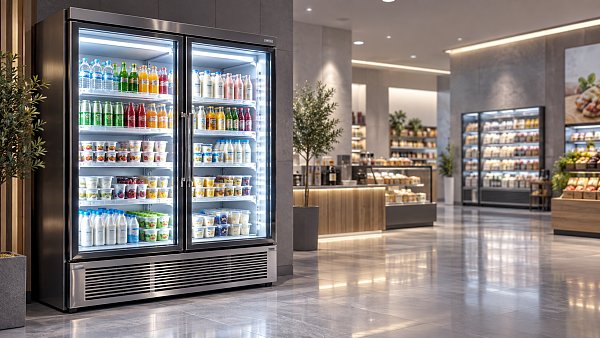
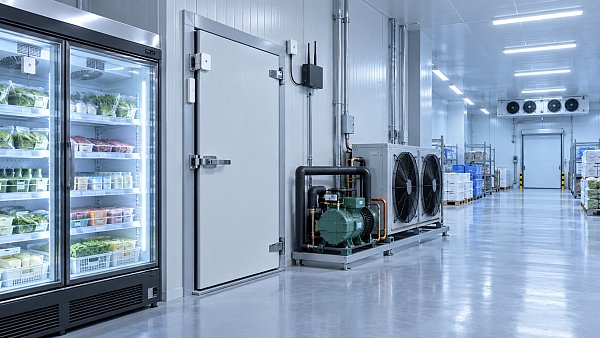
- Fresh goods depend on stable display cooling and temperature recovery after repeated door openings or customer interaction.
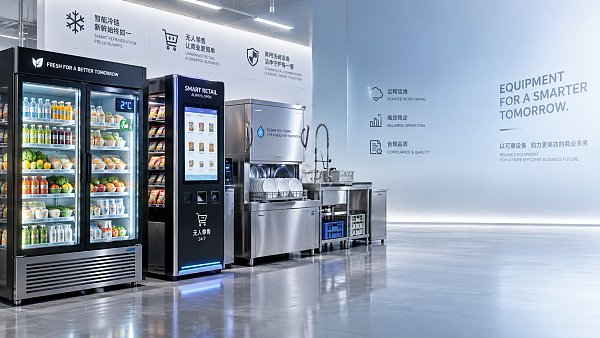
- Unmanned retail depends on edge AI, payment logic, and anti-loss controls rather than simple cabinet hardware.
- Chain restaurants and hospitality sites depend on repeatable cleaning and cooking systems that support throughput without compromising compliance.
- POS and labeling systems convert physical retail behavior into traceable operational data for inventory, pricing, and settlement.
Retail is no longer a single equipment purchase
One common research mistake is to evaluate equipment in isolation. A freezer is judged by cooling output only. A vending cabinet is judged by screen size only. A POS terminal is judged by price only. In practice, the value of modern commercial civilization lies in how these systems interact under real operating pressure.
CRSS focuses on this interconnected view. Its intelligence work links refrigeration, unmanned operations, kitchen sanitation, laundry durability, and transaction systems into one commercial infrastructure map. That matters for information researchers because most procurement failures begin at the interface between systems, not within a single product brochure.
Which retail pillars best explain modern commercial civilization?
To understand why modern commercial civilization remains decisive, it helps to break retail into five high-impact asset groups. Each one supports daily transactions, but each also creates specific operational risk, cost pressure, and compliance demands.
This table shows why modern commercial civilization is still a practical framework for retail analysis. Each pillar is both a service enabler and a cost center. Researchers who compare only upfront price often miss where profitability is truly won or lost.
What makes these pillars strategically connected?
They share three pressure points: uptime, hygiene, and efficiency. A freezer that drifts in temperature creates spoilage risk. A vending terminal with recognition errors damages trust. A weak POS node slows checkout and creates reconciliation issues. A dishwasher or laundry line with unstable cycles can affect compliance and customer experience.
CRSS positions itself around these intersections. Its perspective is useful for researchers because it does not stop at product claims. It examines the thermodynamic, algorithmic, compliance, and TCO implications of commercial assets across real operating environments.
How do technology, hygiene, and energy control change purchasing decisions?
In older retail models, procurement teams often prioritized acquisition cost. In modern commercial civilization, that approach is incomplete. Energy spend, staffing constraints, food safety accountability, and digital transaction reliability now shape the real decision.
For example, an open display freezer may attract more purchases than a closed cabinet, but it also raises questions about air-curtain efficiency, compressor workload, store ambient conditions, and refrigerant compliance in export markets. A smart vending unit may reduce labor, yet image recognition, payment integration, and remote monitoring become central to feasibility.
Key decision variables researchers should compare
- Total cost of ownership, including energy, cleaning, maintenance intervals, consumables, and downtime impact.
- Site fit, such as ambient temperature, peak traffic, operating hours, water access, drainage, and local utility conditions.
- Data integration, including barcode logic, payment compatibility, telemetry, and remote diagnostics.
- Compliance exposure, especially when refrigerants, food contact hygiene, electrical safety, or cross-border deployment are involved.
The influence of modern commercial civilization becomes visible when procurement moves from single-machine thinking to operational ecosystem thinking. That is where specialized intelligence is valuable, especially for information researchers comparing technologies across multiple retail formats.
Cold chain, vending, POS, and laundry: where do the biggest evaluation mistakes happen?
Researchers often need fast screening criteria. The table below compares common retail systems through a practical decision lens rather than a catalog lens. It highlights where modern commercial civilization creates hidden complexity.
The pattern is clear. In modern commercial civilization, visible features sell the concept, but invisible operating variables determine success. This is why CRSS emphasizes intelligence stitching across engineering, compliance, and capital logic.
A practical screening checklist for information researchers
- Define the retail scenario first: supermarket, convenience chain, hotel, canteen, transit hub, or mixed-use site.
- Map the hidden operating constraints: staffing hours, hygiene protocol, ambient heat, payment mix, and utility access.
- Separate brochure parameters from operational parameters: rated capacity is not the same as real throughput under disruption.
- Estimate failure cost, not only purchase cost: product loss, queue delays, missed sales, and labor rework often exceed hardware savings.
What standards and compliance topics should not be ignored?
Modern commercial civilization is also shaped by regulation. Researchers studying global retail equipment quickly discover that performance claims matter less if a system fails local compliance, refrigerant policy, hygiene expectations, or payment-security rules.
CRSS highlights this issue through its Strategic Intelligence Center. In refrigeration, for instance, refrigerant transition pressures can alter export viability and maintenance planning. In food-service and cleaning equipment, sanitation temperature, material compatibility, and operating documentation can affect acceptance. In POS systems, deployment conditions may require attention to data integrity, network continuity, and transaction security practices.
Typical compliance checkpoints by asset type
- Refrigeration: refrigerant selection, environmental restrictions, electrical safety, and temperature control documentation.
- Unmanned retail: payment integration standards, customer data handling, and hardware safety in public spaces.
- Commercial kitchens and dishwashers: wash temperature verification, food-contact surface suitability, drainage, and cleaning recordability.
- Laundry systems: installation requirements, vibration control, water discharge conditions, and preventive maintenance logging.
For information researchers, this is a major reason why modern commercial civilization still shapes retail strategy. The sector no longer rewards simple equipment ownership. It rewards compliant, auditable, low-friction operation at scale.
How should researchers assess cost, alternatives, and implementation risk?
Budget pressure is real, but low initial price can create long-term cost escalation. In retail infrastructure, the main financial trap is underestimating indirect cost. A cheaper freezer may increase energy bills. A basic vending setup may demand more exception handling. A low-cost washer may shorten linen life or increase service interruptions.
Compare alternatives through a TCO lens
When analyzing modern commercial civilization, researchers should compare options through site-specific total cost of ownership rather than generic payback claims. The right choice depends on traffic volume, maintenance capability, energy pricing, labor structure, and compliance destination.
- Open display refrigeration may improve merchandising, but closed systems may reduce energy burden in some climates or store formats.
- AI vending can replace certain labor hours, but hybrid attended-plus-unattended models may be safer in early rollout phases.
- High-capacity dishwashing lines suit dense operations, while modular solutions may fit smaller kitchens with variable demand.
- Industrial laundry outsourcing may reduce equipment burden, but in-house systems can improve turnaround control for hotels or healthcare-related services.
Implementation risk also deserves early attention. Researchers should ask whether installation conditions, training demands, spare parts planning, and software integration have been considered before a final shortlist is made.
FAQ: common questions about modern commercial civilization in retail
How does modern commercial civilization apply to small and mid-sized retail operators?
It applies through operating logic rather than company size. Even a smaller store faces energy cost, food safety exposure, digital payment expectations, and labor volatility. The difference is that smaller operators need tighter prioritization and phased investment rather than full-scale transformation at once.
Which system usually has the biggest hidden cost?
That depends on the format, but refrigeration is often a leading candidate because it runs continuously and directly affects product value. In other formats, transaction downtime or sanitation failure may create even greater hidden cost through lost sales, labor rework, or compliance risk.
What is the biggest research mistake when comparing unmanned retail solutions?
Many teams compare front-end convenience but ignore exception management. They should examine recognition errors, returns handling, network interruptions, replenishment workflow, and remote support logic. A smooth demo does not guarantee stable field performance.
Why do compliance and engineering need to be studied together?
Because retail infrastructure works in regulated physical environments. A technically capable system may still face adoption barriers if refrigerants, sanitation processes, electrical design, or payment handling do not match market requirements. Engineering without compliance creates rollout risk; compliance without engineering creates weak performance.
Why choose us for retail infrastructure intelligence and next-step evaluation?
CRSS is built for people who need more than product descriptions. Our focus is the machinery and logic behind modern commercial civilization: supermarket cold chains, smart vending terminals, commercial kitchen sanitation, POS and barcode systems, and high-frequency laundry operations.
We help researchers, sourcing teams, and commercial equipment stakeholders narrow decisions with a practical lens that combines thermodynamics, edge AI, hygiene control, export compliance, and TCO reasoning. This is especially useful when your project spans multiple retail asset categories and the risk lies in system interaction rather than in one isolated machine.
- Consult us for parameter confirmation when comparing display cooling, smart vending logic, dishwashing throughput, POS stability, or industrial laundry load profiles.
- Ask for product selection support if you need help matching site conditions, traffic patterns, hygiene targets, and budget constraints to a realistic equipment roadmap.
- Discuss delivery timelines, deployment sequence, and maintenance considerations before finalizing a shortlist, especially for multi-country or multi-site programs.
- Request guidance on refrigerant pathways, certification concerns, customization boundaries, sample evaluation logic, and quotation comparison structure.
If your research goal is to understand why modern commercial civilization still shapes retail, the next step is not simply collecting more brochures. It is building a clearer decision model. CRSS can support that process with cross-category intelligence grounded in operational reality.
Recommended News
 Oct 14, 2026Retail Equipment for Store Fit-Outs: How to Budget Beyond the Purchase PriceCompare retail equipment solutions for store fit out beyond purchase price. Uncover installation, running and maintenance costs to budget smarter and avoid costly surprises.
 Sep 28, 2026Supplier Evaluation for Modern Commercial Civilization Projects: Criteria That MatterModern commercial civilization supplier evaluation: discover the criteria that protect uptime, compliance, service quality, integrations, and total cost across commercial operations.
 Sep 24, 2026Commercial Refrigeration Cost Factors: What Drives Lifetime Ownership Costs?Commercial refrigeration cost factors explained: compare energy, installation, maintenance, reliability, refrigerants, and TCO to make smarter investment decisions.
 Sep 23, 2026Remote Monitoring Strategies to Cut Energy Use in Commercial RefrigerationEnergy-saving refrigeration remote monitoring helps commercial sites detect hidden waste, optimize defrosts, reduce run time, and protect temperature compliance.
 Sep 18, 2026Commercial Equipment Applications That Help Retail Chains Standardize Store OperationsCommercial equipment applications for retail chains help standardize refrigeration, POS, kitchens, vending, and laundry—reducing costs, improving compliance, and scaling reliable store operations.
 Sep 17, 2026Global Bulk Procurement: How Buyers Reduce Supply Risk and Landed CostsGlobal bulk procurements: learn how buyers cut landed costs, reduce supplier risk, ensure compliance, and protect uptime with smarter sourcing strategies.
 Sep 07, 2026Commercial Cooling Systems Price: Key Cost Factors for Business BuyersCommercial cooling systems price explained: compare equipment, installation, energy use, maintenance, and lifecycle costs to choose the right system for your business.
 Aug 14, 2026How to Choose Retail Cold Chain Equipment for Grocery Stores: Key Specs, Costs, and Store Fitretail cold chain equipment for grocery stores: compare key specs, total costs, and store fit to choose reliable, energy-smart solutions that protect food quality and boost ROI.
 Aug 08, 2026How to Evaluate a Commercial Refrigeration Equipment Distributor for Multi-Site Foodservice?Commercial refrigeration equipment distributor selection for multi-site foodservice: learn how to compare coverage, parts, compliance, and service support to reduce downtime and scale confidently.
 Aug 07, 2026How to Plan Commercial Equipment IoT Integration Across POS, Refrigeration, and KitchensCommercial equipment IoT integration made practical: learn how to connect POS, refrigeration, and kitchens with phased planning, stronger uptime, food safety, and measurable ROI.
 Aug 04, 2026How to Evaluate a Commercial Asset Intelligence Platform for Multi-Site OperationsCommercial asset intelligence platform evaluation starts with operating fit, integration depth, alert quality, and edge resilience. Learn how to choose the right solution for multi-site operations.
 Jul 31, 2026How to Evaluate a Retail Cold Chain Solutions Manufacturer for Food Safety and ROIRetail cold chain solutions manufacturer selection starts with food safety and ROI. Learn how to compare temperature control, compliance, energy use, durability, and service before you buy.
 Jul 16, 2026Global Bulk Procurements in the Middle East: Supplier Risk, MOQ, and Cost FactorsGlobal bulk procurements Middle East demand more than low prices. Learn how to assess supplier risk, manage MOQ, and control total cost for faster, safer sourcing decisions.
 Jul 15, 2026OEM Sourcing Support Middle East: How to Vet Suppliers, Lead Times, and ComplianceOEM sourcing support Middle East explained: learn how to vet suppliers, assess real lead times, verify compliance, and reduce hidden sourcing risks before you place an order.
 Jul 13, 2026How to Structure a Technical Product Comparison for Global Supplier EvaluationTechnical product comparison global teams can trust: learn how to evaluate suppliers with weighted scoring, compliance checks, lifecycle cost analysis, and evidence-based criteria.
 Jul 13, 2026OEM Sourcing Support for Exporters: How to Vet Suppliers and Control Delivery RiskOEM sourcing support exporter strategies to vet suppliers, verify compliance, and reduce delivery risk. Learn practical steps to protect margins, avoid delays, and improve export reliability.
 Jul 12, 2026How to Use an Industrial Sourcing Information Supplier Directory to Shortlist Reliable VendorsUse an industrial sourcing information supplier directory to shortlist reliable vendors faster. Learn how to assess fit, compliance, support, and risk before negotiation.
 Jul 06, 2026Procurement Planning for Sourcing: How to Balance Lead Time, MOQ, Budget, and RiskProcurement planning for sourcing made practical: learn how to balance lead time, MOQ, budget, and risk to cut delays, control TCO, and choose suppliers with confidence.
 Jul 04, 2026Supplier Capability for Distributors: 7 Criteria to Compare Before You SignSupplier capability for distributors: compare 7 proven criteria before you sign. Learn how to assess risk, compliance, quality, and after-sales strength for smarter supplier decisions.
 Jul 04, 2026OEM Sourcing Support Manufacturers: How to Vet Capacity, QC, and Lead TimesOEM sourcing support manufacturers: learn how to verify real capacity, QC systems, and lead times before you commit. Spot red flags, reduce sourcing risk, and choose suppliers that can scale reliably.
 Jul 02, 2026When to Use Commercial CFD Analysis Services for HVAC, Airflow, and Heat ControlCommercial CFD analysis services help teams optimize HVAC, airflow, and heat control before costly issues appear. Learn when CFD delivers better efficiency, compliance, and thermal reliability.
 Jul 02, 2026Technical Product Comparison for Buyers: Which Specs Matter Most Before RFQTechnical product comparison for buyers: learn which specs truly matter before RFQ—from load performance and efficiency to reliability, compliance, and serviceability.
 Jul 02, 2026How to Evaluate a Product Sourcing Platform in Southeast Asia for Supplier Risk and MOQProduct sourcing platform Southeast Asia guide: learn how to assess supplier risk, verify compliance, and negotiate workable MOQ terms to reduce sourcing surprises and buy with confidence.
 Jul 01, 2026OEM Sourcing Support Pricing Explained: What Services Are Included and What Costs ExtraOEM sourcing support pricing explained clearly: see what services are included, what costs extra, and how to compare real sourcing value before choosing a provider.





Editor's Selection
The Archive Newsletter
Critical industrial intelligence delivered every Tuesday. Peer-reviewed summaries of the week's most impactful logistics and market shifts.