
FDA Tightens BPA Rules for Labels and POS Housings
by
Published
Views:
On June 2, 2026, the U.S. Food and Drug Administration issued a final rule updating 21 CFR §177.1520, introducing BPA migration testing requirements for thermal barcode printer consumables used in fresh cold-chain labels and certain plastic housing components of smart POS terminals. The update is particularly relevant to food packaging, cold-chain labeling, thermal printing consumables, smart retail terminals, and cross-border supply chains because it affects documentation, testing, and shipment compliance for goods arriving at U.S. ports after June 15, 2026.
Event Overview
The FDA published a final rule on June 2, 2026, amending the food-contact materials regulation 21 CFR §177.1520.
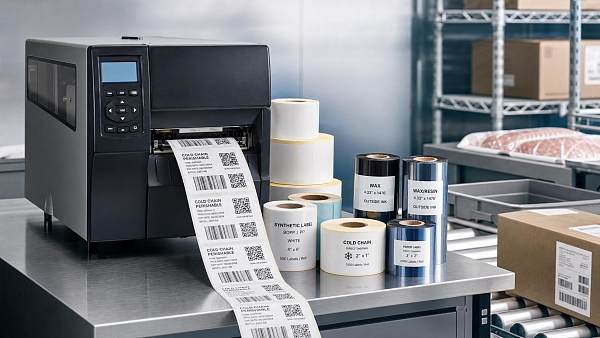
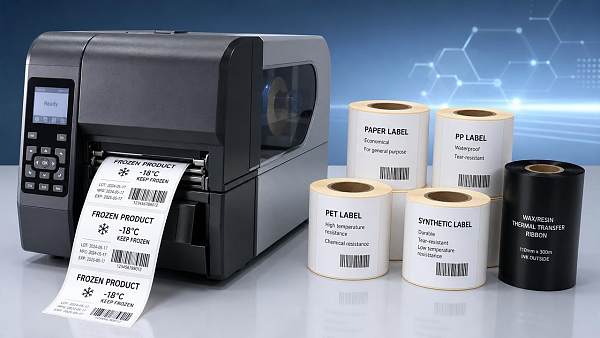
According to the information currently available, the rule requires all thermal barcode printer consumables used for fresh cold-chain labels, as well as plastic housing parts in smart POS terminals that directly contact food packaging or are frequently touched by hands, to provide a third-party laboratory test report showing BPA migration of no more than 0.1 ppb.
The rule also requires a Declaration of Conformity to be submitted with the shipment. The requirement applies to all relevant goods arriving at U.S. ports after June 15, 2026.
Which Market Segments Are Affected
Direct Export and Import Businesses
Companies shipping relevant thermal barcode printer consumables or smart POS terminal components to the United States may be directly affected because the rule links compliance to goods arriving at U.S. ports after June 15, 2026.
The main impact is likely to appear in pre-shipment documentation, third-party laboratory testing arrangements, and the preparation of Declarations of Conformity. Analysis shows that businesses with shipments already scheduled close to the effective arrival date may need to review whether their documentation can match the new entry requirement.
Thermal Label and Printing Consumables Suppliers
Suppliers of thermal barcode printer consumables used for fresh cold-chain labels are specifically named in the rule. They may need to verify whether their label materials fall within the scope of the requirement when used in fresh cold-chain applications.
The impact may be reflected in product classification, batch-level compliance management, and communication with downstream food distributors or packaging users. From an industry perspective, the key issue is not only whether the product is described as BPA-free, but whether a third-party laboratory report can demonstrate BPA migration at or below 0.1 ppb.
Smart POS Terminal Manufacturers and Component Suppliers
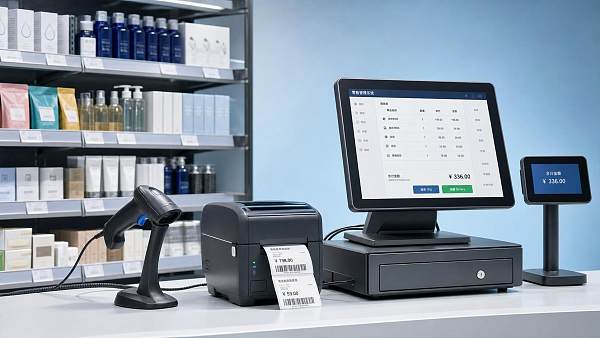
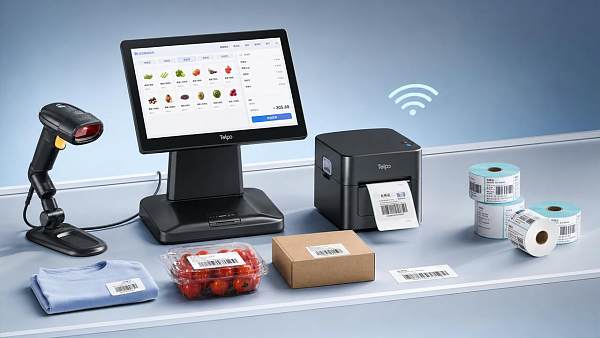
Manufacturers of smart POS terminals and suppliers of plastic housing parts may be affected when those components directly contact food packaging or are frequently touched by hands.
The main compliance pressure may arise from identifying which housing parts are covered, obtaining migration test reports, and ensuring that the Declaration of Conformity travels with the relevant shipment. Observably, this may require closer coordination between product design, procurement, quality control, and export documentation teams.
Food Packaging, Fresh Retail, and Cold-Chain Operators
Food packaging users, fresh retail operators, and cold-chain service providers may not be the direct producers of thermal labels or POS housings, but their procurement specifications could be affected if their products or equipment are linked to U.S.-bound supply chains.
Current procurement teams may need to confirm whether labels used on fresh cold-chain products and related POS equipment can be supported by the required BPA migration test reports and Declarations of Conformity. What deserves attention now is the possibility that compliance evidence may become a practical purchasing condition for U.S.-related business.
Supply Chain and Compliance Service Providers
Logistics providers, customs documentation teams, testing coordinators, and compliance consultants may face increased demand for document checking and shipment timing review.
The rule requires test reports and Declarations of Conformity to accompany shipments, which means compliance work may need to be completed before goods arrive at U.S. ports. From an industry perspective, late-stage document correction may carry higher operational risk for shipments after June 15, 2026.
What Companies Should Watch and How to Respond
Confirm Whether Products Fall Within the Stated Scope
Companies should first determine whether their products are thermal barcode printer consumables used for fresh cold-chain labels, or plastic housing components of smart POS terminals that directly contact food packaging or are frequently touched by hands.
Analysis shows that scope identification is the first practical step because the rule does not apply broadly to every label or every POS component based on the available information. Businesses should avoid treating all products as identical, while also avoiding under-classification of products that may be covered.
Arrange Third-Party BPA Migration Testing Early
For products within scope, companies should prepare third-party laboratory testing that specifically supports the BPA migration requirement of no more than 0.1 ppb.
What deserves attention now is the timing. Since the rule applies to goods arriving at U.S. ports after June 15, 2026, testing and report preparation may need to be completed before shipment documents are finalized. Companies should also check whether test reports clearly match the product, material, and shipment documentation.
Prepare Declarations of Conformity With Shipments
The final rule requires a Declaration of Conformity to be submitted with the shipment. Businesses should therefore align test reports, product descriptions, shipment references, and compliance declarations before goods are dispatched.
From an industry perspective, this is a documentation control issue as much as a material compliance issue. A product supported by a test report may still face operational friction if the Declaration of Conformity is incomplete, inconsistent, or not submitted with the relevant shipment.
Review U.S.-Bound Orders Around the Effective Arrival Date
Companies with U.S.-bound shipments scheduled near or after June 15, 2026 should review arrival dates, product categories, and document readiness.
It is more appropriate to understand this as an arrival-based compliance trigger based on the available information. Businesses should therefore check port arrival timing rather than only production or departure dates when assessing whether the new requirement applies.
Editorial Viewpoint / Industry Observation
Analysis shows that this FDA update is not merely a labeling or equipment detail. It connects food-contact material compliance with thermal printing consumables and smart retail terminal components, two areas that often sit between packaging operations, equipment procurement, and retail supply chains.
Observably, the rule already forms a concrete compliance requirement for goods arriving at U.S. ports after June 15, 2026, because it specifies a BPA migration threshold, third-party laboratory testing, and shipment-level Declarations of Conformity. At the same time, companies still need to watch how product scope and document review are handled in actual business execution.
From an industry perspective, the update is also a compliance signal for businesses serving food-related retail and cold-chain scenarios. Materials and components that interact with food packaging or frequent hand contact may receive closer scrutiny when they are linked to U.S. market access.
Conclusion
The FDA’s June 2, 2026 update to 21 CFR §177.1520 gives clear compliance attention to BPA migration in fresh cold-chain thermal label consumables and certain food-contact or high-touch plastic housings used in smart POS terminals.
The industry significance lies in the shift from general product claims to verifiable third-party testing and shipment-level conformity documentation. It is more appropriate to understand this update as a practical compliance requirement for affected U.S.-bound goods, while continuing to monitor how the rule is applied in documentation review and supply-chain execution.
Information Source Statement
Main source: U.S. Food and Drug Administration final rule issued on June 2, 2026, updating 21 CFR §177.1520, as described in the provided regulatory information.
Items requiring continued observation: further official explanations, implementation details, and practical document review expectations for covered thermal barcode printer consumables and smart POS terminal plastic housing components after the June 15, 2026 U.S. port arrival applicability date.
Recommended News
 Jun 21, 2026Thermal Transfer Printers Buying Guide: Print Resolution, Media Compatibility, and TCOThermal transfer printers buying guide covering print resolution, media compatibility, and TCO. Learn how to choose the right model for reliable labels, smoother operations, and lower long-term costs.
 Jun 19, 2026Retail Barcode Systems Explained: Scanner, Printer, and POS Integration for Daily OperationsRetail barcode systems explained for modern stores: learn how scanners, printers, and POS integration improve speed, pricing accuracy, inventory visibility, and daily retail efficiency.
 Jun 15, 2026Thermal Transfer Printers Explained: Media Types, Print Resolution, and Label DurabilityThermal transfer printers explained: compare media types, ribbon options, print resolution, and label durability to choose reliable, long-lasting labels for retail, logistics, and food service.
 Jun 13, 2026Retail Barcode Systems Buying Guide: Scanner Types, Printer Compatibility, and POS IntegrationRetail barcode systems buying guide covering scanner types, printer compatibility, and POS integration to help retailers cut errors, improve checkout speed, and choose smarter long-term solutions.
 Jun 12, 2026Retail Thermal Transfer vs Direct Thermal: Which Barcode Printing Method Fits Your Store?Retail thermal transfer vs direct thermal: discover which barcode printing method delivers better durability, scan accuracy, and cost control for your store.
![]() Jun 09, 2026Thermal Transfer Printers Buying Guide: Print Resolution, Media, and Workflow FitThermal transfer printers buying guide: compare print resolution, media compatibility, durability, and workflow fit to choose reliable label printing for retail, foodservice, and logistics.
Jun 09, 2026Thermal Transfer Printers Buying Guide: Print Resolution, Media, and Workflow FitThermal transfer printers buying guide: compare print resolution, media compatibility, durability, and workflow fit to choose reliable label printing for retail, foodservice, and logistics. Jun 03, 2026FDA Tightens BPA Rules for Labels and POS HousingsFDA tightens BPA rules for thermal labels and POS housings. See who is affected, what testing is required, and how to prepare U.S.-bound shipments.
 Jun 02, 2026FDA Sets BPA-Free Tests for Food-Contact POS DevicesFDA BPA-free tests for food-contact POS devices now affect thermal barcode printers and smart terminals. Learn compliance steps, testing limits, and supply chain risks.
 Jun 02, 2026Thermal Transfer Printers vs Direct Thermal: Which Barcode Labels Last Longer?Thermal transfer printers help barcode labels outlast direct thermal options, resisting fading, moisture, and abrasion for safer compliance, traceability, and scanning.
 May 30, 2026When do high-speed thermal printers actually pay off?High-speed thermal printers pay off when faster queues, fewer reprints, and stronger uptime cut real costs. Learn when to upgrade and when standard printers suffice.
 May 29, 2026Why do retail thermal transfer labels fail at checkout?Retail thermal transfer labels failing at checkout? Learn the key causes—ribbon mismatch, printer wear, moisture, glare—and how to improve barcode scans fast.
 May 26, 2026Why high-speed thermal printers fail in busy label workflowsHigh-speed thermal printers fail fast in busy label workflows when heat, media, and maintenance are ignored. Learn the hidden causes, early warning signs, and fixes to cut downtime.
![]() May 25, 2026CBoT Memorial Day Closure Tightens Thermal Printer Export WindowThermal printer exporters: CBoT Memorial Day closure tightens LC submission window—act now to meet June 2 deadline and avoid expiry risks.
May 25, 2026CBoT Memorial Day Closure Tightens Thermal Printer Export WindowThermal printer exporters: CBoT Memorial Day closure tightens LC submission window—act now to meet June 2 deadline and avoid expiry risks. May 24, 2026Are thermal transfer printers still best for durable labels?Thermal transfer printers still lead for durable labels in cold-chain, retail, kitchen, and laundry use. Compare lifespan, scan reliability, and total cost before you choose.


Editor's Selection
The Archive Newsletter
Critical industrial intelligence delivered every Tuesday. Peer-reviewed summaries of the week's most impactful logistics and market shifts.