
EU Tightens CO2 Cold Room Export Rules
by
Published
Views:
On July 18, 2026, the European Commission formally issued Regulation (EU) 2026/1342, revising the F-Gas framework in a way that directly affects CO2 Cascade Cold Rooms shipped into the EU. From an industry perspective, the immediate point of attention is no longer only product configuration, but whether exporters, manufacturers, certification parties, and delivery teams can align hardware integration and compliance documents before the October 1, 2026 enforcement date. The update matters because equipment without the required module will not be able to complete the EU Declaration of Conformity pathway.
What the revised rule now requires
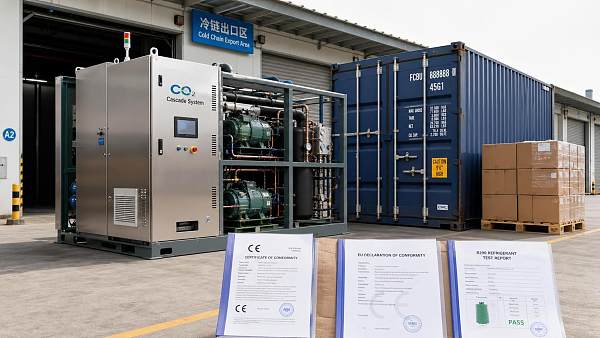
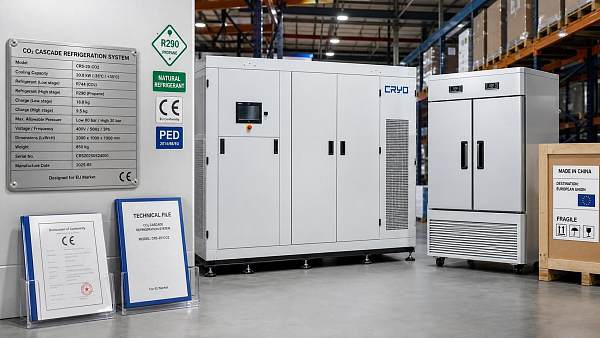
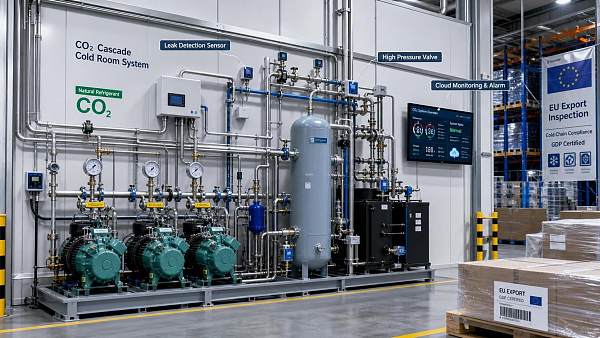
According to the information provided, Regulation (EU) 2026/1342 was released by the European Commission on July 18, 2026 as a key amendment to F-Gas Regulation (EC) No 517/2014. The amendment requires that, starting on October 1, 2026, all CO2 Cascade Cold Rooms exported to the EU must include a real-time refrigerant leak detection and automatic alarm module compliant with EN 378-4:2025. The equipment must also be accompanied by a third-party type inspection certificate. The stated compliance consequence is clear: units without the pre-installed module will not pass the EU Declaration of Conformity.
Where the pressure will appear across the trade chain
Export-facing manufacturers will face a configuration and certification bottleneck
Analysis shows that manufacturers supplying the EU market are likely to feel the impact first because the requirement is tied directly to product design, module integration, and conformity documentation. The main business effect will appear in engineering confirmation, production planning, and shipment readiness, especially where existing models were prepared without the required leak monitoring and alarm function.
Trading companies will need tighter control over deliverable specifications
For exporters and trading companies, the issue is not only whether an order can be booked, but whether the delivered configuration matches the new compliance threshold. What deserves closer attention is the risk of selling products into the EU market under older specifications that no longer support the final conformity process after October 1, 2026.
Certification and documentation workflows become part of delivery risk
Observably, the rule links hardware and paperwork more tightly than before. The requirement for a third-party type inspection certificate means that document preparation is no longer a secondary step after manufacturing. The impact is likely to be felt in approval timing, shipment coordination, and customer acceptance milestones.
Buyers and downstream project parties may reassess lead times
Procurement teams, importers, and downstream project participants may also be affected because compliance now depends on pre-installed functionality rather than a later adjustment. From an industry perspective, this can shift attention toward model confirmation, acceptance criteria, and the realism of delivery schedules for projects targeting the EU market.
What companies should watch now
Check whether EU-bound models already include the required module
The most immediate practical question is whether current CO2 Cascade Cold Room configurations for the EU already integrate a real-time refrigerant leak detection and automatic alarm module meeting EN 378-4:2025. If not, the gap is not marginal; it directly affects conformity eligibility.
Review certificate readiness alongside product readiness
Companies should pay close attention to the third-party type inspection certificate requirement. In practical terms, product completion and document completion now need to move together. A technically updated unit without the required certificate may still face compliance obstacles.
Recalculate order timing and customer communication
Because the enforcement date is October 1, 2026, affected businesses should closely review orders that are in quotation, production, or shipment planning stages for the EU. Analysis shows that delivery commitments and customer communication may need to reflect the added compliance step rather than assuming prior export routines still apply.
Watch for how the rule is applied in real transactions
What deserves closer attention is the difference between a published rule and its day-to-day implementation in transactions. Companies should continue monitoring how customers, certification parties, and conformity documentation processes interpret the new requirement in actual export cases.
Why this looks larger than a single technical add-on
This should not be read only as a component-level adjustment. Analysis shows that the requirement changes the compliance path itself, because the absence of the module blocks the EU Declaration of Conformity. That makes the development more than a short-term engineering revision; it is also a signal that market access for this product category is becoming more closely tied to embedded monitoring capability and verifiable documentation. At the same time, it is still appropriate to treat some downstream effects as subject to observation, especially around timing, certification workflow, and how quickly supply chains adapt.
How to understand the development at this stage
The immediate result is clear: for CO2 Cascade Cold Rooms exported to the EU, the revised F-Gas rule sets a mandatory compliance condition beginning October 1, 2026. From an industry perspective, this is best understood as a confirmed near-term regulatory change with operational consequences, rather than a speculative policy signal. The broader commercial impact will depend on how quickly manufacturers, exporters, and project parties adjust their product, certification, and delivery arrangements.
Basis of this article and points for continued verification
This article is based on the user-provided news title, event date, and event summary. For this type of development, commonly relevant source categories may include official government or regulatory notices, company compliance statements, industry association updates, authoritative media reporting, and standards organization documents. A specific official source link was not provided in the input, so the exact source document and any subsequent interpretive notices still need continued verification. Follow-up attention should remain on official clarification, certification practice, and any further implementation details tied to EU-bound exports of CO2 Cascade Cold Rooms.
Recommended News
 Oct 21, 2026Rivacold Introduces Patented ADAPTIX Technology for CO2 Refrigeration EfficiencyDiscover how Rivacold’s patented ADAPTIX technology enhances transcritical CO2 refrigeration efficiency, with claimed energy savings of up to 30% alone and 40% when combined with other solutions.
 Oct 20, 2026Wiesbaden Supermarket Claims First All-CO2 Refrigeration, Heating and Cooling OperationWiesbaden supermarket claims all-CO2 refrigeration, heating and cooling. Explore what this approach could mean for retail procurement and the EU F-Gas transition.
 Oct 19, 2026CO2, Ammonia, or HFO Blends: Choosing Refrigeration Systems for Cold RoomsExplore refrigeration system selection by refrigerant type: compare CO2, ammonia, and HFO blends for cold rooms to balance efficiency, safety, and lifecycle costs. Make a confident choice.
 Oct 06, 2026How to Size a Commercial Cold Room System for Food Storage Capacity and Peak LoadsCommercial cold room systems: learn to size storage capacity, account for peak heat loads, manage door traffic, and protect food quality with efficient, reliable design.
 Sep 22, 2026How to Select Cold Room Refrigeration Equipment for Load, Temperature, and Energy UseCommercial refrigeration equipment for cold rooms: learn how to match load, temperature, airflow, defrost, and energy controls for reliable, cost-effective performance.
 Sep 16, 2026How Restaurants Can Size Refrigeration Systems for Peak Service and Food SafetyCommercial refrigeration systems for restaurants: size for peak service, rapid recovery, food safety, efficient workflow, and lower operating risk.
 Aug 16, 2026EU F-Gas Rules Take Effect Aug. 18: CO2 Cascade Cold Rooms Face Carbon Footprint LabelingEU F-Gas rules now impact CO2 Cascade Cold Rooms with batteries above 2kWh—see how carbon footprint labeling and import declarations may affect EU market access.
 Aug 15, 2026EU F-Gas Rule to Require Type Certification for CO2 Cascade Cold RoomsEU F-Gas Rule now requires type certification for CO2 Cascade Cold Rooms exported to the EU from 2026. Learn customs risks, testing scope, and compliance steps before shipping.
 Aug 14, 2026China Tightens F-Gas Checks on Commercial Refrigeration ExportsChina tightens F-Gas checks on EU-bound commercial refrigeration exports, putting certificates, GWP files, and customs clearance under sharper scrutiny. Stay ahead of delays and compliance risk.
 Aug 13, 2026EU F-Gas Rule Adds New Certification for CO2 Cold Room ExportsEU F-Gas Rule reshapes CO2 cold room exports from August 15, 2026. Learn how new certification, leak-rate reports, and customs risks could affect delivery, compliance, and EU market access.
![]() Aug 12, 2026Vietnam launches anti-dumping investigation into China’s prestressed steel productsVietnam launches an anti-dumping probe into Chinese prestressed steel, potentially impacting cold room structures, CO2 Cascade systems, costs, compliance, and delivery schedules.
Aug 12, 2026Vietnam launches anti-dumping investigation into China’s prestressed steel productsVietnam launches an anti-dumping probe into Chinese prestressed steel, potentially impacting cold room structures, CO2 Cascade systems, costs, compliance, and delivery schedules. Aug 11, 2026EU F-Gas Rule Now Enforced for CO2 Cascade Cold RoomsEU F-Gas Rule now enforced for CO2 Cascade Cold Rooms: learn how EN 378-1:2026 certification impacts EU exports, customs clearance, supplier approval, and delivery timelines.
 Aug 10, 2026EU Requires EN 378-1:2026 for CO2 Cold Room ExportsEU Requires EN 378-1:2026 for CO2 Cold Room Exports: learn how the new EU compliance rule impacts certification, customs clearance, delivery timelines, and market access.
 Aug 10, 2026How Inverter Refrigeration Improves Energy Efficiency in Commercial Cold RoomsHigh-efficiency refrigeration with inverter technology helps commercial cold rooms cut energy use, improve temperature stability, and reduce cycling stress. Learn when the upgrade delivers real ROI.
 Aug 09, 2026EU Rule Takes Effect for CO2 Cascade Cold RoomsEU Rule Takes Effect for CO2 Cascade Cold Rooms: learn how EN 378-1:2026, CE+UKCA dual marking, and refrigerant limits reshape EU exports, compliance, and delivery.
 Aug 08, 2026EU Tightens F-Gas Transition for CO2 Cold RoomsEU Tightens F-Gas Transition for CO2 Cold Rooms: learn how the August 15, 2026 EU compliance shift impacts EN 378 certification, CE DoC, customs clearance, and on-time delivery.
 Aug 07, 2026EU Tightens EN 378-1:2024 Deadline for CO2 Cold RoomsEU Tightens EN 378-1:2024 Deadline for CO2 Cold Rooms: learn the August 15 certification cut-off, September 1 enforcement, customs risks, and how exporters can protect EU market access.
 Aug 06, 2026EU Tightens F-Gas Transition for CO2 Cold RoomsEU Tightens F-Gas Transition for CO2 Cold Rooms: learn how the new F-Gas notice impacts EU market access, Annex IV lab certification, and shipment timing before September 1, 2026.
 Aug 05, 2026EU F-Gas Rule Tightens CO2 Cold Room Export TimelineEU F-Gas Rule update: CO2 cold room exporters face an October 1, 2026 compliance deadline. Learn how certification, CE filing, and border-entry risks could impact shipments.
 Aug 04, 2026EU Tightens F-Gas Transition for CO2 Cascade Cold RoomsEU Tightens F-Gas Transition for CO2 Cascade Cold Rooms: learn how the October 1, 2026 R290 certification and CE Annex IV rules could impact EU market access, delivery timelines, and export compliance.
 Aug 03, 2026EU F-Gas Rule Takes Effect: R290 Certification Becomes a Prerequisite for CO2 Cascade Cold Room ExportsEU F-Gas Rule takes effect: R290 certification is now essential for CO2 Cascade Cold Room exports. Learn the new EU compliance impact on access, lead times, and delivery planning.
 Aug 01, 2026EU F-Gas Rule Takes Effect for CO2 Cascade Cold RoomsEU F-Gas Rule now impacts CO2 Cascade Cold Rooms exported to the EU. Learn the 2026 leak monitoring, EN 14800:2025, and customs clearance requirements before shipment.
 Jul 31, 2026EU F-Gas Revision Takes Effect for CO2 Cold RoomsEU F-Gas revision takes effect for CO2 cold rooms from August 1, 2026. Learn the new leak monitoring, CE compliance, certificate, and customs risks affecting EU shipments.
 Jul 30, 2026EU F-Gas Rule Takes Effect for CO2 Cascade Cold RoomsEU F-Gas Rule now impacts CO2 Cascade Cold Rooms entering Europe. Learn how AI leak monitoring, CE marking, and customs compliance could affect exporters, buyers, and delivery plans.


Editor's Selection
The Archive Newsletter
Critical industrial intelligence delivered every Tuesday. Peer-reviewed summaries of the week's most impactful logistics and market shifts.