
Energy-Efficient Refrigeration ROI in 2026 Store Upgrades
by
Published
Views:
For finance decision-makers planning 2026 store upgrades, energy-efficient refrigeration is no longer just a sustainability choice—it is a measurable profit lever. From lower utility bills and reduced maintenance to compliance-ready refrigerants and stronger food protection, the right upgrade can improve total cost of ownership and speed payback across retail operations.
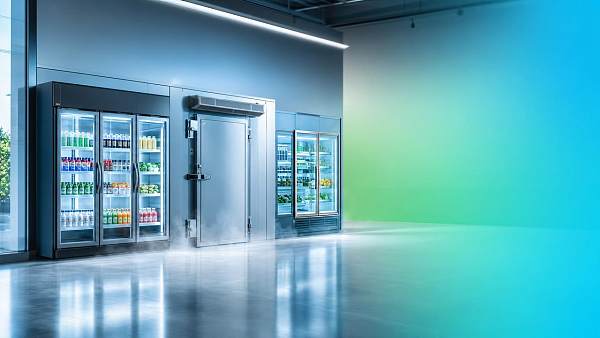
In supermarkets, convenience formats, unmanned retail points, and mixed-use service sites, refrigeration often runs 24/7 and can account for one of the largest controllable energy loads in the store. That makes it a capital planning issue, not just an engineering one.
For CRSS readers evaluating commercial assets across cold chains, vending, foodservice, and store infrastructure, the core question is practical: which upgrades create a credible return within 24 to 60 months, and which only look efficient on a product sheet?
Why energy-efficient refrigeration has become a finance priority in 2026
The 2026 upgrade cycle is different from earlier replacement waves because three pressures are now converging at once: higher energy tariffs, tighter refrigerant compliance expectations, and stronger demands for uptime in food-sensitive retail environments.
A refrigeration asset that saves 12% to 25% in annual electricity can outperform a lower-priced unit that appears cheaper at purchase but costs more over a 7 to 12 year life. Finance teams are increasingly reviewing refrigeration with the same discipline used for POS, automation, and logistics systems.
The four cost centers that shape ROI
Return on investment in energy-efficient refrigeration is rarely driven by power savings alone. In commercial retail and service systems, four cost centers usually determine the real outcome.
- Electricity consumption across 16 to 24 operating hours per day
- Maintenance frequency, including compressors, fans, controls, and defrost systems
- Product loss from temperature instability, door openings, or poor recovery time
- Compliance risk tied to refrigerant transition planning and future serviceability
For finance approvers, this means a store upgrade should be judged on total operating impact per site, per year, and per equipment family, not on upfront price variance alone.
Where the strongest savings usually come from
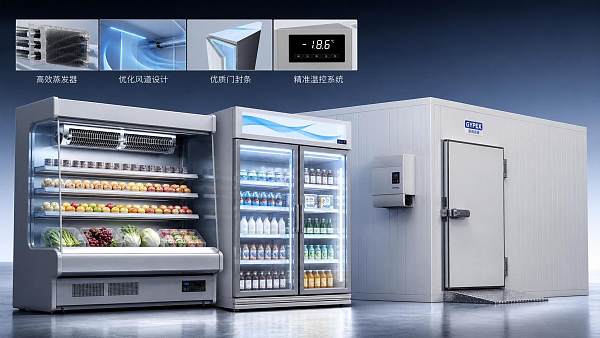
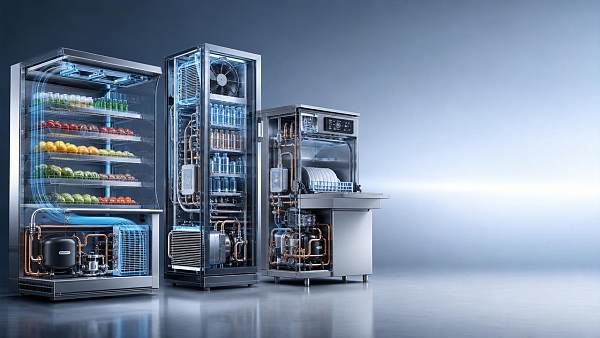
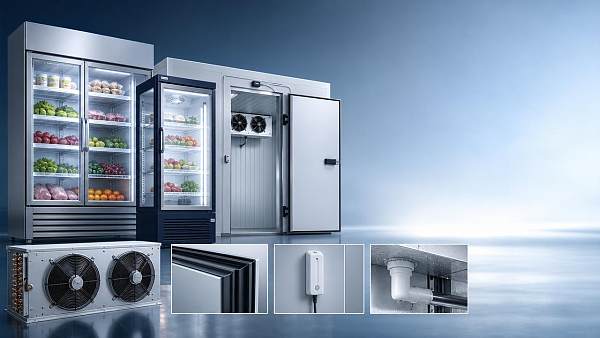
In display freezers, reach-ins, cold rooms, and smart refrigerated vending, the largest efficiency gains often come from variable-speed compressors, electronically commutated fans, improved insulation, tighter case controls, and better airflow management.
In open-front supermarket cases, even a modest improvement in air curtain stability can reduce thermal drift and shorten temperature recovery after shopper interaction. In practical terms, that supports both energy performance and food protection.
Typical upgrade triggers seen in retail portfolios
- Equipment age beyond 8 to 10 years
- Repeated service calls more than 3 times per year per unit
- High defrost-related energy spikes or unstable cabinet temperatures
- Legacy refrigerants with rising service cost or regulatory pressure
- Store remodels that combine cold chain, vending, POS, and labor optimization
The comparison below helps finance teams separate low-capex replacements from stronger lifecycle performers when evaluating energy-efficient refrigeration for store upgrades.
The key takeaway is simple: a lower sticker price often shifts cost into power, service, and compliance exposure. Energy-efficient refrigeration tends to deliver its best financial case when evaluated over the asset life, not the bid day.
How finance teams should calculate refrigeration ROI
A usable ROI model should be transparent enough for finance review and detailed enough for operations sign-off. In most retail and service portfolios, a 5-factor model is more reliable than a simple utility-savings estimate.
A practical 5-factor ROI framework
- Baseline annual energy cost per unit or per store
- Expected energy reduction percentage after upgrade
- Maintenance cost reduction over 12 months
- Estimated reduction in shrink or product loss
- Residual risk cost from non-compliant or hard-to-service refrigerants
For example, if a medium-format food retailer spends $18,000 per year on refrigeration electricity at one site, a 15% reduction produces $2,700 in annual savings. If maintenance also drops by $1,200 and shrink improves by $800, total yearly benefit reaches $4,700 before incentives.
If the incremental capex over a standard replacement is $14,000, simple payback is about 36 months. If electricity rates rise 6% to 10% over the next planning cycle, payback can shorten further.
Common ROI errors in board submissions
- Using rated laboratory performance instead of real store duty cycles
- Ignoring maintenance labor and after-hours callout costs
- Excluding product spoilage from temperature excursions
- Assuming all stores have the same operating profile
- Comparing assets with different refrigerant roadmaps as if risk were equal
The table below shows a simple structure finance teams can adapt when reviewing energy-efficient refrigeration across supermarkets, convenience stores, and unattended retail nodes.
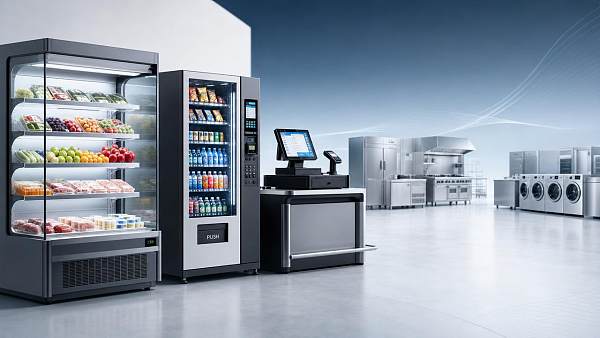
This framework is especially relevant when refrigeration is part of a broader 2026 modernization budget that also includes vending, POS, kitchen, or laundry systems. Standardized ROI logic helps finance leaders compare unlike assets on a common basis.
Which refrigeration technologies deserve budget attention
Not every efficiency feature creates equal financial value. Budget priority should go to technologies that improve both thermodynamic performance and operational resilience.
High-impact features for 2026 upgrade programs
- Variable-speed compressor systems that adapt to load instead of running at fixed intensity
- EC fan motors that lower electrical draw and support better airflow control
- Adaptive defrost logic that reduces unnecessary defrost cycles
- Door and gasket improvements that limit infiltration losses
- Advanced controllers with alarms, logging, and remote monitoring integration
- Low-GWP refrigerant pathways such as CO2 or R290 where design and compliance permit
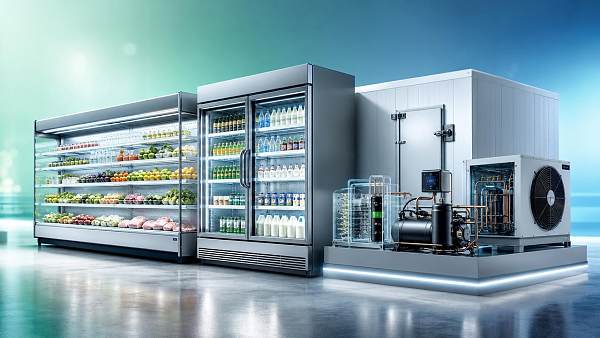
For open display cases, airflow engineering matters as much as component efficiency. For cold rooms, insulation integrity and door management can materially affect kWh use. For smart vending fridges, edge monitoring and fast fault alerts reduce downtime and inventory risk.
Why refrigerant strategy belongs in ROI planning
Finance teams sometimes treat refrigerants as a compliance side topic. In reality, refrigerant choice can affect service availability, retrofit timing, technician requirements, and future asset flexibility. Those are cost variables, not only environmental ones.
For exporters and multi-country operators, the transition toward lower-GWP systems may influence sourcing strategy 12 to 36 months before a unit reaches end of life. That makes early planning valuable, especially for chains standardizing equipment across regions.
How to choose the right upgrade path by store format
A convenience store, a supermarket fresh zone, and an unmanned micro-retail point do not share the same refrigeration economics. Finance approval is stronger when the business case reflects real operating patterns rather than a generic equipment proposal.
Supermarkets and large-format food retail
In larger stores, the best opportunities often sit in multi-door cases, island freezers, and back-of-house cold rooms. Because these assets carry long run hours and large product loads, even a 10% gain can produce meaningful annual savings at chain scale.
Finance teams should request a store-level split between sales floor refrigeration and storage refrigeration. The load profiles differ, and so do the upgrade priorities.
Convenience stores and forecourt retail
In smaller formats, footprint and maintenance simplicity matter more. Self-contained energy-efficient refrigeration can reduce installation complexity, while remote monitoring is useful when staffing is lean and downtime affects impulse sales immediately.
Smart vending and unmanned retail terminals
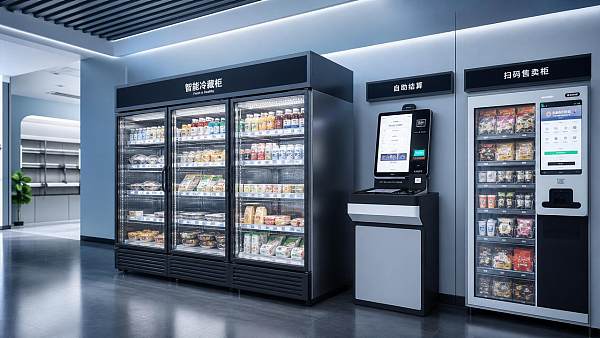
For AI-enabled vending and grab-and-go cabinets, refrigeration must support both product integrity and digital continuity. A failed cooling cycle can damage stock, trigger payment disputes, and disrupt customer trust within hours.
That is why the procurement lens should include remote alerts, energy use by transaction volume, temperature recovery speed after door openings, and service response targets such as 4-hour diagnosis or 24-hour parts dispatch where available.
Implementation, risk control, and post-installation verification
An attractive ROI model can fail in execution if installation, commissioning, and monitoring are weak. In store upgrades, the return depends not only on equipment design but also on rollout discipline.
A 5-step rollout model for finance-backed projects
- Audit current assets by age, power use, service history, and refrigerant exposure
- Pilot 3 to 10 representative sites across different formats or climate loads
- Measure 60 to 90 days of post-install performance against baseline
- Refine specification standards before chain-wide procurement
- Track savings and uptime quarterly for at least 12 months
Post-install checks that protect the business case
- Cabinet temperature consistency during peak traffic periods
- Defrost performance and recovery time after interruptions
- Night energy profile compared with design expectations
- Alarm accuracy and remote visibility of critical faults
- Maintenance response workflow between store, service partner, and asset manager
For CRSS-oriented operators managing broader commercial systems, this verification approach aligns well with how other mission-critical assets are governed. Refrigeration should be monitored with the same seriousness as POS uptime, dishwasher sanitation performance, or high-cycle laundry reliability.
Questions finance approvers often ask before sign-off
Is energy-efficient refrigeration worth it if stores may be remodeled again?
Usually yes, if the expected payback falls inside the remaining site strategy window. If a location is likely to operate for another 3 to 5 years, a 24 to 36 month payback can still be financially sound, especially where energy tariffs are high.
Should we prioritize full replacement or selective retrofit?
That depends on equipment age, refrigerant pathway, service burden, and case condition. Selective retrofits can work when cabinet structure is sound, but full replacement is often stronger when units are beyond 8 years old or face repeated service disruptions.
What documentation should finance request from vendors?
Request modeled annual energy use assumptions, component-level specification detail, refrigerant roadmap clarity, warranty scope, preventive maintenance requirements, and commissioning criteria. A good vendor should also explain what conditions can narrow or widen the expected ROI range.
Energy-efficient refrigeration in 2026 is not just a facilities upgrade. It is a cross-functional investment that touches utility spend, food safety, compliance readiness, service continuity, and store profitability. The strongest decisions come from evaluating lifecycle value, not simply purchase price.
For finance approvers overseeing supermarkets, convenience chains, unmanned retail, and broader commercial service environments, CRSS recommends a disciplined approach: quantify baseline costs, compare technologies by operating impact, pilot before scale, and align refrigerant strategy with long-term asset planning.
If you are preparing a 2026 capital plan, now is the right time to review your refrigeration portfolio with a TCO lens. Contact us to get a tailored upgrade framework, discuss equipment selection priorities, and explore more solutions for efficient, compliance-ready commercial retail systems.
Recommended News
 Jun 17, 2026What Is Thermodynamic Energy Squeezing and Where Is It Used in Cooling Systems?Thermodynamic energy squeezing explained: learn where it is used in cooling systems to improve temperature stability, cut energy costs, and boost retail refrigeration performance.
 Jun 16, 2026Physical Dispatch Hubs Explained: Functions, Layout Types, and When Businesses Need OnePhysical dispatch hubs explained: discover core functions, layout types, and the key signs your business needs one to improve response speed, control costs, and reduce downtime.
 Jun 14, 2026Commercial Air-Bag Suspension vs Leaf Spring: Which Is Better for Heavy-Duty Fleets?Commercial air-bag suspension vs leaf spring: discover which option better protects cargo, uptime, and long-term fleet costs for heavy-duty operations.
 Jun 13, 2026Modern Commercial Civilization and Retail Automation: Why Unmanned Formats Are ExpandingModern commercial civilization is accelerating unmanned retail growth through smarter cold-chain, POS, hygiene, and energy systems—see what’s driving scalable, reliable automation.
 Jun 11, 2026What Is Thermodynamic Energy Squeezing? Working Principle, Limits, and Industrial Use CasesThermodynamic energy squeezing explained: discover its working principle, real-world limits, and industrial use cases to improve efficiency, stability, and long-term operating value.
 Jun 10, 2026Food Retail Equipment Checklist: What to Compare Before Opening a Grocery or Convenience StoreFood retail equipment checklist for new grocery and convenience stores. Compare refrigeration, POS, shelving, food safety, and total cost before buying to cut risk and improve margins.
 Jun 07, 2026New Retail Revolution Explained: How Store Formats Are Changing with Automation and DataNew retail revolution explained: discover how automation, real-time data, and connected store systems are reshaping retail formats, cutting costs, and creating smarter, scalable operations.
 Jun 06, 2026Energy-Saving Refrigeration vs Standard Systems: Upfront Cost, Power Use, and PaybackEnergy-saving refrigeration vs standard systems: compare upfront cost, power use, maintenance risk, and real payback to choose the smarter long-term investment.
![]() Jun 04, 2026Retail Efficiency Maximization: 7 Ways Cold Display Layout Impacts Sales and LaborRetail efficiency maximization starts with smarter cold display layout. Discover 7 practical ways to boost sales, cut labor, improve flow, and strengthen cold-chain performance.
Jun 04, 2026Retail Efficiency Maximization: 7 Ways Cold Display Layout Impacts Sales and LaborRetail efficiency maximization starts with smarter cold display layout. Discover 7 practical ways to boost sales, cut labor, improve flow, and strengthen cold-chain performance. May 31, 2026Do energy-efficient refrigeration solutions pay back?Energy-efficient refrigeration solutions can cut TCO, reduce food loss, and improve compliance. Learn how to calculate payback and choose upgrades that deliver measurable ROI.
 May 28, 2026Why modern commercial civilization still shapes retailModern commercial civilization still shapes retail through cold chain, smart vending, POS, kitchens, and laundry systems. Explore the hidden infrastructure driving efficiency, hygiene, and profit.
 May 27, 2026What retail cold chain equipment fails first in stores?Retail cold chain equipment often fails first at fan motors, door gaskets, defrost parts, and sensors. Learn the early warning signs and smart maintenance checks to prevent downtime.
![]() May 25, 2026Commercial cooling solutions that lower energy bills fastCommercial cooling solutions that cut energy bills fast: learn how smart controls, efficient compressors, and better airflow reduce costs, protect products, and speed up ROI.
May 25, 2026Commercial cooling solutions that lower energy bills fastCommercial cooling solutions that cut energy bills fast: learn how smart controls, efficient compressors, and better airflow reduce costs, protect products, and speed up ROI. May 23, 2026What makes eco-friendly refrigeration cheaper over time?Eco-friendly refrigeration cuts long-term costs through lower energy use, fewer repairs, reduced compliance risk, and longer equipment life—see how to evaluate true savings.
 May 22, 2026How energy-saving refrigeration cuts bills without riskEnergy-saving refrigeration helps cut power bills without raising operational risk. Learn how smarter controls, stable temperatures, and efficient system design protect uptime, safety, and savings.
 May 20, 2026Energy-Efficient Refrigeration ROI in 2026 Store UpgradesEnergy-efficient refrigeration drives measurable ROI in 2026 store upgrades through lower energy bills, reduced maintenance, stronger compliance, and faster payback across retail formats.

Editor's Selection
The Archive Newsletter
Critical industrial intelligence delivered every Tuesday. Peer-reviewed summaries of the week's most impactful logistics and market shifts.