
Lingang Introduces 'Super Individual' Policy for Soft-Mount Washer Extractor Makers
by
Published
Views:
On May 15, 2026, the Lingang New Area Management Committee launched the Several Measures for Developing the 'Super Individual' Economy, introducing targeted support for small- and medium-sized technology enterprises engaged in Commercial Laundry equipment R&D—particularly those advancing vibration control algorithms and intelligent damping structures for Soft-mount Washer Extractors. The policy directly impacts manufacturers serving emerging export markets in Southeast Asia, the Middle East, and Latin America.
Policy Rollout and Confirmed Support Mechanisms
The Lingang New Area Management Committee officially released the Several Measures for Developing the 'Super Individual' Economy on May 15, 2026. Under this initiative, eligible small- and medium-sized technology enterprises developing Commercial Laundry equipment—including core technologies for Soft-mount Washer Extractors such as vibration control algorithms and intelligent damping structures—are entitled to R&D expense subsidies of up to RMB 5 million. Concurrently, China Export & Credit Insurance Corporation (Sinosure) Shanghai Branch has partnered with the authority to offer a 30% increase in export credit insurance coverage limits and a 50% premium subsidy for export orders, with priority application to Southeast Asian, Middle Eastern, and Latin American markets.
Impact Across Supply Chain Roles
Direct Exporting Enterprises
Manufacturers exporting Soft-mount Washer Extractors will benefit from enhanced risk mitigation via expanded Sinosure coverage and reduced premium costs. This lowers barriers to market entry in higher-risk emerging regions, particularly where buyer payment reliability or political stability remains uncertain. Companies must now align internal credit management systems with updated insurance claim workflows and documentation requirements.
Component and Subsystem Suppliers
Suppliers providing vibration-damping modules, control units, or structural components face increased demand scrutiny. Buyers may require updated technical validation reports—especially for dynamic performance under varying operating conditions—and traceable compliance documentation supporting the subsidized R&D claims. Supplier qualification dossiers may need revision to reflect alignment with Lingang’s supported innovation scope.
Contract Manufacturing and Assembly Firms
Firms engaged in final assembly or system integration must ensure production records, firmware versions, and calibration logs meet traceability standards tied to subsidized R&D outputs. Any deviation between design specifications validated under the subsidy program and actual build configurations could affect eligibility for both R&D reimbursement and export insurance benefits.
Logistics and Trade Services Providers
Freight forwarders, customs brokers, and trade finance facilitators will observe shifts in documentation expectations—including certified origin statements, technical annexes referencing vibration control parameters, and Sinosure endorsement forms. Service-level agreements may need updating to accommodate accelerated pre-shipment verification cycles triggered by new subsidy-linked compliance checks.
Key Actions for Eligible Enterprises
Confirm Eligibility Against Innovation Scope Criteria
Enterprises must verify whether their R&D activities—e.g., algorithm development for real-time imbalance compensation or topology-optimized damping frame design—fall explicitly within the policy’s defined focus areas for Commercial Laundry equipment. Self-assessment should reference official guidance on ‘vibration control algorithms’ and ‘intelligent damping structures’, not generic engineering claims.
Prepare Technical Documentation for Subsidy Application
R&D expense claims require auditable evidence: version-controlled source code repositories, lab test protocols for dynamic load simulation, third-party validation reports on noise/vibration reduction (e.g., ISO 10816-3 compliant), and BOMs identifying domestically developed subsystems. Retrospective documentation for projects initiated before May 2026 may be accepted only if aligned with the policy’s effective date provisions.
Integrate Sinosure Coverage Adjustments into Export Contracting
When negotiating contracts targeting Southeast Asia, the Middle East, or Latin America, firms should embed clauses specifying Sinosure-backed payment terms and define trigger conditions for insurance activation. Internal sales teams require training on revised credit limit thresholds and documentation timelines—especially for buyers without established banking relationships in China.
Align Quality Systems with Export Risk Mitigation Requirements
Post-sale service commitments—including field vibration diagnostics, remote firmware updates, and spare-part availability for damping actuators—must be formally documented and reflected in technical proposals. Sinosure’s enhanced coverage presumes demonstrable quality control rigor; therefore, ISO 9001-certified processes and failure mode analysis (FMEA) records for critical damping functions are now de facto prerequisites.
Industry Perspective: Beyond Immediate Incentives
Analysis shows this policy signals a strategic shift toward recognizing specialized SMEs—not just platform-scale exporters—as vital nodes in high-value equipment supply chains. From an industry perspective, the coupling of R&D subsidies with export insurance reform suggests a deliberate effort to de-risk innovation-driven internationalization. What deserves closer attention is how quickly certification bodies adapt assessment criteria for ‘intelligent damping structures’—currently lacking harmonized international standards—and whether regional testing labs in target markets (e.g., Singapore, Dubai, São Paulo) develop recognized capacity for validating Soft-mount Washer Extractor vibration performance under local utility conditions. It is more appropriate to understand this as a catalyst for modular compliance: firms may begin decoupling core vibration algorithms (developed and subsidized in Lingang) from region-specific mechanical interfaces (certified locally), accelerating market responsiveness without full re-engineering.
Strategic Implications for the Commercial Laundry Equipment Sector
This initiative does not merely lower short-term financial barriers—it redefines competitive positioning for manufacturers of precision laundry equipment. By anchoring support to verifiable technical advancement—not just export volume—the policy elevates engineering capability as a primary differentiator. For global buyers evaluating suppliers, Lingang-endorsed R&D status may increasingly serve as a proxy for technical maturity and long-term service viability. However, the impact remains contingent on consistent implementation: disparities in subsidy adjudication timelines or inconsistent Sinosure underwriting interpretations across emerging markets could dilute intended benefits.
Source Attribution and Ongoing Monitoring
This article was generated exclusively from the user-provided title, event date (May 15, 2026), and summary text. Specific official source links were not provided in the input and should be verified continuously. Stakeholders are advised to monitor forthcoming implementation guidelines from the Lingang New Area Management Committee, Sinosure Shanghai Branch’s operational bulletins on premium subsidy procedures, and updates to tender specifications issued by procurement agencies in target export markets—particularly any references to vibration performance validation or domestic R&D linkage requirements.
Recommended News
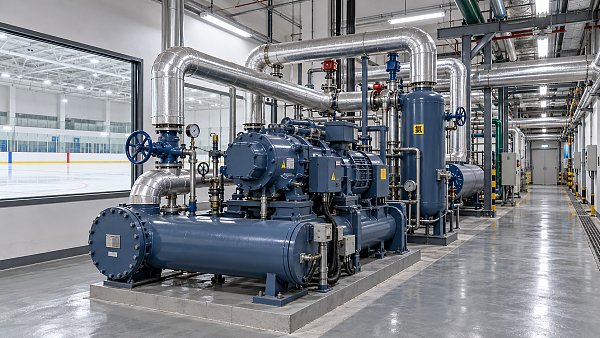
 Oct 26, 2026Missouri’s Kirkwood Ice Arena Replaces R-22 With Ammonia in $5.2 Million RenovationKirkwood Ice Arena replaces R-22 with ammonia in a $5.2 million renovation. Discover how the upgrade improves ice-making performance and energy efficiency.
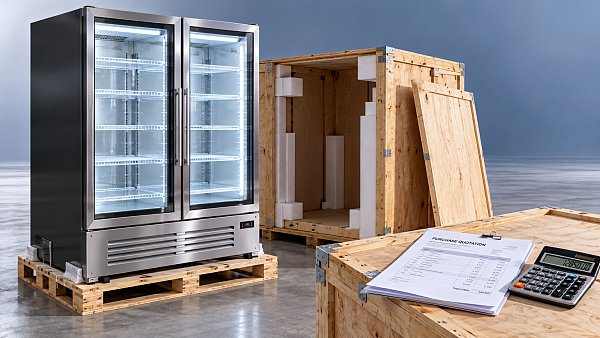
 Oct 26, 2026Private Label Sourcing Costs: Unit Prices, Agent Fees, and ShippingCompare private label sourcing price factors, from unit costs and agent fees to shipping and duties. Discover how to calculate landed costs and avoid hidden charges before you buy.
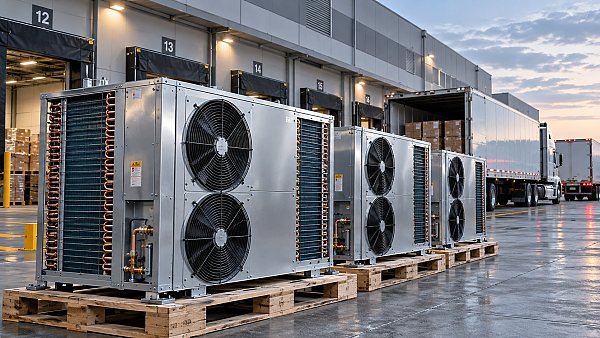
 Oct 25, 2026U.S. Removes 50% Tariff on Selected Canadian Refrigeration Equipment and MachineryU.S. tariff relief removes a 50% duty on selected Canadian refrigeration equipment and machinery. Explore product coverage and potential savings for your next equipment purchase.
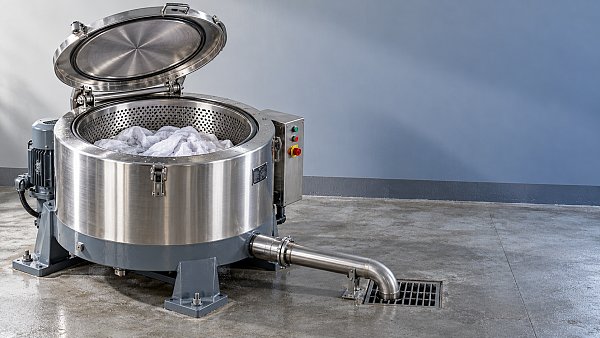
 Oct 25, 2026Commercial Centrifugal Dryer Prices: Capacity, Materials, and Setup CostsCompare commercial centrifugal drying price factors, from capacity and stainless steel to installation costs. Discover how to assess quotes, avoid hidden expenses, and choose the right laundry extractor.
 Oct 24, 2026Shanghai Aorun’s Inorganic Radiative Cooling Coating Earns “World First” CertificationShanghai Aorun’s inorganic radiative cooling coating earns “world first” certification. Explore its potential to reduce cooling loads in refrigeration and cold-chain facilities.
 Oct 24, 2026Choosing an Unmanned Retail Systems Supplier: Integration and Support ChecksChoosing an unmanned retail systems supplier? Discover integration tests, offline checks, and support requirements to reduce downtime and select a reliable partner before you scale.
 Oct 23, 2026TOMRA Signs to Become Preferred Reverse Vending Supplier for Major UK Retail ChainTOMRA signs a letter of intent for around 2,000 reverse vending machines for a major UK retailer. Explore what it could mean for procurement ahead of the expected 2027 deposit return scheme.
 Oct 23, 2026Industrial Tumble Dryers: Is a Stainless Steel Drum Enough for Your Laundry?Industrial tumble dryers with stainless steel drums need more than durable surfaces. Discover how airflow, moisture control, and lifecycle costs help you choose the right laundry solution.
 Oct 22, 2026Chemours Faces Investor Lawsuit Over US Sales of Opteon RefrigerantsChemours faces an investor lawsuit over US Opteon refrigerant sales. Explore alleged inventory risks tied to 2025 stockbuilding and questions over its 2026 earnings guidance.
 Oct 22, 2026Commercial Dry Cleaning Equipment in the Middle East: Utility and Service ChecksCompare commercial dry cleaning equipment Middle East suppliers offer. Check utilities, summer cooling, solvent compatibility and local service to avoid costly downtime. Buy with confidence.
 Oct 21, 2026Rivacold Introduces Patented ADAPTIX Technology for CO2 Refrigeration EfficiencyDiscover how Rivacold’s patented ADAPTIX technology enhances transcritical CO2 refrigeration efficiency, with claimed energy savings of up to 30% alone and 40% when combined with other solutions.
 Oct 21, 2026Choosing Department Store Checkout Systems: Inventory Sync and Returns ManagementCompare retail checkout systems for department stores to improve inventory sync, control returns, and reduce refund errors. Discover practical tests to choose the right solution.
 Oct 20, 2026Wiesbaden Supermarket Claims First All-CO2 Refrigeration, Heating and Cooling OperationWiesbaden supermarket claims all-CO2 refrigeration, heating and cooling. Explore what this approach could mean for retail procurement and the EU F-Gas transition.
 Oct 20, 2026Commercial Laundry Equipment in Europe: Comparing Total Cost of OwnershipCompare commercial laundry equipment Europe buyers can trust. Uncover installation, energy and service costs to find the lowest lifetime cost per kilogram and invest with confidence.
 Oct 19, 2026CO2, Ammonia, or HFO Blends: Choosing Refrigeration Systems for Cold RoomsExplore refrigeration system selection by refrigerant type: compare CO2, ammonia, and HFO blends for cold rooms to balance efficiency, safety, and lifecycle costs. Make a confident choice.
 Oct 18, 2026Retail IoT Interconnection Architecture: How POS and Sensors Exchange DataExplore retail IoT interconnection architecture to connect POS and sensors securely, prevent duplicate updates, and keep stores resilient during outages. Discover practical design strategies.
 Oct 17, 2026Cloud-Based Smart Retail Systems: Evaluating POS Integration and Offline ReliabilityCloud-based smart retail systems: compare POS integration, offline payments, and data recovery. Discover what to test before choosing a platform that keeps your stores selling.
 Oct 16, 2026Choosing Barcode Printers for Dispatch Hubs: Speed, Labels, and IntegrationExplore physical dispatch hubs equipment with our barcode printer guide. Compare speed, label durability, and integration to reduce downtime and keep shipments moving.
 Oct 15, 2026Edge AI Retail Systems: Choosing Hardware for In-Store Video AnalyticsChoose hardware for edge AI retail systems with confidence. Discover how to validate video decoding, model performance, latency, and cooling for reliable in-store analytics.
 Oct 14, 2026Retail Equipment for Store Fit-Outs: How to Budget Beyond the Purchase PriceCompare retail equipment solutions for store fit out beyond purchase price. Uncover installation, running and maintenance costs to budget smarter and avoid costly surprises.
 Oct 13, 2026Choosing Combi Ovens for Commercial Kitchens: Capacity and Utility RequirementsChoose combi ovens that match peak kitchen demand. Discover how to assess usable capacity, power, water, drainage, and ventilation to avoid costly upgrades and buy with confidence.
 Oct 12, 2026How to Size Gas-Heated Industrial Drying Machines for Laundry ThroughputIndustrial drying machines gas heated: learn how to size capacity for peak laundry throughput, moisture removal, airflow, and reliable operations.
 Oct 11, 2026Linen Processing Equipment Prices: Cost Drivers and Budget Benchmarks for BuyersLinen processing equipment price guide: explore cost drivers, budget benchmarks, throughput planning, utility needs, and smart buying tips for efficient laundry operations.
 Oct 10, 2026What to Evaluate in a Global Solution Comparison Platform Before Shortlisting VendorsSolution comparison platform global guide: evaluate TCO, compliance, integrations, reliability, and local service to shortlist vendors with confidence.
Editor's Selection
The Archive Newsletter
Critical industrial intelligence delivered every Tuesday. Peer-reviewed summaries of the week's most impactful logistics and market shifts.