
New AI Safety Baseline Mandated for Robotic Retail Terminals
by
Published
Views:
On May 19, 2026, China’s Cyberspace Administration, National Development and Reform Commission, and Ministry of Industry and Information Technology jointly issued the Implementation Opinion on Standardized Application and Innovative Development of Intelligent Agents, introducing mandatory AI safety compliance requirements for Robotic Retail Terminals deployed in public spaces—significantly impacting the intelligent retail hardware sector.
Mandatory Compliance Framework Effective Immediately
The regulation stipulates that all Robotic Retail Terminals—including autonomous retail robots and AI-powered in-store guidance terminals—intended for deployment in public areas must pass the AI Safety Baseline V1.2 certification prior to market access. This baseline covers four core technical requirements: adherence to the data minimization principle for facial recognition; on-device (local) data processing; real-time abnormal behavior interception with response latency ≤200 ms; and adversarial sample robustness validated per ISO/IEC 23894:2024 Annex B. Products failing this certification are explicitly barred from government procurement lists and bidding eligibility for large-scale supermarket chains.
Impact Across the Value Chain
Direct Trading Enterprises
These firms face immediate bid qualification risks: non-certified units will be excluded from tender submissions for public-sector and major retail contracts. Procurement timelines may shift as buyers now require verified test reports before contract award—making pre-qualification documentation a critical gatekeeper.
Raw Material and Component Suppliers
Suppliers of vision modules, edge AI chips, and secure enclave hardware must align component-level specifications with the Baseline’s latency and data residency constraints. For example, processors must support deterministic inference under 200 ms, and camera firmware must enforce strict local-only biometric processing—no cloud offloading permitted.
Manufacturing Entities
OEMs and ODMs must revise production validation protocols to integrate AI Safety Baseline V1.2 test cases into final QA. Firmware signing, hardware root-of-trust configuration, and certified secure boot sequences become mandatory—not optional—features for new production runs.
Supply Chain Service Providers
Logistics, certification facilitation, and regulatory consulting services must now incorporate Baseline-specific conformity assessments—including third-party lab coordination for ISO/IEC 23894:2024 Annex B testing—and maintain traceable records of data flow architecture reviews.
Key Compliance Priorities for Enterprises
Accelerate Certification Readiness
Organizations should initiate formal engagement with accredited testing labs offering AI Safety Baseline V1.2 verification—particularly those authorized for ISO/IEC 23894:2024 Annex B adversarial robustness evaluation. Pre-assessment gap analysis is recommended before formal submission.
Revise Technical Tender Documentation
Bid proposals targeting government or Tier-1 retail clients must now include explicit statements on facial data handling architecture, latency test results (≤200 ms), and evidence of local-only processing design—verified via system architecture diagrams and firmware audit logs.
Update Supplier Qualification Criteria
Procurement departments must add AI Safety Baseline V1.2 compliance as a hard prerequisite in supplier onboarding checklists—especially for subsystem vendors supplying perception, decision, or actuation modules subject to real-time behavioral control.
Validate End-to-End Data Lifecycle Controls
Manufacturers must document and verify full data provenance: from sensor capture through on-device inference, local storage (if any), and secure deletion—all without external transmission. Auditable logs and tamper-evident storage mechanisms are now essential for certification review.
Industry Observation: A Shift Toward Embedded Trust Architecture
Analysis shows this mandate signals a structural pivot—from evaluating AI systems primarily on functional performance to certifying their embedded trustworthiness across operational conditions. Observably, the ≤200 ms response threshold and strict local processing requirement effectively disqualify many legacy cloud-dependent architectures. It is more appropriate to understand this as a de facto standardization push toward edge-native, privacy-by-design robotic systems. What deserves closer attention is the implied lead time: full Baseline V1.2 validation typically requires 8–12 weeks per platform variant, suggesting manufacturers with modular, upgradable hardware will gain competitive advantage during the transition phase.
Strategic Implications for Market Access
This regulation does not merely introduce a new test—it redefines the entry threshold for public-space AI hardware. Its enforcement shifts competitive differentiation from algorithmic novelty to verifiable safety engineering discipline. While short-term compliance costs will rise, the long-term effect may consolidate market share among firms with vertically integrated hardware-software-security capabilities—and accelerate retirement of fragmented, uncertifiable legacy platforms.
Source Attribution and Monitoring Guidance
This article synthesizes information provided in the user input: title, event date (2026-05-19), and official summary. Specific official source links were not provided in the input and should be verified continuously. Stakeholders are advised to monitor forthcoming implementation guidelines from the three issuing authorities, updates to national certification body testing scopes, procurement notice templates issued by central and provincial governments, and early feedback from pilot retailers undergoing vendor requalification.
Recommended News
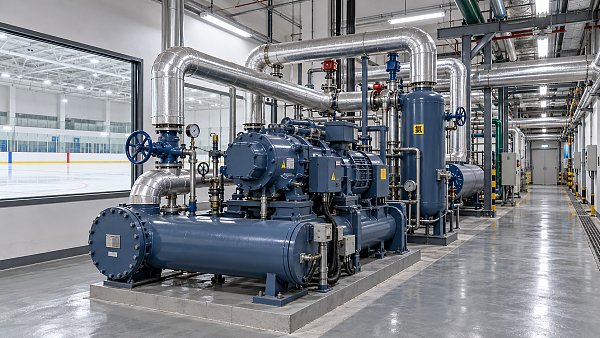
 Oct 26, 2026Missouri’s Kirkwood Ice Arena Replaces R-22 With Ammonia in $5.2 Million RenovationKirkwood Ice Arena replaces R-22 with ammonia in a $5.2 million renovation. Discover how the upgrade improves ice-making performance and energy efficiency.
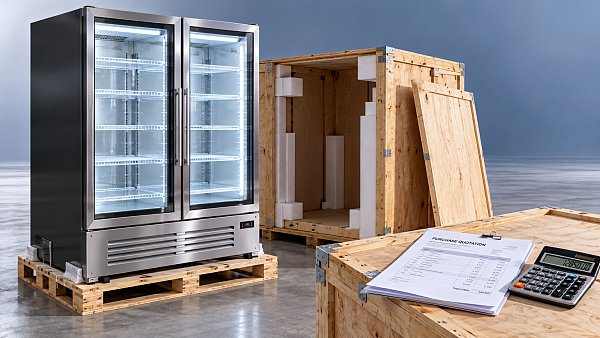
 Oct 26, 2026Private Label Sourcing Costs: Unit Prices, Agent Fees, and ShippingCompare private label sourcing price factors, from unit costs and agent fees to shipping and duties. Discover how to calculate landed costs and avoid hidden charges before you buy.
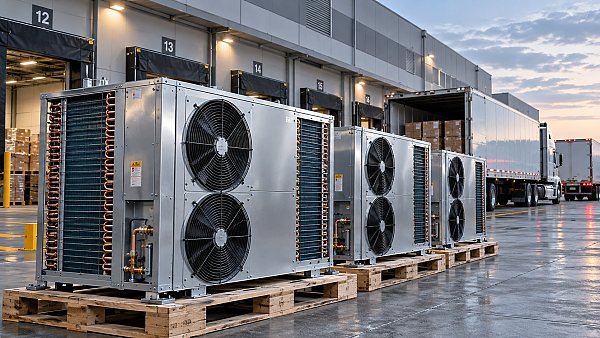
 Oct 25, 2026U.S. Removes 50% Tariff on Selected Canadian Refrigeration Equipment and MachineryU.S. tariff relief removes a 50% duty on selected Canadian refrigeration equipment and machinery. Explore product coverage and potential savings for your next equipment purchase.
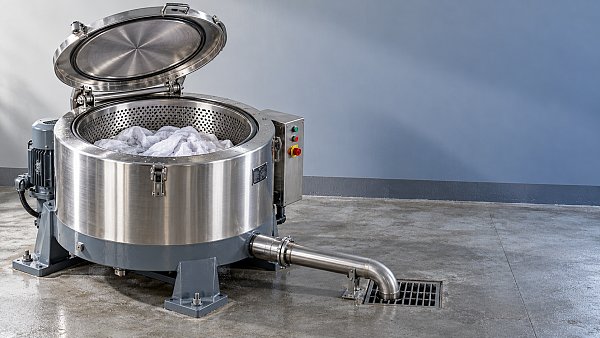
 Oct 25, 2026Commercial Centrifugal Dryer Prices: Capacity, Materials, and Setup CostsCompare commercial centrifugal drying price factors, from capacity and stainless steel to installation costs. Discover how to assess quotes, avoid hidden expenses, and choose the right laundry extractor.
 Oct 24, 2026Shanghai Aorun’s Inorganic Radiative Cooling Coating Earns “World First” CertificationShanghai Aorun’s inorganic radiative cooling coating earns “world first” certification. Explore its potential to reduce cooling loads in refrigeration and cold-chain facilities.
 Oct 24, 2026Choosing an Unmanned Retail Systems Supplier: Integration and Support ChecksChoosing an unmanned retail systems supplier? Discover integration tests, offline checks, and support requirements to reduce downtime and select a reliable partner before you scale.
 Oct 23, 2026TOMRA Signs to Become Preferred Reverse Vending Supplier for Major UK Retail ChainTOMRA signs a letter of intent for around 2,000 reverse vending machines for a major UK retailer. Explore what it could mean for procurement ahead of the expected 2027 deposit return scheme.
 Oct 23, 2026Industrial Tumble Dryers: Is a Stainless Steel Drum Enough for Your Laundry?Industrial tumble dryers with stainless steel drums need more than durable surfaces. Discover how airflow, moisture control, and lifecycle costs help you choose the right laundry solution.
 Oct 22, 2026Chemours Faces Investor Lawsuit Over US Sales of Opteon RefrigerantsChemours faces an investor lawsuit over US Opteon refrigerant sales. Explore alleged inventory risks tied to 2025 stockbuilding and questions over its 2026 earnings guidance.
 Oct 22, 2026Commercial Dry Cleaning Equipment in the Middle East: Utility and Service ChecksCompare commercial dry cleaning equipment Middle East suppliers offer. Check utilities, summer cooling, solvent compatibility and local service to avoid costly downtime. Buy with confidence.
 Oct 21, 2026Rivacold Introduces Patented ADAPTIX Technology for CO2 Refrigeration EfficiencyDiscover how Rivacold’s patented ADAPTIX technology enhances transcritical CO2 refrigeration efficiency, with claimed energy savings of up to 30% alone and 40% when combined with other solutions.
 Oct 21, 2026Choosing Department Store Checkout Systems: Inventory Sync and Returns ManagementCompare retail checkout systems for department stores to improve inventory sync, control returns, and reduce refund errors. Discover practical tests to choose the right solution.
 Oct 20, 2026Wiesbaden Supermarket Claims First All-CO2 Refrigeration, Heating and Cooling OperationWiesbaden supermarket claims all-CO2 refrigeration, heating and cooling. Explore what this approach could mean for retail procurement and the EU F-Gas transition.
 Oct 20, 2026Commercial Laundry Equipment in Europe: Comparing Total Cost of OwnershipCompare commercial laundry equipment Europe buyers can trust. Uncover installation, energy and service costs to find the lowest lifetime cost per kilogram and invest with confidence.
 Oct 19, 2026CO2, Ammonia, or HFO Blends: Choosing Refrigeration Systems for Cold RoomsExplore refrigeration system selection by refrigerant type: compare CO2, ammonia, and HFO blends for cold rooms to balance efficiency, safety, and lifecycle costs. Make a confident choice.
 Oct 18, 2026Retail IoT Interconnection Architecture: How POS and Sensors Exchange DataExplore retail IoT interconnection architecture to connect POS and sensors securely, prevent duplicate updates, and keep stores resilient during outages. Discover practical design strategies.
 Oct 17, 2026Cloud-Based Smart Retail Systems: Evaluating POS Integration and Offline ReliabilityCloud-based smart retail systems: compare POS integration, offline payments, and data recovery. Discover what to test before choosing a platform that keeps your stores selling.
 Oct 16, 2026Choosing Barcode Printers for Dispatch Hubs: Speed, Labels, and IntegrationExplore physical dispatch hubs equipment with our barcode printer guide. Compare speed, label durability, and integration to reduce downtime and keep shipments moving.
 Oct 15, 2026Edge AI Retail Systems: Choosing Hardware for In-Store Video AnalyticsChoose hardware for edge AI retail systems with confidence. Discover how to validate video decoding, model performance, latency, and cooling for reliable in-store analytics.
 Oct 14, 2026Retail Equipment for Store Fit-Outs: How to Budget Beyond the Purchase PriceCompare retail equipment solutions for store fit out beyond purchase price. Uncover installation, running and maintenance costs to budget smarter and avoid costly surprises.
 Oct 13, 2026Choosing Combi Ovens for Commercial Kitchens: Capacity and Utility RequirementsChoose combi ovens that match peak kitchen demand. Discover how to assess usable capacity, power, water, drainage, and ventilation to avoid costly upgrades and buy with confidence.
 Oct 12, 2026How to Size Gas-Heated Industrial Drying Machines for Laundry ThroughputIndustrial drying machines gas heated: learn how to size capacity for peak laundry throughput, moisture removal, airflow, and reliable operations.
 Oct 11, 2026Linen Processing Equipment Prices: Cost Drivers and Budget Benchmarks for BuyersLinen processing equipment price guide: explore cost drivers, budget benchmarks, throughput planning, utility needs, and smart buying tips for efficient laundry operations.
 Oct 10, 2026What to Evaluate in a Global Solution Comparison Platform Before Shortlisting VendorsSolution comparison platform global guide: evaluate TCO, compliance, integrations, reliability, and local service to shortlist vendors with confidence.

Editor's Selection
The Archive Newsletter
Critical industrial intelligence delivered every Tuesday. Peer-reviewed summaries of the week's most impactful logistics and market shifts.