
China Grants New CO2 Display Case Patent
by
Published
Views:
On June 5, 2026, Aucma and Aucma Smart Cold Chain received authorization for patent CN224320466U covering an energy-saving temperature control structure for refrigerated display cabinets. The update matters beyond a single patent filing: it points directly to a persistent operating issue in open air-curtain display cases, especially where frequent opening affects temperature uniformity and recovery speed. For manufacturers, exporters, supermarket equipment buyers, and cold-chain solution providers serving the EU, Middle East, and Southeast Asia, the development is worth watching because it links temperature control performance with both energy-efficiency upgrading and F-Gas-compliant substitution pathways.
What the patent authorization confirms
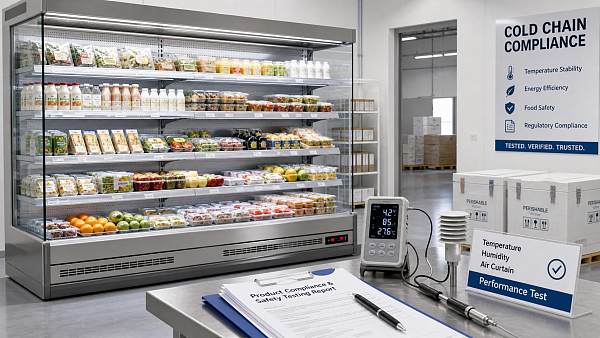
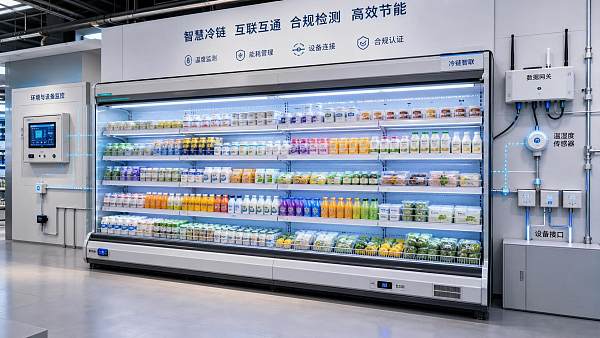
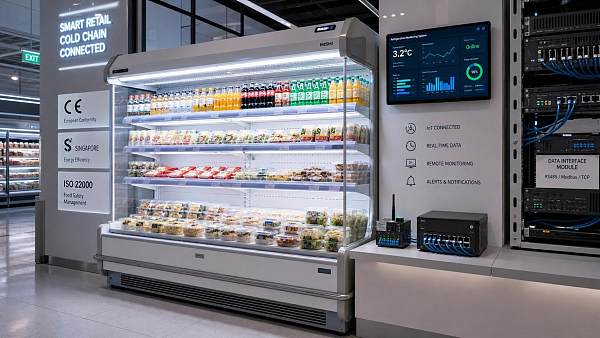
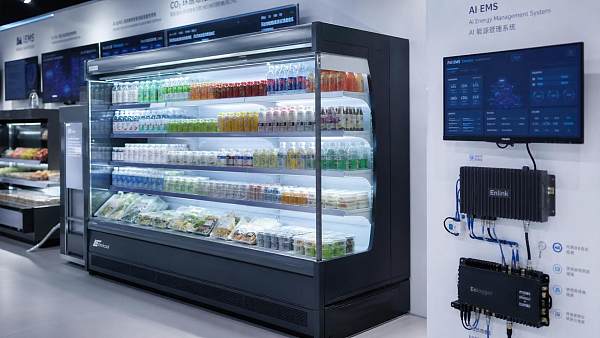
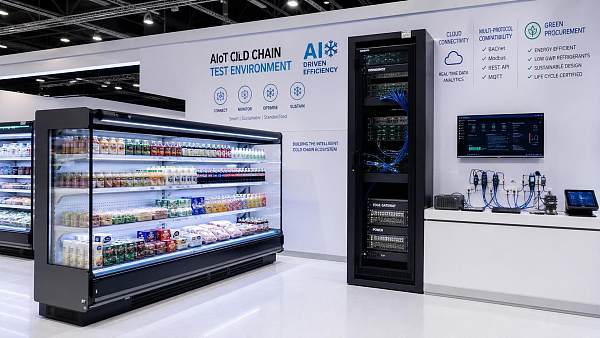
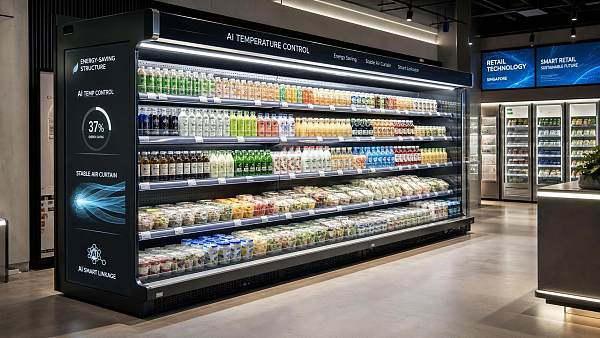
The confirmed event is the authorization announcement of patent CN224320466U to Aucma and Aucma Smart Cold Chain on June 5, 2026. The patent focuses on an energy-saving temperature control structure for refrigerated display cabinets. According to the provided summary, the design combines multi-point temperature sensors with an adjustable-angle airflow guide plate. The stated effect is a clear improvement in temperature uniformity and recovery speed under frequent opening conditions. The information provided also indicates that the technology targets a core pain point in open air-curtain display cases and is positioned as a compliant alternative route for exports to the EU, Middle East, and Southeast Asia, while also supporting energy-efficiency upgrades.
Why different market participants may pay attention
Display case manufacturers and system integrators
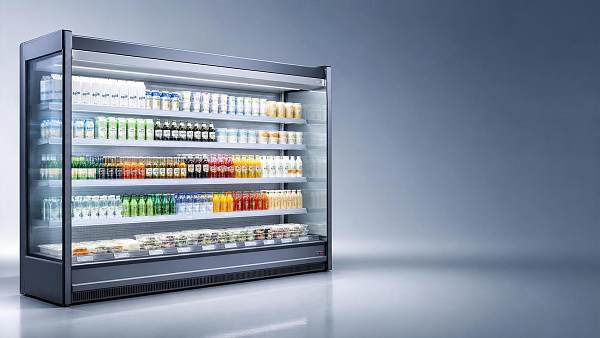
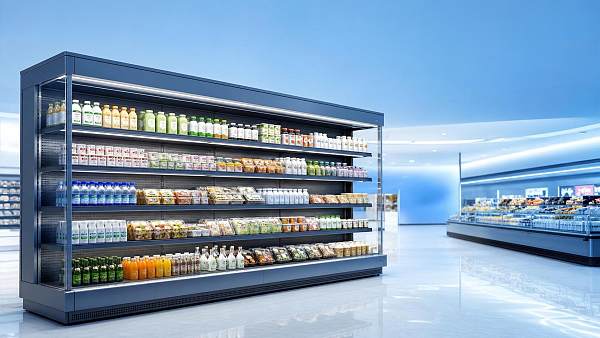
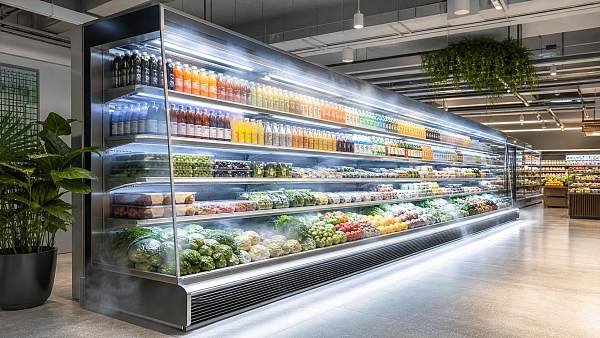
From an industry perspective, this group may be affected first because the patent addresses a known performance bottleneck in open air-curtain display cases: keeping temperature stable when usage is intensive. The potential impact is concentrated in product design, control architecture, airflow management, and model positioning. What deserves closer attention is whether similar product lines will increasingly emphasize sensor layout, airflow control, and recovery performance as differentiating features in commercial bidding and export discussions.
Export-oriented equipment suppliers
For suppliers targeting overseas supermarket customers, the relevance lies in the link between CO2-class refrigeration equipment, F-Gas compliance alternatives, and operational performance. The impact is likely to show up in customer communication, export documentation preparation, and product portfolio planning for the EU, Middle East, and Southeast Asia. Observably, the key issue is not only whether a system is compliant in principle, but whether it can maintain stable temperature control in real retail use scenarios.
Retail buyers and supermarket operators
Procurement teams and end users may pay attention because open display equipment is judged not just by cabinet type, but by actual temperature consistency and recovery after frequent access. The business impact would mainly fall on equipment selection, tender specifications, and after-sales performance evaluation. What deserves closer attention is whether buyers start asking more specifically about temperature recovery behavior and control structure rather than focusing only on basic refrigeration configuration.
Service providers in cold-chain delivery and maintenance
For installation, commissioning, and maintenance providers, the immediate relevance comes from the combination of multi-point sensing and adjustable airflow guidance. The impact may appear in commissioning logic, field tuning, and service documentation. Analysis shows that if temperature precision and recovery become more central to purchasing decisions, service teams may need to pay closer attention to how control settings and airflow adjustments are explained and maintained during delivery.
What companies should monitor in practice
How the technology is described in future official communications
Analysis shows that companies should distinguish between the fact of patent authorization and any later commercialization, certification, or market rollout language. The current confirmed information is limited to the patent authorization and the technical direction described in the summary. Businesses should continue monitoring whether future official statements provide more detail on product application, model coverage, or market implementation.
Which export scenarios are most directly connected
What deserves closer attention is the export relevance highlighted in the summary: the EU, Middle East, and Southeast Asia. For firms already serving these regions, the practical issue is how to map this kind of temperature-control upgrade to customer requirements, tender language, and compliance discussions. The key is to separate broad market messaging from concrete project needs in specific retail environments.
Whether procurement standards begin to shift toward control performance
Observably, the patent summary emphasizes temperature uniformity and recovery speed under frequent opening conditions. Companies involved in sourcing, sales engineering, or bid preparation should therefore watch whether customer questions evolve from general refrigeration capacity toward more detailed expectations around control precision, airflow organization, and operating stability in open-display use.
Supplier coordination and delivery-side preparation
For manufacturers and channel partners, the practical response is less about broad strategy statements and more about readiness in technical communication. That includes keeping product descriptions, technical files, and customer-facing explanations aligned with confirmed facts. Where export projects are involved, firms should also pay attention to whether supporting documents, specification sheets, and delivery commitments can clearly address the claimed application value without overstating what has not yet been officially detailed.
How this development is best understood at this stage
Analysis shows that this news is better understood as a meaningful technical and market signal rather than a fully proven industry outcome. The signal is clear: in open air-curtain display cases, temperature stability under high-frequency use is becoming central to the value proposition of CO2-based and energy-saving equipment. At the same time, the currently confirmed information does not by itself establish market adoption scale, final customer acceptance, or broader competitive reshaping. That is why the development is important, but still requires continued observation.
It is more appropriate to understand this as a sign that product competitiveness in commercial refrigeration may increasingly be judged at the intersection of compliance direction, energy efficiency, and real operating performance. Whether that signal turns into wider specification changes or stronger demand in export markets will depend on later product deployment and customer response, which are not confirmed in the current input.
What this means for the industry now
At this stage, the patent authorization matters because it frames a concrete response to a practical weakness in open air-curtain display cases: maintaining accurate and recoverable temperature control when access is frequent. For the industry, the value of the news lies less in headline novelty and more in what it suggests about the next layer of competition in refrigerated display equipment. A rational reading is that this is a noteworthy short-term development with potential longer-term implications, especially for export-facing suppliers and retail refrigeration buyers, but it should still be tracked through subsequent official disclosures and market application evidence.
Basis of this article and follow-up verification
This article is based on the user-provided news title, event date, and event summary concerning the June 5, 2026 patent authorization of CN224320466U to Aucma and Aucma Smart Cold Chain. For this type of industry update, commonly relevant source categories would include official patent announcements, company announcements, industry association information, authoritative media coverage, and standards-related documents. No specific official source link was provided in the input, so further verification remains necessary. Follow-up attention should focus on subsequent official disclosures, any clarified product application scope, and how the technology is referenced in export, compliance, or customer procurement contexts.
Recommended News
 Oct 25, 2026U.S. Removes 50% Tariff on Selected Canadian Refrigeration Equipment and MachineryU.S. tariff relief removes a 50% duty on selected Canadian refrigeration equipment and machinery. Explore product coverage and potential savings for your next equipment purchase.
 Sep 21, 2026How to Evaluate a Display Chiller System Manufacturer for Retail Food ProjectsChoose a display chiller system manufacturer with confidence. Compare thermal performance, energy efficiency, service support, and rollout capability for retail food projects.
 Sep 08, 2026How to Specify Display Refrigeration Systems for Supermarkets and Convenience StoresDisplay refrigeration systems: learn how to specify efficient, reliable solutions for supermarkets and convenience stores, balancing food safety, energy use, layout, controls, and lifecycle cost.
 Aug 12, 2026How to Choose Plug-In Retail Display Coolers for Small Stores and Grab-and-Go AreasRetail display coolers plug in buying guide for small stores: compare cabinet types, temperature control, energy costs, installation, and food safety to choose a smarter grab-and-go solution.
 Jul 17, 2026How to Choose Multideck Display Chillers: Key Sizes, Temperatures, and Merchandising FeaturesMultideck display chillers buying guide: compare key sizes, temperature stability, airflow recovery, and merchandising features to improve food safety, product visibility, and retail sales.
 Jul 12, 2026Air Curtain Refrigeration for Dairy: When Open Display Cases Work Best for Fresh Milk and YogurtAir curtain refrigeration for dairy works best in stable, high-turn stores. Learn when open cases protect fresh milk and yogurt, boost visibility, and drive more sales.
 Jul 11, 2026Japan Clears JIS T 2304:2026 for Open Air-curtain CasesJapan clears JIS T 2304:2026 for open air-curtain cases, bringing new air-curtain stability tests and tighter temperature rules. See what importers, manufacturers, and buyers must do before October 1, 2026.
 Jul 09, 2026Multideck Display Chillers With LED Lighting: Key Specs for Merchandising and Energy UseMultideck display chillers LED lighting guide covering key specs for merchandising, temperature stability, and energy use. Compare cabinet performance and choose more efficient retail refrigeration.
 Jul 08, 2026How to Evaluate a Multideck Refrigerated Display Manufacturer for Open Air-Curtain StoresMultideck refrigerated display manufacturer evaluation starts with real-store proof. Learn how to compare airflow, temperature stability, compliance, and lifecycle cost before you buy.
 Jul 05, 2026Open Air-Curtain Case Demand Rises 29% in Heatwave ShiftOpen air-curtain case demand rises 29% as heatwaves reshape retail refrigeration across the EU, Middle East, and Southeast Asia. See what it means for energy compliance, HVAC load, and smarter buying decisions.
 Jul 05, 2026Multideck Display Chillers With Doors vs Open Cases: Which Saves More Energy?Multideck display chillers with doors vs open cases: discover which saves more energy, lowers TCO, improves food safety, and fits modern retail sustainability goals.
 Jul 04, 2026Open Air-curtain Display Case Demand Rises 29%Open Air-curtain Display Case demand rises 29% as heat drives supermarket upgrades. Learn how CFD-optimized designs and EN 16877:2025 tender requirements are reshaping buying decisions.
 Jul 02, 2026Singapore Sets SS 685:2026 Gate for Open Display CasesSingapore SS 685:2026 reshapes market access for open display cases. Learn how telemetry, stability logging, and API compliance can affect imports, sourcing, and sales.
 Jul 01, 2026Singapore Requires Interop Certification for Open Display CasesSingapore requires interop certification for open display cases in the NRF APAC 2026 Smart Store Pilot. Learn how MQTT v5.1, edge AI logging, and compliance rules may impact retailers and suppliers.
 Jun 30, 2026IMDA Sets Interop Rule for Open Air-curtain CasesIMDA Sets Interop Rule for Open Air-curtain Cases: learn how ASEAN’s 2027 certification mandate could impact market access, BMS connectivity, APIs, and procurement decisions.
 Jun 29, 2026Singapore Tightens Rules for Open Display CasesSingapore tightens rules for Open Display Cases as IMDA mandates interoperability certification from Q4 2026. See who is affected, key protocols, and how to prepare now.
 Jun 28, 2026NRF APAC 2026 Sets Interoperability Bar for Open CasesNRF APAC 2026 sets a new benchmark for Open Air-curtain Display Cases, highlighting interoperability with edge AI vision and energy APIs. See what this means for Southeast Asia retail cold-chain buyers and suppliers.
 Jun 27, 2026NRF APAC 2026 Adds Cold Chain AI Testing ZoneNRF APAC 2026 adds a Cold Chain AI testing zone, requiring Open Air-curtain Display Cases to prove interoperability and cloud readiness. See what it means for compliance, procurement, and market access.
 Jun 27, 2026How to Choose an Air Curtain Display Refrigeration Case for Grab-and-Go FoodsAir curtain display refrigeration buyers can learn how to choose the right case for grab-and-go foods, balancing temperature stability, merchandising, energy efficiency, and store layout.
 Jun 26, 2026NRF APAC Puts AI Cold Chain Specs Into Retail BidsNRF APAC puts AI cold chain specs into retail bids, signaling new compliance pressure for Open Air-curtain Display Cases. Learn how certification, CFD reports, and tender readiness may shape 2026 supermarket projects.
 Jun 25, 2026NRF APAC Puts AI Cold Chain Displays in FocusNRF APAC puts AI cold chain displays in focus, highlighting rising demand for integrated open air-curtain display cases, CFD airflow tools, and AI energy forecasting in Southeast Asia retail.
 Jun 24, 2026NRF APAC Debut Puts AI Cold Chain Cases in FocusNRF APAC spotlights AI cold chain and Open Air-curtain Display Cases, signaling new procurement priorities in retail. See what buyers, suppliers, and service teams should watch next.
 Jun 23, 2026NRF APAC Puts AI Cold Chain Cases in FocusNRF APAC puts AI cold chain cases in focus, spotlighting open air-curtain display cases, energy efficiency, and AI recovery speed—see what this means for 2026 retail refrigeration bids.
 Jun 23, 2026How to Choose Food Retail Equipment for Small Stores: Layout, Cooling, and Display BasicsFood retail equipment for small stores should fit layout, cooling, and display needs. Learn how to reduce waste, improve flow, cut energy costs, and choose smarter equipment.



Editor's Selection
The Archive Newsletter
Critical industrial intelligence delivered every Tuesday. Peer-reviewed summaries of the week's most impactful logistics and market shifts.