
Supermarket Display Cases: Key Temperature, Airflow, and Merchandising Issues to Check
by
Published
Views:
For quality control and safety work, supermarket display cases are not just shelves with cooling. They hold the line on food safety, shelf life, store image, and daily energy cost.
A case can look cold from the aisle and still run warm at the product level. That gap is where spoilage, compliance issues, and customer complaints usually begin.
In CRSS research across commercial cold chains, one pattern shows up again and again: temperature, airflow, and merchandising behavior are tightly linked. If one slips, the others usually follow.
The good news is that most problems in supermarket display cases can be spotted early with a few disciplined checks. What matters is checking the right points, at the right time, in the right order.
Start with the temperature that products actually feel
A display case controller may show an acceptable number, but that does not always reflect the real product temperature. Air temperature swings faster than food temperature, especially during restocking and peak traffic.
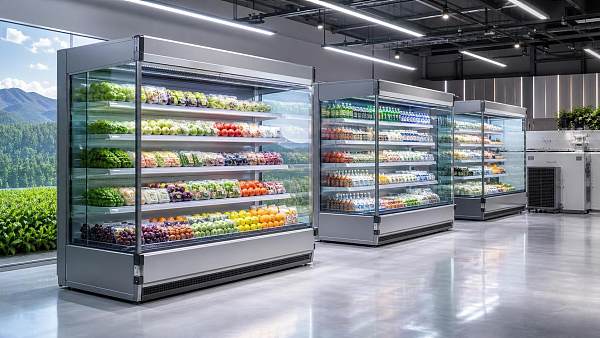
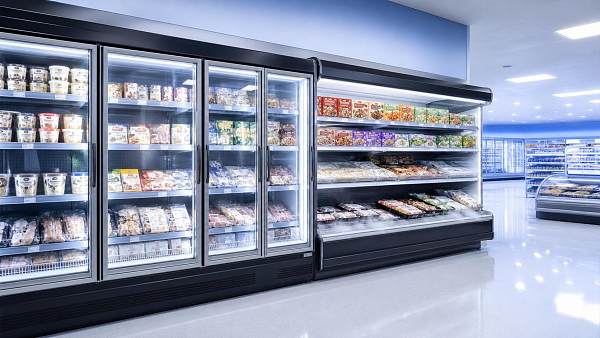
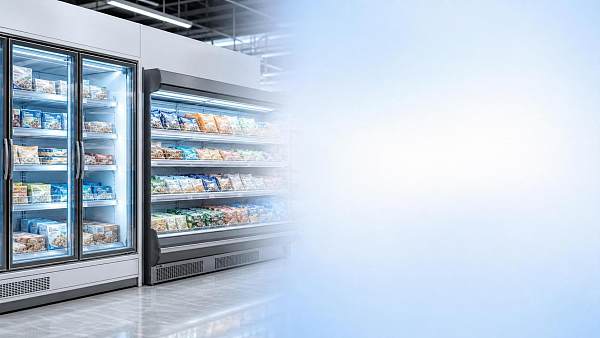
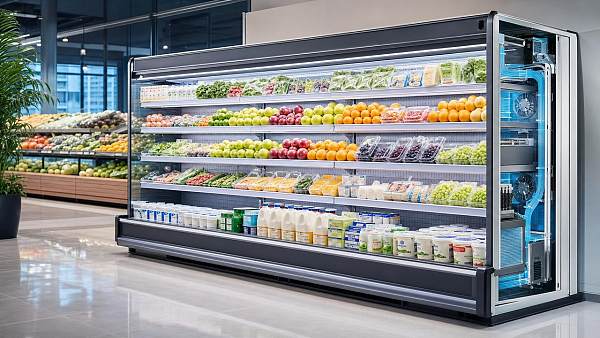
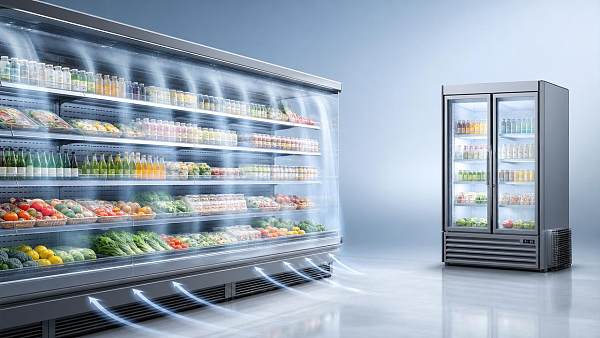
[Image 01: Product temperature spot-check points inside open and glass-door supermarket display cases]
For open-front and multideck supermarket display cases, check warm zones first. Front edges, top shelves, corners, and areas near lights often drift out of range before the center does.
- Measure product temperature at the front row, top shelf, and return-air side. One center reading is not enough for supermarket display cases during busy trading hours.
- Compare controller readings with a calibrated probe and a data logger. If the gap is repeated, check sensor position, defrost settings, and case loading practices.
- Review temperature recovery after restocking. A case that returns slowly may still pass morning checks but fail later when customer traffic keeps breaking the air curtain.
- Separate short-term door opening spikes from chronic warming. Repeated drift at the same shelf usually signals airflow blockage, fan weakness, or poor product arrangement.
- Check night set-back and morning pull-down performance. Weak recovery before opening often means supermarket display cases start the day already behind the safe temperature target.
One common miss is relying on a single reading taken right after a defrost cycle ends. That moment can look stable even when the case spends too much time outside target later in the day.
Watch airflow before blaming refrigeration capacity
Many underperforming supermarket display cases do not have a cooling shortage. They have an airflow problem. In open cases, the invisible air curtain is the real barrier protecting chilled food.
CRSS cold-chain analysis often highlights this point. Once airflow is disturbed by overloading, damaged baffles, or nearby HVAC drafts, temperature stability can collapse surprisingly fast.
- Keep return-air grilles and discharge outlets fully clear. Even a small blockage from packaging or price strips can weaken airflow balance across supermarket display cases.
- Check for strong ceiling vents, entrance drafts, or fans aimed at the case. External air movement can tear the air curtain and create warm pockets.
- Inspect evaporator fans for speed consistency, noise, and vibration. A fan that still spins may already be underperforming and reducing cold-air coverage.
- Look at shelf extenders, dividers, and promotional signs. These often seem harmless, but they can redirect discharge air and upset temperature uniformity.
- Confirm night blinds or covers are used correctly. Poor closing practice increases heat gain overnight and makes next-day supermarket display cases slower to recover.
If one section warms up repeatedly, smoke-pencil or airflow visualization checks can be more useful than immediately calling for compressor adjustments. Air has to go where the design intended.
A quick floor-level scenario
A dairy multideck near the entrance may pass routine checks at 8 a.m. By noon, warm outside air, cart traffic, and frequent product handling can break the air curtain over and over.
In that case, the fix may not be colder settings. It may be relocating promotions, redirecting supply air, reducing stack height, or changing restocking timing.
Merchandising habits can quietly create food safety risk
Merchandising is often treated as separate from case performance, but it directly changes how supermarket display cases breathe. Good visual presentation means little if products sit in unstable temperatures.
Overfilling is one of the most expensive habits on the sales floor. It may look abundant, yet it blocks air paths, slows pull-down, and hides older stock.
- Respect load lines and fill limits marked by the manufacturer. Stock above them can spill into the air curtain and reduce protection across the whole case.
- Avoid tight packing against the back wall or discharge zone. Supermarket display cases need open space for air to circulate around every product layer.
- Use first-expiry, first-out routines that stay visible during rush periods. Poor rotation hides aging stock in colder-looking but warmer product positions.
- Do not mix temperature-sensitive items with less sensitive ones just for appearance. Product risk should shape shelf placement inside supermarket display cases.
- Keep temporary displays and cross-merchandising items away from return-air paths. Small add-ons often create big temperature inconsistencies without being noticed quickly.
This is especially important for ready-to-eat foods, dairy, deli packs, and fresh meat. Products with shorter tolerance for temperature abuse should get the most stable zones, not the most visible ones.
When promotions create hidden stress
High-traffic promotions often raise handling frequency and extend door-open time on adjacent cases. That creates extra thermal load even if the promoted product itself is elsewhere.
For CRSS-tracked retail environments, this is where operations, merchandising, and equipment performance meet. A good promotion plan should include a quick cold-chain impact check.
Check the small details that are often skipped
Some of the biggest failures in supermarket display cases start with small mechanical or housekeeping issues. They are easy to miss because the case still appears to be running.
- Clean coils, grilles, and fan guards on schedule. Dirt lowers heat transfer, weakens airflow, and quietly pushes supermarket display cases toward unstable performance.
- Inspect shelf-edge labels and magnetic strips. Loose materials can flutter into the air stream and cause recurring warm bands across specific facings.
- Review alarm logs instead of only active alarms. Short repeated events often reveal early instability before a full failure becomes obvious.
- Check case leveling. A slight tilt can affect drainage, door closure, and even how air moves across some supermarket display cases.
Match checks to real operating scenarios
Static inspections are useful, but live conditions tell the real story. A case behaves differently during morning stocking, lunch rush, delivery windows, and evening recovery.
That is why supermarket display cases should be reviewed under stress, not only when the aisle is quiet and freshly faced.
- Observe one full restocking cycle from opening to temperature recovery. This reveals whether product loading patterns are overwhelming the case design.
- Check cases during peak customer traffic, not just before opening. Busy periods expose airflow disruption and real operating weaknesses much faster.
- Review adjacent equipment conditions. HVAC vents, nearby ovens, and even unmanned retail coolers can influence the microclimate around supermarket display cases.
- Use simple trend logs for recurring issues by time, shelf, and product type. Patterns are easier to fix than isolated complaints.
In broader commercial environments, CRSS also sees value in linking refrigeration checks with POS timing, labor routines, and smart monitoring. The more connected the store data is, the faster root causes appear.
A practical handoff point
If a case repeatedly fails after merchandising resets, the next step is not another visual tidy-up. It is a structured review of sensor accuracy, airflow path, loading height, and nearby ambient influence.
What to prioritize first
When time is limited, focus on the checks that most often change outcomes in supermarket display cases: actual product temperature, blocked airflow, overloading, repeated recovery delays, and overlooked maintenance basics.
That approach is practical, fast, and usually enough to separate a simple operating issue from a deeper equipment problem.
- Start with the warmest shelf positions and highest-risk foods. Fixing the weakest zone gives the fastest improvement in safety control.
- Then verify airflow paths, fan performance, and load height. Most supermarket display cases lose stability here before they lose refrigeration capacity.
- Finally, align merchandising, maintenance, and monitoring routines. Consistency across teams is what keeps improvements from slipping back in two weeks.
When these checks become routine, supermarket display cases stop being a constant source of surprise. They become more stable, easier to manage, and much more reliable for food safety and store performance.
The next useful step is simple: pick one high-risk case, review it during live trading, and compare product temperature, airflow condition, and merchandising practice at the same time. That single exercise usually shows where action should begin.
Recommended News
 Jun 20, 2026Japan Opens Green Subsidy for Open Display CasesJapan opens green subsidy for open display cases, offering 35% support for qualified R290 and CO2 models. Learn how importers and ODMs can act fast on compliance and procurement opportunities.
 Jun 20, 2026Display Freezers vs Open Display Cases: Which Is Better for Frozen Food Merchandising?Display freezers vs open display cases: discover which option better protects frozen food quality, cuts energy loss, and boosts merchandising performance for commercial buyers.
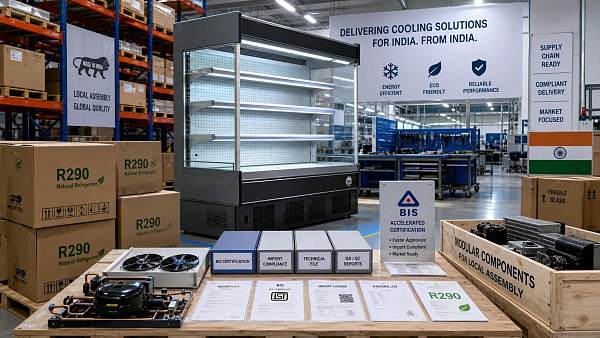
 Jun 19, 2026India Fast-Tracks BIS Approval for R290 Display CasesIndia fast-tracks BIS approval for R290 display cases, opening a green-channel path that may cut import costs and reshape sourcing, certification, and assembly plans in India.
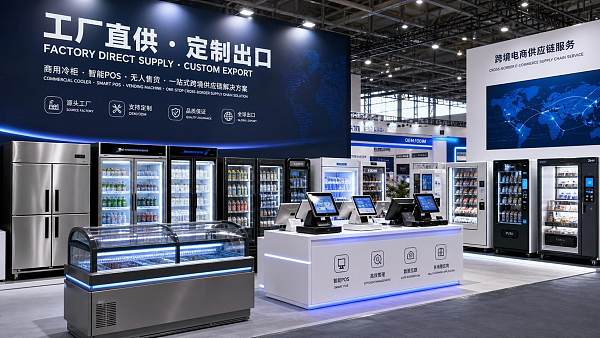
 Jun 18, 20261688 Debuts Factory-Direct Custom Export Zone at Guangzhou Fair1688 Debuts Factory-Direct Custom Export Zone at Guangzhou Fair, spotlighting factory-direct supply, cross-border customization, and market-specific export readiness for global buyers and suppliers.
 Jun 18, 2026Display Freezers Buying Guide: Glass Door vs Open Air-Curtain for Retail MerchandisingDisplay freezers buying guide: compare glass door vs open air-curtain models for better energy savings, temperature control, and retail merchandising performance.
 Jun 17, 20261688 Debuts Factory-Direct Cross-Border Customization1688 Debuts Factory-Direct Cross-Border Customization, highlighting compliance-ready sourcing, drawing-based customization, and fast small-batch supply for commercial equipment buyers.
 Jun 16, 2026Maersk’s Red Sea Return May Cut Display Case Freight 30%Open Air-curtain Display Cases freight may drop 30% as Maersk resumes Red Sea routes in Q3. See how lower 40HQ rates and 5–7 day faster transit could reshape shipping plans.
 Jun 15, 2026Maersk’s Red Sea Return May Cut Display Case Rates 30%Open Air-curtain Display Cases may see rates drop 25%–30% as Maersk resumes Red Sea services. Learn what this means for Asia–Middle East shipping costs, timing, and procurement decisions.
 Jun 14, 2026Maersk Red Sea Return Pressures Display Case FreightMaersk Red Sea Return Pressures Display Case Freight as Red Sea and Suez routing resumes. Learn how exporters can cut freight costs, optimize contracts, and protect delivery timing.
 Jun 14, 2026What Does Retail Centrifugal Force Mean in Store Planning and Product Display?Retail centrifugal force shapes how shoppers move beyond main aisles into high-value zones. Learn how layout, display, checkout, and cold-chain design drive flow, conversion, and efficiency.
 Jun 11, 2026Thailand Enforces AI Module Rule for Open Display CasesThailand enforces AI module rule for Open Display Cases, requiring TIS 2756-2567 compliance and real-time temperature reporting. See key import risks, buyer impacts, and compliance steps now.
 Jun 10, 2026Thailand Enforces AI Module Rule for Open Display CasesThailand Enforces AI Module Rule for Open Display Cases from June 1, 2026. Learn how the new compliance rule impacts exporters, certification, procurement, and cold-chain delivery planning.
 Jun 10, 2026Supermarket Display Cases Explained: Open, Air-Curtain, and Glass-Door Models ComparedSupermarket display cases compared: discover how open, air-curtain, and glass-door models differ in energy use, temperature control, and sales performance to choose the best fit.
 Jun 09, 2026Thailand Tightens Import Rules for Open Display CasesThailand tightens import rules for open display cases from Oct. 1, 2026. Learn how edge AI temperature control impacts compliance, licensing, sourcing, and cold-chain procurement.
 Jun 08, 2026Supermarket Display Cases: Key Temperature, Airflow, and Merchandising Issues to CheckSupermarket display cases: learn the key temperature, airflow, and merchandising checks that protect food safety, cut energy waste, and improve retail performance.
 Jun 06, 2026China Grants New CO2 Display Case PatentChina Grants New CO2 Display Case Patent: discover how Aucma’s new refrigerated display cabinet technology could improve temperature recovery, energy efficiency, and export competitiveness.
![]() Jun 04, 2026Display Freezers Explained: Upright vs Island vs Glass-Door Models for Retail UseDisplay freezers compared: upright, island, and glass-door models for retail use. Learn which format improves visibility, energy control, workflow, and frozen sales.
Jun 04, 2026Display Freezers Explained: Upright vs Island vs Glass-Door Models for Retail UseDisplay freezers compared: upright, island, and glass-door models for retail use. Learn which format improves visibility, energy control, workflow, and frozen sales. Jun 02, 2026Vietnam Ends 3.5% RCEP Duty on Cold Chain GearVietnam ends 3.5% RCEP duty on eligible China-origin cold chain gear, boosting cost advantages for supermarkets, convenience stores, and import partners.
 May 31, 2026What makes retail display coolers lose cold air?Retail display coolers losing cold air? Discover key causes—from air curtain leaks to gaskets, fans, loading, and condensers—and fix faults faster.
 May 29, 2026Are display freezers raising your energy costs?Display freezers may be silently driving up energy costs. Learn how airflow, maintenance, controls, and smart upgrades cut waste without hurting sales.
![]() May 25, 2026China to Release First Integrated GBA Foreign Trade Data, Boosting Open Air-Curtain Display Cases Export CredibilityChina's first integrated GBA foreign trade data boosts credibility for open air-curtain display cases exporters — validate cluster strength, enhance EU/UK market access & buyer trust.
May 25, 2026China to Release First Integrated GBA Foreign Trade Data, Boosting Open Air-Curtain Display Cases Export CredibilityChina's first integrated GBA foreign trade data boosts credibility for open air-curtain display cases exporters — validate cluster strength, enhance EU/UK market access & buyer trust. May 24, 2026How retail display equipment shapes store traffic and salesRetail display equipment drives store traffic, shopper flow, and sales. Discover how smarter layouts, cold display performance, and POS integration boost efficiency and conversion.
 May 22, 2026Retail display coolers can lift sales if placed rightRetail display coolers lift sales when placed strategically. Learn a practical checklist to improve visibility, impulse buys, traffic flow, and energy performance.


Editor's Selection
The Archive Newsletter
Critical industrial intelligence delivered every Tuesday. Peer-reviewed summaries of the week's most impactful logistics and market shifts.