
How commercial laundry equipment affects daily throughput
by
Published
Views:
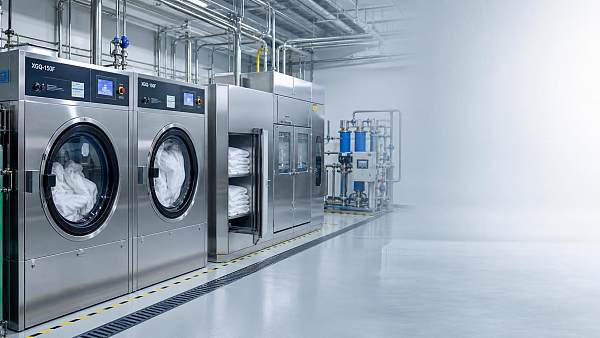
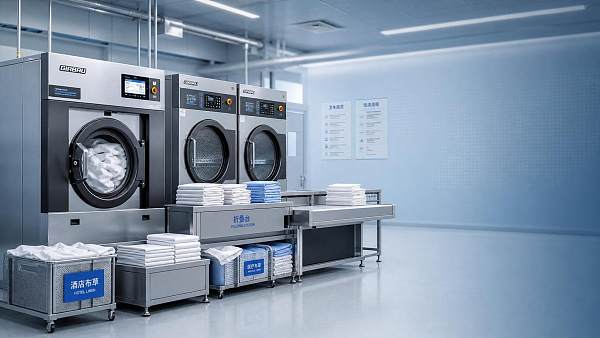
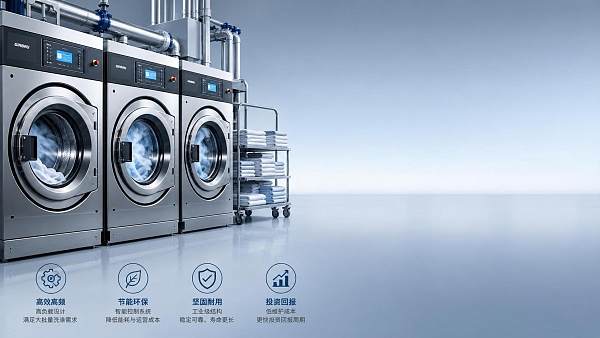
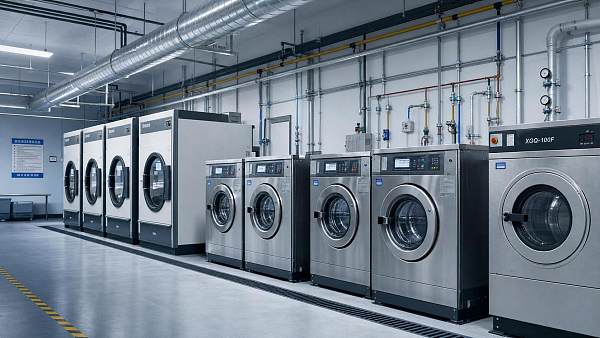
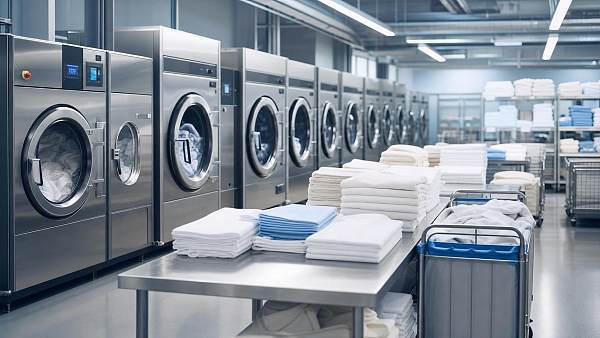
In busy hotels, hospitals, and laundries, commercial laundry equipment directly shapes daily throughput, labor efficiency, and linen quality. For operators, every cycle time, load capacity, and machine downtime can affect how smoothly the shift runs. Understanding these performance factors helps teams reduce bottlenecks, improve workflow, and keep high-volume laundry operations consistent, fast, and cost-effective.
Why commercial laundry equipment has such a direct impact on daily throughput
For operators, throughput is not only about how many kilograms a washer can hold. It depends on the full rhythm of washing, extracting, drying, sorting, rewash rates, loading discipline, and machine availability across an entire shift.
That is why commercial laundry equipment should be judged as a production system rather than as isolated machines. A fast washer with poor extraction may slow the dryer. A large dryer with uneven airflow may create rework. A weak finishing flow can leave clean linen waiting in carts.
CRSS follows this same systems logic across commercial assets. Just as cold-chain cabinets, smart vending, and POS terminals must perform under constant transactional pressure, high-frequency laundry operations depend on stable, measurable, repeatable output with controlled energy use and hygiene assurance.
Throughput is usually constrained by these five factors
- Cycle time mismatch between washers, dryers, and finishing stations, which creates queues even when installed capacity looks sufficient on paper.
- Underloading or overloading, both of which reduce usable capacity and often increase moisture retention, chemical waste, and operator intervention.
- Frequent stoppages caused by lint buildup, drain issues, door lock faults, or delayed maintenance on high-frequency equipment.
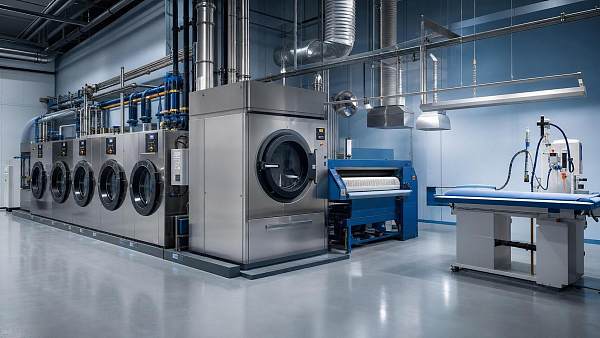
- Poor layout, where carts, soil sort, clean linen staging, and folding paths force unnecessary transport time between steps.
- Inconsistent programming, where wash formulas, water levels, extraction speed, and dry-end settings are not aligned with textile type and soil level.
Which machine characteristics matter most to operators on the floor?
Operators usually feel performance through time pressure. If loads stack up before lunch, if dryers still run late into the second shift, or if flatwork arrives damp at finishing, the issue is often linked to the design and programming of commercial laundry equipment.
The table below summarizes the machine factors that most strongly affect daily throughput in real operating conditions.
The key point is that throughput is cumulative. Small delays at each stage can erase the capacity benefit of larger machines. Operators should look at usable output per shift, not nameplate size alone.
What strong floor performance usually looks like
- Wash programs are locked by linen type, so staff do not improvise settings under pressure.
- Extraction levels are high enough to protect dryer capacity without overstressing delicate items.
- Dryers complete loads consistently, which helps folding and finishing teams maintain pace.
- Operators know the acceptable load factor for sheets, towels, uniforms, and mixed healthcare textiles.
How different operating scenarios change commercial laundry equipment priorities
Not every site should buy the same configuration. A hospital laundry values segregation, hygiene barriers, and process traceability. A hotel operation often prioritizes quick turnaround of sheets, duvet covers, and towels during peak occupancy. A retail laundry service may need flexibility for many fabric types and urgent customer loads.
The next comparison helps operators connect application needs with practical equipment priorities.
This is where procurement mistakes often begin. Operators sometimes buy for occasional peak volume only, then live with inefficient loads for the other 80% of the year. Better results come from sizing around average flow, peak windows, and recovery plans for overflow days.
Scenario-based warning signs
- Hotel sites should watch for morning congestion caused by too few dryers relative to washer output.
- Healthcare sites should avoid uncontrolled manual overrides that break hygiene protocols or wash validation.
- Mixed-service laundries should not rely on one formula set for all textiles, because that raises rewash and complaint rates.
How to evaluate capacity, cycle time, and workflow before purchase
When selecting commercial laundry equipment, operators should start with output goals per shift and then work backward. The right question is not “How big is the machine?” but “How many saleable or usable loads can the system finish within the labor window?”
A practical evaluation checklist
- Measure current daily volume by textile category, not just total kilograms. Sheets, towels, uniforms, and mats behave differently in wash and dry stages.
- Record actual cycle duration, including loading, unloading, transfer, and waiting time. Nameplate cycle times rarely show the real shift rhythm.
- Check residual moisture after extraction. This number strongly influences dryer occupancy and energy cost.
- Map the route of carts and staff. Extra transport distance often hides more lost minutes than wash chemistry settings.
- Review utility conditions such as drainage, steam, gas, power stability, ventilation, and water pressure before finalizing machine type.
CRSS applies this facility-thinking across commercial systems because output is always tied to the surrounding environment. In laundry, as in refrigerated display or high-frequency dishwashing, equipment only performs as promised when airflow, utilities, programming, and operator behavior are aligned.
Common selection mistakes that reduce throughput later
- Choosing oversized washers without matching drying and finishing capacity.
- Ignoring preventive maintenance access when placing machines too tightly.
- Focusing only on purchase price instead of water, energy, labor, and downtime cost over several years.
- Assuming household-style operating logic applies to industrial or on-premise laundry environments.
What role do controls, automation, and data play in high-frequency laundry?
Modern commercial laundry equipment affects throughput not only through mechanical power but also through control quality. Programmable formulas, error logs, usage counters, and network-ready monitoring help operators standardize results across shifts and reduce avoidable delays.
This matters especially in facilities where labor turnover is high. If settings depend on memory alone, throughput becomes unstable. If programs are preconfigured for textile group, temperature target, and extraction profile, operators can sustain output with fewer judgment errors.
Useful control features for operators
- Preset programs for towels, sheets, uniforms, and sensitive items to reduce decision time at the control panel.
- Fault code visibility so maintenance teams can act before a minor issue becomes a shift disruption.
- Cycle tracking and usage logs to identify overloaded stations or underused machines.
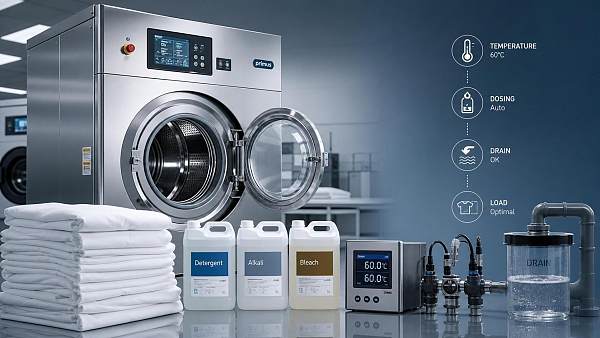
- Chemical dosing integration where needed to improve consistency and lower rewash caused by manual dosing error.
For CRSS, this is part of a broader commercial intelligence model. Whether the environment is a smart vending terminal, a POS lane, or a laundry room under intense utilization, the operational edge comes from measurable, traceable, low-friction workflows rather than from isolated hardware claims.
Cost, downtime, and TCO: what operators should watch beyond the sticker price
A lower purchase price can be expensive if commercial laundry equipment consumes more gas, more water, more labor minutes, and more replacement parts over time. Operators feel these hidden costs quickly because throughput losses usually appear as overtime, delayed deliveries, and emergency rerouting of loads.
The most useful cost view is total cost of ownership. That includes utilities, consumables, preventive service, spare parts access, training time, rewash, and the business impact of downtime during peak periods.
Operators should also compare alternatives such as adding one more medium-capacity unit instead of replacing the line with one oversized unit. In some sites, redundancy protects throughput better than maximum single-machine capacity.
Compliance, hygiene, and operational discipline
Throughput cannot be separated from hygiene and compliance. In healthcare, hospitality, and food-adjacent service environments, commercial laundry equipment must support repeatable sanitation outcomes while still meeting time and labor targets.
Operators should confirm which local or customer-specific requirements apply to wash temperature control, chemical use, separation of soiled and clean flows, drainage, ventilation, and worker safety. In many cases, layout discipline matters as much as machine specification.
Key compliance-oriented checks
- Whether the machine controls can lock or document hygiene-critical programs.
- Whether the site layout prevents cross-contact between soiled intake and clean output staging.
- Whether ventilation, exhaust, and drain design match the selected commercial laundry equipment.
- Whether operator training includes loading standards, PPE use, and response to alarm conditions.
FAQ: practical questions operators ask about commercial laundry equipment
How do I know if my washer capacity is too small or simply poorly used?
Look at the whole shift, not single loads. If machines spend significant time waiting for loading, transfer, or program decisions, utilization is the issue. If loads are continuous and queues still grow, installed capacity may be too small. Measure completed kilograms per labor hour and per operating hour for a clearer answer.
Should I prioritize bigger washers or faster extraction?
In many operations, faster extraction creates more practical throughput benefit because it frees dryer capacity and shortens the full process. Bigger washers help only if loading discipline, transfer flow, and downstream equipment can absorb the increased batch size.
What is the most common reason commercial laundry equipment underperforms after installation?
The most common reason is mismatch between machine capability and site workflow. Poor utility preparation, tight placement, weak staff training, and unbalanced washer-to-dryer ratios often reduce performance more than the machine specification itself.
How important is preventive maintenance for daily throughput?
It is essential. High-frequency laundry equipment works under heavy mechanical, thermal, and lint stress. Small issues such as airflow restriction, drain slowdown, or seal wear can quickly expand into missed cycles, rising rewash, and emergency downtime during peak periods.
Why many operators use CRSS when planning or upgrading laundry systems
CRSS looks at commercial laundry equipment the same way it studies cold-chain cabinets, unmanned retail terminals, kitchen systems, and POS infrastructure: as mission-critical assets inside high-frequency service environments. That perspective helps operators move beyond isolated machine comparisons and focus on usable throughput, energy discipline, hygiene reliability, and operational continuity.
This is especially useful for teams managing mixed commercial facilities, where laundry performance affects guest experience, healthcare service quality, labor planning, and total operating cost. The right guidance can reduce trial-and-error during specification and installation.
What you can discuss with us
- Capacity planning based on your daily kilograms, textile mix, and shift structure.
- Commercial laundry equipment selection, including washer, dryer, and workflow balance.
- Utility and site-readiness review for drainage, ventilation, power, gas, or steam conditions.
- Program logic, operator training priorities, and maintenance planning for high-frequency use.
- Lead time, delivery coordination, compliance concerns, and quotation alignment for commercial projects.
If your team is reviewing commercial laundry equipment for a new project or trying to increase output from an existing laundry room, contact us with your load profile, operating hours, and current bottlenecks. We can help you confirm parameters, compare options, assess delivery timing, and shape a more practical throughput plan before you commit to the next procurement step.
Recommended News
 Aug 30, 2026How High-Frequency Commercial Washers Cut Energy Use in High-Volume LaundriesDiscover how high-frequency commercial washers energy saving strategies reduce water, heat, and drying costs while maintaining hygiene and throughput in high-volume laundries.
 Jul 11, 2026Industrial Washer Extractors Price Guide: What Affects Cost and Total Ownership?Industrial washer extractors price explained: compare cost drivers, price ranges, and total ownership factors to choose a machine that saves more over time.
 Jul 09, 2026Commercial Laundry Equipment for Nursing Homes: Washer and Dryer Sizing by Resident LoadCommercial laundry equipment for nursing homes should match resident load, linen volume, and staffing. Learn how to size washers and dryers for reliable throughput, hygiene, and lower operating costs.
 Jul 08, 2026Shanghai Port Improves, But Laundry Exports Still LagShanghai Port improves, but laundry exports still lag as soft-mount washer extractors and dry cleaners face 22-day delays. See what component shortages mean for buyers and suppliers.
 Jul 05, 2026How to Evaluate a High-Frequency Laundry Supplier for Hotels and HealthcareHigh-frequency laundry supplier selection affects hygiene, uptime, and cost. Learn how hotels and healthcare teams compare durability, compliance, service, and TCO.
 Jul 01, 2026High Frequency Laundry Equipment Price Guide: What Drives Cost and ROI?High frequency laundry equipment price explained: discover what drives cost, hidden expenses, and how to measure ROI, uptime, and long-term savings before you buy.
 Jun 30, 2026How to Evaluate an Air Suspension Industrial Washers Exporter for Stable OEM SupplyAir suspension industrial washers exporter selection starts with proof, not promises. Learn how to assess OEM supply stability, compliance, quality control, and warranty support before you buy.
 Jun 30, 2026Commercial Laundry Equipment Installation: Site Requirements, Utilities, and Common MistakesCommercial laundry equipment installation guide covering site requirements, utilities, drainage, ventilation, and common mistakes to help improve safety, uptime, and project performance.
 Jun 24, 2026How to Choose High-Frequency Laundry Systems for Hotels, Hospitals, and LaundromatsHigh-frequency laundry buying guide for hotels, hospitals, and laundromats. Compare capacity, hygiene, uptime, and lifecycle cost to choose a smarter system.
 Jun 23, 2026Industrial Washers Not Cleaning Properly? 7 Common Causes and How to Fix ThemIndustrial washers not cleaning properly? Discover 7 common causes—from dosing and temperature to loading and drainage—and learn practical fixes to cut rewash costs fast.
 Jun 18, 2026Commercial Laundry Equipment Cost Breakdown: What Drives CAPEX, Utilities, and Service NeedsCommercial laundry equipment cost goes beyond machine price. Learn what drives CAPEX, utilities, maintenance, and downtime to compare quotes wisely and lower total ownership cost.
 Jun 16, 2026Industrial Laundry Machines for Hotels and Hospitals: Capacity, Utility Load, and Workflow FitIndustrial laundry machines for hotels and hospitals: compare capacity, utility load, hygiene needs, and workflow fit to choose efficient systems that reduce bottlenecks and support reliable daily operations.
 Jun 15, 2026Commercial Laundry Equipment Costs: What Drives ROI for Hotels, Clinics, and LaundriesCommercial laundry equipment costs vary far beyond purchase price. Discover what drives ROI for hotels, clinics, and laundries, from extraction and utilities to uptime and service.
 Jun 11, 2026Industrial Washers for Hotels: How to Size Loads, Cycle Time, and Utility DemandIndustrial washers for hotels: learn how to size loads, shorten cycle time, and plan utility demand for better laundry efficiency, lower costs, and smarter hotel operations.
 Jun 10, 2026Industrial Laundry Machines: Key Capacity, Extraction, and Utility Factors for Plant BuyersIndustrial laundry machines for plant buyers: compare capacity, extraction, utilities, and controls to cut operating costs, improve throughput, and choose the right system with confidence.
![]() Jun 09, 2026How to Evaluate an Industrial Laundry Machines Supplier for Capacity, Service, and ROIIndustrial laundry machines supplier evaluation made simple: compare capacity, service response, and lifecycle ROI to choose a reliable partner and reduce downtime, costs, and risk.
Jun 09, 2026How to Evaluate an Industrial Laundry Machines Supplier for Capacity, Service, and ROIIndustrial laundry machines supplier evaluation made simple: compare capacity, service response, and lifecycle ROI to choose a reliable partner and reduce downtime, costs, and risk. Jun 01, 2026Are industrial washers for hotels worth the upgrade?Industrial washers for hotels can cut laundry costs, improve hygiene, protect linens, and boost throughput. Learn when upgrading delivers real ROI.
 May 26, 2026What to check before buying commercial laundry systemsCommercial laundry systems buying guide: learn what to check for capacity, utility fit, hygiene, durability, and lifecycle cost before you invest in a reliable, efficient setup.
 May 22, 2026How commercial laundry equipment affects daily throughputCommercial laundry equipment directly impacts daily throughput, labor efficiency, and linen quality. Learn how to reduce bottlenecks, cut downtime, and improve laundry performance.
 May 20, 2026Industrial Washers: Soft-Mount vs Hard-Mount in 2026Industrial washers in 2026: compare soft-mount vs hard-mount for vibration, installation cost, energy savings, and ROI to choose the best fit for your facility.
 May 20, 2026Industrial Laundry Machines: Downtime Causes and FixesIndustrial laundry machines downtime guide: learn the top failure causes, practical fixes, and checklist-based maintenance steps to restore uptime faster and reduce repeat breakdowns.



Editor's Selection
The Archive Newsletter
Critical industrial intelligence delivered every Tuesday. Peer-reviewed summaries of the week's most impactful logistics and market shifts.