
Industrial Laundry Machines: Downtime Causes and Fixes
by
Published
Views:
For after-sales maintenance teams, industrial laundry machines are judged by uptime first. When washers or dryers stop suddenly, linen flow stalls, labor pressure rises, and service reliability drops fast. This guide reviews the most common downtime causes in industrial laundry machines and gives practical fixes that support faster diagnosis, lower repeat failure rates, and steadier commercial laundry performance.
Why a Checklist Approach Matters for Industrial Laundry Machines
Industrial laundry machines work under heavy thermal, mechanical, and electrical stress. In hotels, healthcare, laundries, and mixed-service facilities, a single failure can ripple into delivery delays, hygiene risk, and overtime costs.
A checklist reduces guesswork. It helps isolate whether the stoppage comes from power quality, drainage, imbalance, heating, controls, chemical dosing, or neglected wear parts. That structure also improves handoff between shifts and shortens return visits.
For CRSS-focused service environments, uptime is tied to total operating efficiency. Industrial laundry machines do not fail in isolation; they affect room turnover, food-service linen supply, retail uniforms, and broader service continuity.
Core Downtime Checklist: Causes and Fixes
- Verify incoming power first. Check voltage imbalance, loose terminals, blown fuses, and phase loss before opening deeper assemblies or replacing control components.
- Inspect drain performance. Clear lint, scale, and foreign objects from valves, traps, and hoses when wash cycles stall or machines will not advance.
- Check door interlocks and safety circuits. A worn latch, misaligned strike, or damaged switch often causes no-start conditions and intermittent shutdowns.
- Measure water inlet flow and pressure. Restricted valves and clogged filters create fill errors, long cycles, poor rinsing, and repeated control alarms.
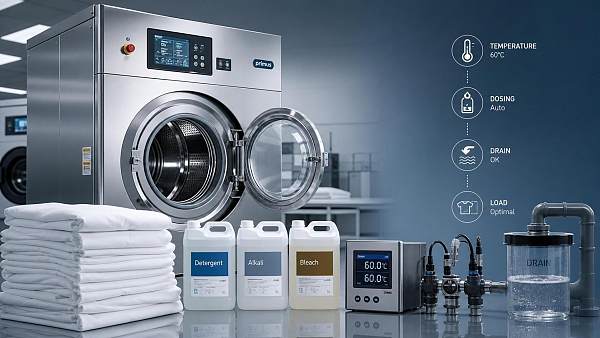
- Confirm heating performance. Test elements, steam valves, gas ignition, and temperature sensors when loads come out cold or sanitation targets are missed.
- Review extraction problems by checking load balance, shock absorbers, bearings, belts, and suspension systems when vibration or spin aborts occur.
- Examine chemical dosing lines. Blocked tubes, air ingress, and pump drift can trigger foam issues, residue complaints, sensor errors, and corrosion.
- Read controller fault history. Stored alarms often reveal recurring overheating, motor overload, communication loss, or operator sequence errors.
- Inspect motors and drives. Listen for bearing noise, check current draw, and test inverters when drums hesitate, trip, or fail during acceleration.
- Clean airflow paths on dryers. Lint-packed ducts, blocked filters, and weak fans raise heat stress, lengthen dry times, and trip safety cutouts.
1) Sudden No-Start or Mid-Cycle Stop
Many industrial laundry machines appear dead because a simple permissive signal is missing. Start with the main isolator, emergency stop loop, door lock status, and overload reset. Then confirm supply stability under load, not only at idle.
If faults repeat after reset, inspect wiring at high-vibration points. Terminal blocks near motors, contactors, and heated zones often loosen over time. Re-terminate, replace heat-damaged conductors, and verify grounding integrity.
2) Poor Extraction, Vibration, or Spin Failure
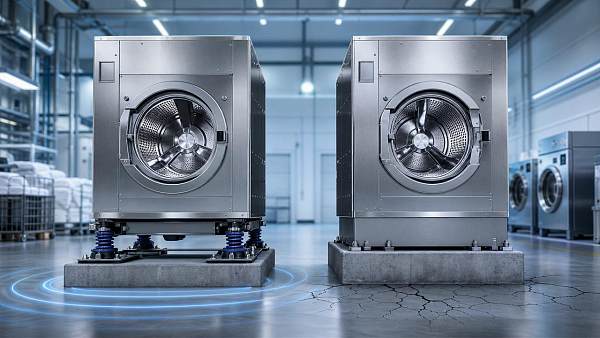
Poor extraction in industrial laundry machines usually starts with mechanical imbalance, overloaded drums, or worn suspension parts. Check whether the issue is load-related or constant across empty and test cycles.
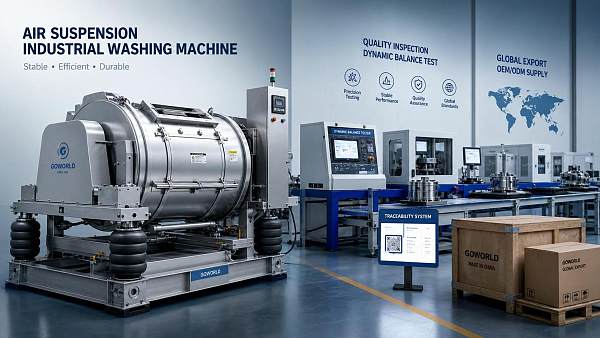
Inspect bearings, drive belts, pulleys, and air-bag or spring assemblies. A failing bearing often shows heat, noise, and black dust before catastrophic seizure. Replace matched components, then recheck alignment and machine anchoring.
3) Heating Faults and Long Cycle Times
When industrial laundry machines fail to reach programmed temperature, cycles lengthen and hygiene assurance weakens. Confirm whether the problem sits in the heat source, control signal, or temperature feedback loop.
On electric units, test element resistance and contactor condition. On steam-heated systems, inspect valve actuation, traps, and condensate return. On gas-fired dryers, verify ignition sequence, flame sensing, and combustion airflow.
4) Drainage, Fill, and Water Level Errors
Drain and fill issues cause a large share of preventable downtime in industrial laundry machines. Small obstructions build slowly, then trigger major cycle interruptions when valves cannot open fully or sensors read unstable levels.
Clear sump areas, valve chambers, and pressure-sensing tubes. Also inspect hard-water scale around probes and ports. After cleaning, run multiple test programs because intermittent level faults may only appear at specific stages.
Scenario Notes Across Commercial Operations
Hotel and Hospitality Linen Rooms
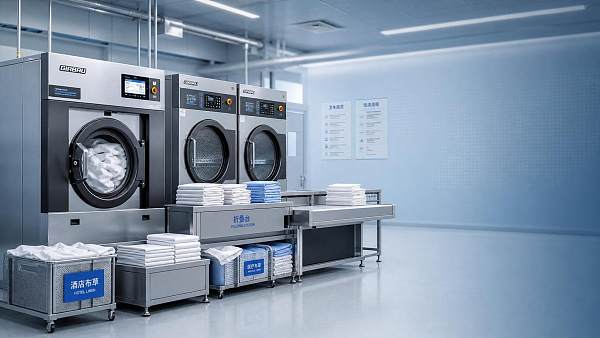
In hospitality settings, industrial laundry machines face sharp daily peaks. Downtime often appears during room-turnover windows, when overloaded batches and rushed loading create imbalance and poor extraction complaints.
A practical fix is to standardize load formulas, verify extraction performance by linen type, and post quick fault codes near each machine. That limits unnecessary restarts and protects suspension components.
Healthcare and Care Facilities
Here, thermal disinfection and documented cycle completion matter as much as runtime. Heating drift, sensor inaccuracy, and dosing failure are more serious than simple throughput loss.
Trend temperature, water level, and chemical delivery against logged programs. If industrial laundry machines pass mechanically but fail compliance targets, recalibration is often more urgent than part replacement.
Mixed Retail, Uniform, and Service Laundries
Mixed-load sites stress industrial laundry machines with variable soil levels, fabric weights, and detergents. That variability increases the chance of operator workarounds, incorrect programs, and foam-related interruptions.
Lock down approved wash recipes, review actual dosing, and watch for unofficial chemical substitutions. Many repeat faults come from process drift rather than failed hardware.
Commonly Missed Risks
Ignoring minor leaks is costly. Water on bases, seals, or nearby electrical paths can damage bearings, corrode connectors, and create misleading control faults weeks later.
Skipping lint and duct cleaning on dryers shortens component life. Overheating stresses thermostats, fans, belts, and burner systems while quietly increasing energy consumption.
Replacing single failed parts without checking root cause leads to repeat downtime. Burned contactors, snapped belts, and failed sensors usually have an upstream mechanical or thermal reason.
Overlooking water quality also hurts industrial laundry machines. Scale reduces heating efficiency, restricts valves, and distorts level sensing, especially in high-cycle commercial laundry environments.
Practical Execution Recommendations
- Build a first-15-minute routine covering power, safety loop, fill, drain, heating status, and recent controller alarms before deeper disassembly begins.
- Record repeat failures by machine, program, and time of day. Patterns often reveal operator overload, utility instability, or maintenance timing gaps.
- Stock high-failure consumables such as door switches, belts, contactors, probes, valves, and drain seals to reduce avoidable waiting time.
- Schedule condition checks around vibration, bearing temperature, motor current, and airflow restriction instead of relying only on calendar service intervals.
- Confirm every repair with a loaded test cycle, not just a dry run, because many industrial laundry machines fault only under thermal or extraction demand.
Conclusion and Next Actions
The fastest way to reduce downtime in industrial laundry machines is to standardize diagnosis. Start with power, safety, water, heat, drive, drainage, and control history in the same order every time.
Then separate symptom from root cause. A spin abort may begin with suspension wear, but poor loading practice can be the trigger. A heat alarm may point to airflow blockage, not a failed heater.
Used consistently, this checklist helps commercial laundry teams restore uptime faster, cut repeat callouts, and protect the service continuity that modern facilities depend on every day.
Recommended News
 Aug 30, 2026How High-Frequency Commercial Washers Cut Energy Use in High-Volume LaundriesDiscover how high-frequency commercial washers energy saving strategies reduce water, heat, and drying costs while maintaining hygiene and throughput in high-volume laundries.
 Jul 11, 2026Industrial Washer Extractors Price Guide: What Affects Cost and Total Ownership?Industrial washer extractors price explained: compare cost drivers, price ranges, and total ownership factors to choose a machine that saves more over time.
 Jul 09, 2026Commercial Laundry Equipment for Nursing Homes: Washer and Dryer Sizing by Resident LoadCommercial laundry equipment for nursing homes should match resident load, linen volume, and staffing. Learn how to size washers and dryers for reliable throughput, hygiene, and lower operating costs.
 Jul 08, 2026Shanghai Port Improves, But Laundry Exports Still LagShanghai Port improves, but laundry exports still lag as soft-mount washer extractors and dry cleaners face 22-day delays. See what component shortages mean for buyers and suppliers.
 Jul 05, 2026How to Evaluate a High-Frequency Laundry Supplier for Hotels and HealthcareHigh-frequency laundry supplier selection affects hygiene, uptime, and cost. Learn how hotels and healthcare teams compare durability, compliance, service, and TCO.
 Jul 01, 2026High Frequency Laundry Equipment Price Guide: What Drives Cost and ROI?High frequency laundry equipment price explained: discover what drives cost, hidden expenses, and how to measure ROI, uptime, and long-term savings before you buy.
 Jun 30, 2026How to Evaluate an Air Suspension Industrial Washers Exporter for Stable OEM SupplyAir suspension industrial washers exporter selection starts with proof, not promises. Learn how to assess OEM supply stability, compliance, quality control, and warranty support before you buy.
 Jun 30, 2026Commercial Laundry Equipment Installation: Site Requirements, Utilities, and Common MistakesCommercial laundry equipment installation guide covering site requirements, utilities, drainage, ventilation, and common mistakes to help improve safety, uptime, and project performance.
 Jun 24, 2026How to Choose High-Frequency Laundry Systems for Hotels, Hospitals, and LaundromatsHigh-frequency laundry buying guide for hotels, hospitals, and laundromats. Compare capacity, hygiene, uptime, and lifecycle cost to choose a smarter system.
 Jun 23, 2026Industrial Washers Not Cleaning Properly? 7 Common Causes and How to Fix ThemIndustrial washers not cleaning properly? Discover 7 common causes—from dosing and temperature to loading and drainage—and learn practical fixes to cut rewash costs fast.
 Jun 18, 2026Commercial Laundry Equipment Cost Breakdown: What Drives CAPEX, Utilities, and Service NeedsCommercial laundry equipment cost goes beyond machine price. Learn what drives CAPEX, utilities, maintenance, and downtime to compare quotes wisely and lower total ownership cost.
 Jun 16, 2026Industrial Laundry Machines for Hotels and Hospitals: Capacity, Utility Load, and Workflow FitIndustrial laundry machines for hotels and hospitals: compare capacity, utility load, hygiene needs, and workflow fit to choose efficient systems that reduce bottlenecks and support reliable daily operations.
 Jun 15, 2026Commercial Laundry Equipment Costs: What Drives ROI for Hotels, Clinics, and LaundriesCommercial laundry equipment costs vary far beyond purchase price. Discover what drives ROI for hotels, clinics, and laundries, from extraction and utilities to uptime and service.
 Jun 11, 2026Industrial Washers for Hotels: How to Size Loads, Cycle Time, and Utility DemandIndustrial washers for hotels: learn how to size loads, shorten cycle time, and plan utility demand for better laundry efficiency, lower costs, and smarter hotel operations.
 Jun 10, 2026Industrial Laundry Machines: Key Capacity, Extraction, and Utility Factors for Plant BuyersIndustrial laundry machines for plant buyers: compare capacity, extraction, utilities, and controls to cut operating costs, improve throughput, and choose the right system with confidence.
![]() Jun 09, 2026How to Evaluate an Industrial Laundry Machines Supplier for Capacity, Service, and ROIIndustrial laundry machines supplier evaluation made simple: compare capacity, service response, and lifecycle ROI to choose a reliable partner and reduce downtime, costs, and risk.
Jun 09, 2026How to Evaluate an Industrial Laundry Machines Supplier for Capacity, Service, and ROIIndustrial laundry machines supplier evaluation made simple: compare capacity, service response, and lifecycle ROI to choose a reliable partner and reduce downtime, costs, and risk. Jun 01, 2026Are industrial washers for hotels worth the upgrade?Industrial washers for hotels can cut laundry costs, improve hygiene, protect linens, and boost throughput. Learn when upgrading delivers real ROI.
 May 26, 2026What to check before buying commercial laundry systemsCommercial laundry systems buying guide: learn what to check for capacity, utility fit, hygiene, durability, and lifecycle cost before you invest in a reliable, efficient setup.
 May 22, 2026How commercial laundry equipment affects daily throughputCommercial laundry equipment directly impacts daily throughput, labor efficiency, and linen quality. Learn how to reduce bottlenecks, cut downtime, and improve laundry performance.
 May 20, 2026Industrial Washers: Soft-Mount vs Hard-Mount in 2026Industrial washers in 2026: compare soft-mount vs hard-mount for vibration, installation cost, energy savings, and ROI to choose the best fit for your facility.
 May 20, 2026Industrial Laundry Machines: Downtime Causes and FixesIndustrial laundry machines downtime guide: learn the top failure causes, practical fixes, and checklist-based maintenance steps to restore uptime faster and reduce repeat breakdowns.





Editor's Selection
The Archive Newsletter
Critical industrial intelligence delivered every Tuesday. Peer-reviewed summaries of the week's most impactful logistics and market shifts.