
How retail POS terminals cut queues without raising errors
by
Published
Views:
For enterprise decision-makers, retail POS terminals are no longer just checkout devices—they are frontline tools for faster service, cleaner data capture, and lower operational risk.
As customer traffic intensifies and labor pressure rises, the ability to cut queues without increasing errors has become a direct driver of revenue, trust, and store efficiency.
This article explores how modern retail POS terminals make that balance possible across complex commercial environments, from supermarkets and convenience stores to service counters and hybrid retail formats.
Retail POS terminals as a speed-and-accuracy infrastructure
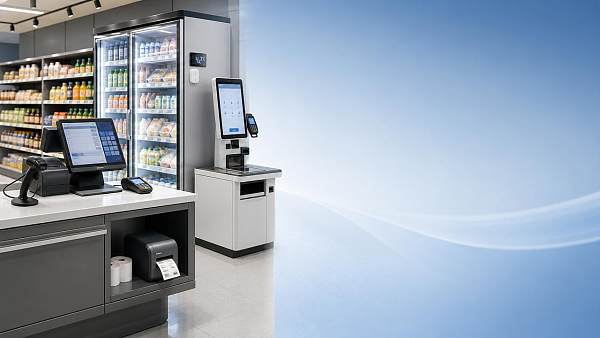
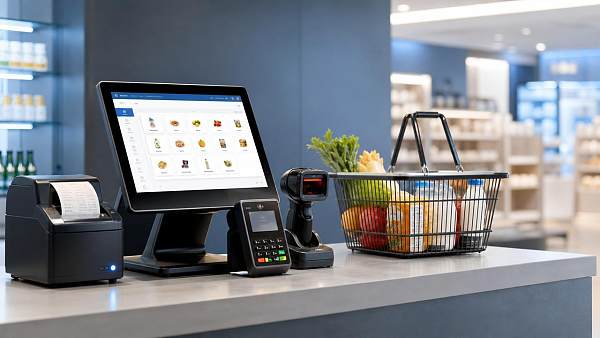
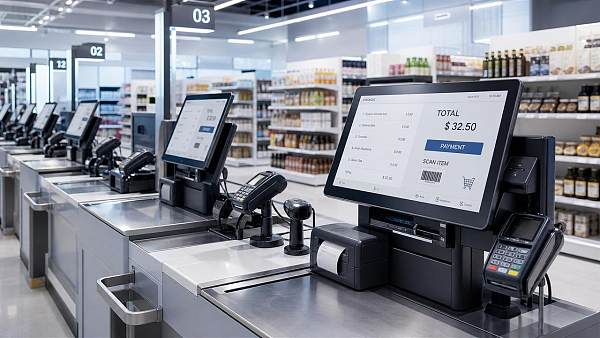
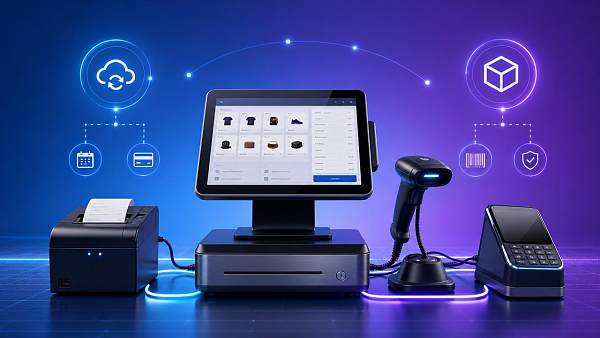
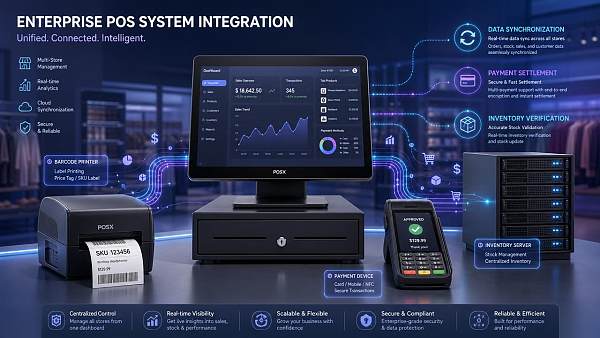
Retail POS terminals are the transaction endpoints that connect product scanning, pricing logic, payment acceptance, receipt output, and sales data synchronization.
Older checkout devices focused on processing a sale.
Modern retail POS terminals also manage workflow discipline, exception handling, and real-time visibility for every basket, operator action, and payment event.
That shift matters because long queues rarely come from one single issue.
They usually result from many small frictions happening together.
- Slow item lookup for damaged or missing barcodes
- Price mismatches between shelf labels and checkout rules
- Payment terminal lag during card authorization
- Manual discount approval steps
- Receipt or label printer delays
- Weak network response during peak trading periods
Well-designed retail POS terminals reduce these frictions through interface simplicity, local failover logic, device integration, and cleaner transaction orchestration.
Current retail pressure points behind queue reduction
Across the broader commercial sector, checkout speed has become a strategic issue rather than a front-end convenience metric.
CRSS tracks this through retail systems, vending intelligence, cold-chain merchandising, and other commercial service infrastructures where transaction flow directly shapes profitability.
Several market signals explain why retail POS terminals now receive stronger investment attention.
The result is clear.
Retail POS terminals must accelerate throughput while protecting pricing integrity, payment security, and item-level traceability.
How retail POS terminals shorten queues without adding mistakes
Faster scan-to-pay workflows
The most direct queue benefit comes from reducing seconds inside the core checkout sequence.
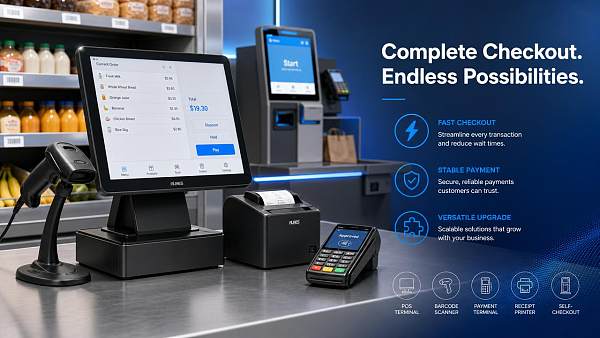
Responsive touchscreens, high-speed barcode engines, and integrated payment acceptance reduce handoff delays between item entry and payment completion.
When those actions happen in one fluid interface, operators spend less time switching attention between disconnected devices.
Error prevention at the point of action
Good retail POS terminals do not wait for back-office corrections.
They block many errors before a transaction is finalized.
- Automatic promotion matching reduces manual discount entries
- Permission rules limit risky overrides
- Item and basket alerts flag age-restricted or restricted goods
- Price validation reduces charge disputes
- Structured return screens lower refund mistakes
By preventing avoidable exceptions, retail POS terminals keep lanes moving and reduce the hidden queue impact of rework.
Stable performance under weak or variable networks
Peak-hour slowdowns often come from network dependency.
This is especially relevant in large stores, temporary retail zones, and mixed-use commercial sites.
Advanced retail POS terminals use local caching, transaction buffering, and controlled offline modes to maintain service continuity.
That resilience supports both speed and accuracy because interrupted transactions create some of the most expensive checkout errors.
Cleaner operator interfaces
A crowded interface slows every action.
Clear button hierarchy, consistent prompts, and fewer unnecessary steps help new and experienced staff work at a reliable pace.
This matters in comprehensive commercial environments where temporary staff and cross-trained teams are common.
Business value beyond the checkout lane
The best retail POS terminals improve more than front-end speed.
They strengthen commercial control across inventory, reporting, customer experience, and compliance.
- Higher basket throughput during rush periods
- Lower losses from pricing and refund errors
- Better synchronization between shelf stock and sales movement
- Stronger loyalty capture through integrated membership flows
- Improved auditability for payments, promotions, and operator actions
In sectors linked to food hygiene, temperature-sensitive merchandising, or unattended retail, this accuracy becomes even more important.
A checkout error can cascade into stock distortion, replenishment mistakes, or failed promotion analysis.
That is why retail POS terminals should be evaluated as data-control assets, not just cashier hardware.
Typical deployment scenarios for retail POS terminals
Different formats require different POS priorities.
The common objective remains the same: queue reduction with low error rates.
Implementation priorities and risk controls
Choosing retail POS terminals only by purchase price often creates downstream inefficiency.
A better approach is to evaluate total operating impact.
Key selection criteria
- Transaction speed under real peak conditions
- Interface simplicity for quick staff adoption
- Peripheral compatibility with scanners, printers, and payment modules
- Offline continuity and data recovery safeguards
- Security controls for payments and operator permissions
- Serviceability, software updates, and lifecycle support
Common implementation mistakes
- Testing only average traffic, not queue spikes
- Ignoring printer, scanner, and payment latency
- Overcomplicating cashier screens with low-value functions
- Failing to map exception workflows before rollout
- Separating POS data from inventory and promotion governance
The strongest retail POS terminals are usually part of a broader commercial systems strategy, not a standalone hardware refresh.
Practical next steps for stronger checkout performance
Begin with a queue audit tied to transaction exceptions, payment delays, and operator interventions.
Then compare those findings against the capabilities of current retail POS terminals and connected peripherals.
Priority should go to changes that remove repeated friction at the checkout edge.
- Measure average and peak transaction times by lane type
- Track manual overrides, voids, and price corrections
- Review failure behavior during network instability
- Pilot improved retail POS terminals in high-pressure locations first
- Connect POS insights to merchandising and service operations
When retail POS terminals are selected and deployed with operational discipline, queues fall, error rates stay controlled, and transaction data becomes more useful across the business.
That is the practical advantage modern retail systems should deliver: faster flow, safer execution, and a stronger foundation for scalable commercial performance.
Recommended News
 Jun 18, 2026Trade Secret Rules Raise Export Compliance for AI DevicesTrade secret rules raise export compliance for AI devices from June 1, 2026. Learn how Smart POS terminals, firmware, and AI model transfers may trigger security assessment risks.
 Jun 17, 2026Retail Edge Computing for Stores: Best Use Cases for POS, Vision AI, and InventoryRetail edge computing helps stores speed up POS, power Vision AI, and improve real-time inventory accuracy. Explore top use cases that boost uptime, reduce shrink, and drive smarter retail operations.
 Jun 14, 2026Retail Automation Systems for Small Stores: What to Automate First and WhyRetail automation systems for small stores should start where profit leaks first. Learn whether to automate POS, inventory, refrigeration, or self-service for faster ROI.
 Jun 13, 2026EU-China Talks Put Smart POS on Priority Access TrackSmart POS enters the EU-China priority access track as talks explore mutual recognition, possible duplicate EMC/EMI test relief, and faster cross-border compliance planning.
 Jun 12, 2026EU-China Talks Put Smart POS on Fast-Track ReviewSmart POS moves into fast-track review as EU-China talks signal easier market access. Learn how CE, GB/T 39932, EMVCo 5.4, and customs changes could reshape sourcing and exports.
 Jun 12, 2026How Retail IoT Interconnection Improves Inventory Accuracy Across POS, Shelves, and Cold StorageRetail IoT interconnection improves inventory accuracy by linking POS, smart shelves, and cold storage in real time—reducing stock errors, shrink, and spoilage while boosting retail efficiency.
 Jun 11, 2026EU-China Talks Put Smart POS on Fast-Track ReviewSmart POS enters fast-track review as EU-China talks advance mutual recognition. Explore how this may cut CE certification time, reshape compliance planning, and impact EU market entry.
 Jun 10, 2026EU-China Talks Put Smart POS Terminals on Fast-Track ReviewSmart POS terminals move into focus as EU-China talks open a fast-track review path. See what this means for compliance, certification, market access, and cross-border trade planning.
 Jun 10, 2026How to Manage Retail Weak-Network Concurrency in Self-Checkout and Smart POS DeploymentsRetail weak-network concurrency explained for self-checkout, smart POS, and unmanned retail. Learn practical edge, sync, and recovery strategies to cut delays and improve uptime.
 Jun 09, 2026China-Europe Talks Put Smart POS on Priority Review ListSmart POS enters priority review in China-Europe talks, signaling possible faster compliance and market access. See what importers, exporters, and retail tech firms should watch next.
![]() Jun 04, 2026FDA Tightens BPA-Free Rules for Food-Contact HousingsFDA Tightens BPA-Free Rules for Food-Contact Housings: learn how the 2026 FDA update impacts smart food equipment, compliance reports, suppliers, and export readiness before deadlines hit.
Jun 04, 2026FDA Tightens BPA-Free Rules for Food-Contact HousingsFDA Tightens BPA-Free Rules for Food-Contact Housings: learn how the 2026 FDA update impacts smart food equipment, compliance reports, suppliers, and export readiness before deadlines hit. Jun 03, 2026Retail Weak-Network Concurrency: How POS Systems Keep Orders SyncedRetail weak-network concurrency keeps POS orders, payments, inventory, and receipts synced during unstable connections—learn how resilient systems prevent costly errors.
 Jun 02, 2026New Retail Revolution: How AI, Self-Checkout, and Smart POS Change StoresNew retail revolution insights: see how AI vision, self-checkout, smart POS, and connected cold-chain systems cut labor, improve hygiene, and boost store profitability.
 Jun 01, 2026Why retail IoT interconnection fails in real storesRetail IoT interconnection fails when real-store networks, protocols, edge devices, and ownership gaps collide. Learn how CRSS helps evaluate resilient, scalable architectures.
 May 31, 2026Why smart retail interconnection still fails in storesSmart retail interconnection fails when devices, data, networks, and workflows are not aligned. See the checklist to reduce downtime, protect sales, and scale connected stores.
 May 30, 2026Why retail IoT interconnection fails in store rolloutsRetail IoT interconnection fails when store rollouts expose weak networks, protocol gaps, edge latency, and unclear ownership. Learn how to evaluate rollout-ready systems.
 May 28, 2026How retail POS terminals cut queues without raising errorsRetail POS terminals help cut queues without increasing errors by speeding scan-to-pay, reducing manual mistakes, and improving checkout resilience—see how modern systems boost store efficiency.
 May 26, 2026How retail checkout terminals cut queues without raising costsRetail checkout terminals help cut queues, speed payments, and reduce checkout friction without increasing labor costs. See how retailers boost efficiency and protect margins.
 May 23, 2026Are retail checkout systems still worth upgrading in 2026?Retail checkout systems are still worth upgrading in 2026 when they improve speed, payment security, uptime, and omnichannel flow. See which retail scenarios deliver the best ROI.
 May 23, 2026ASTM F2100-26 Takes Effect, Antibacterial POS Casings Now RecommendedASTM F2100-26 now recommends antibacterial POS casings—silver-ion & copper-alloy coatings with UL/SGS ISO 22196 certification required for North American pharmacy and C-store deployments. Act now to avoid order delays.
 May 22, 2026Visa CEO's China Visit Spurs Multi-Currency POS MandateVisa CEO's China visit triggers mandatory multi-currency POS compliance for USD/CAD/MXN—key for exporters, OEMs & fintechs. Act now to avoid shipment delays.
 May 20, 2026Retail POS Systems: Hidden Costs in Subscription PricingRetail POS systems may look affordable on subscription, but hidden fees in payments, hardware, support, and integrations can cut ROI fast. Learn what finance teams must check before signing.
 May 20, 2026Retail POS Systems Integration Issues Before Multi-Store RolloutRetail POS systems can fail at scale if ERP, payments, inventory, tax, and printing are not aligned. See the key integration checklist before a multi-store rollout.

Editor's Selection
The Archive Newsletter
Critical industrial intelligence delivered every Tuesday. Peer-reviewed summaries of the week's most impactful logistics and market shifts.