
Retail POS Systems Integration Issues Before Multi-Store Rollout
by
Published
Views:
Before a multi-store launch, retail POS systems often expose integration weaknesses that stay hidden in a single pilot site. Problems usually appear at the connections between ERP, inventory, payment gateways, barcode printing, tax logic, and offline synchronization. If these gaps are not tested early, the rollout can trigger duplicate stock counts, delayed settlement, receipt errors, and inconsistent pricing across locations.
For businesses operating in modern retail environments, retail POS systems are no longer isolated checkout devices. They are transaction hubs connected to finance, warehouse movement, promotion engines, labeling workflows, customer data, and service operations. A checklist-based review helps reduce rollout risk by turning vague integration concerns into verifiable technical checkpoints.
Why a checklist matters before scaling retail POS systems
A multi-store rollout multiplies every small defect. One incorrect tax mapping becomes hundreds of wrong receipts. One unstable sync service becomes storewide inventory drift. One printer driver conflict becomes label delays across regions. That is why retail POS systems should be validated as an integrated operating stack, not just as front-counter hardware.
A structured checklist also improves cross-team coordination. It creates a common reference for software testing, store operations, payment certification, network failover, and master data governance. This is especially important in mixed retail environments where checkout speed, barcode accuracy, and weak-network resilience directly affect revenue continuity.
Core integration checklist before multi-store rollout
- Verify master data mapping between retail POS systems, ERP, and inventory platforms, including SKU codes, unit packs, tax classes, price levels, and store-specific assortments.
- Test real-time and delayed synchronization rules for sales, returns, voids, transfers, and stock adjustments under both stable connectivity and weak-network conditions.
- Confirm payment gateway behavior for card, wallet, QR, split tender, and refund scenarios, including timeout handling, reversal logic, and reconciliation exports.
- Validate barcode printing integration for product labels, shelf tags, receipts, and return slips across printer models, drivers, templates, and regional formatting rules.
- Review promotion engine compatibility, ensuring discounts, coupons, bundles, loyalty points, and member pricing calculate identically in POS, ERP, and reporting layers.
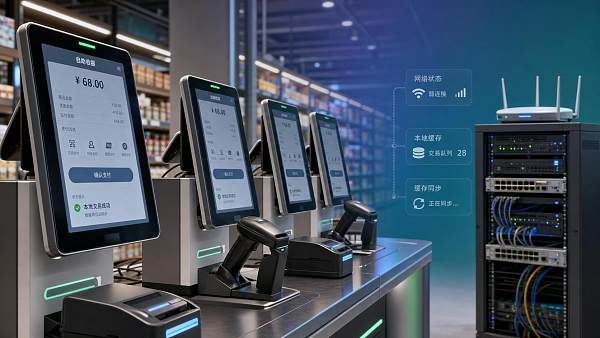
- Inspect offline transaction storage limits, local database recovery behavior, and conflict resolution rules when retail POS systems reconnect after network interruption.
- Check user roles, approval flows, and audit logs for overrides, returns, cash drawer actions, and price changes to prevent control gaps during scale-up.
- Measure API latency and queue performance during peak volumes, especially for concurrent payment requests, receipt generation, and central stock updates.
- Validate tax, currency, rounding, and fiscal receipt settings by region so store expansion does not create compliance errors at the transaction level.
- Simulate store opening, shift closing, cash reconciliation, and end-of-day posting to confirm that retail POS systems match finance and store-control procedures.
What to test in different operating scenarios
High-volume supermarkets and convenience chains
In fast-moving grocery formats, retail POS systems must process dense barcode scanning, weighted items, promotion stacking, and rapid basket completion. Integration issues often surface when fresh-item PLU logic, electronic scale data, and central promotion files are updated at different times.
Test item lookup speed, receipt rendering, and stock decrement timing during rush hours. Also check whether temporary network loss causes duplicate uploads when the line reconnects after several queued transactions.
Unmanned or semi-unmanned retail environments
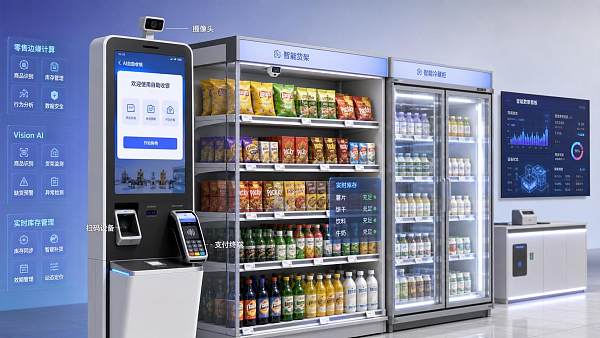
Where self-service, vending, or smart cabinet flows are involved, retail POS systems must coordinate identity, payment preauthorization, product recognition, and post-transaction settlement. Even a short delay can affect customer exit flow or trigger billing disputes.
Verify how the POS layer exchanges order status with edge devices and central billing systems. Review exception handling for abandoned orders, partial picks, and payment success without final stock confirmation.
Service counters and mixed retail-service sites
Retail environments that combine product sales with laundry, foodservice, repair, or pickup services place extra demands on retail POS systems. The platform must handle appointments, service tickets, staged fulfillment, and different tax treatments within one transaction flow.
Run tests for partial delivery, deposit collection, later settlement, and refund to original payment method. Confirm that service status updates do not break standard retail reporting structures.
Commonly missed integration risks
Inconsistent item identity across systems
A product may share one barcode but carry different internal identifiers in ERP, warehouse, and POS databases. This creates silent errors in inventory deduction, returns validation, and promotion eligibility.
Printer dependency hidden in pilot stores
A pilot location may run smoothly because it uses a single tested printer model. Once scaled, retail POS systems often fail on receipt formatting, cutter commands, or label alignment with different firmware versions.
Weak-network behavior not fully simulated
Many teams test only under reliable broadband. In real stores, congestion, packet loss, and ISP switching can delay payment callbacks or stock sync. Offline mode must be proven under realistic instability.
Promotion logic validated only at the screen level
A discount may look correct on the terminal but still post incorrectly into finance or BI systems. Retail POS systems should be checked from basket calculation through export and settlement records.
Store process exceptions excluded from testing
Void after payment, return without receipt, manager override, shift interruption, and reopened drawers are routine store events. If not covered, rollout issues appear during the first busy trading day.
Practical execution advice
- Build a transaction matrix covering sale, return, exchange, suspended order, loyalty redemption, and offline recovery before any store expansion date is fixed.
- Use production-like store data, real payment devices, and actual printer firmware instead of relying only on sandbox simulations or cleaned demo catalogs.
- Run a limited multi-store pilot with different network conditions, not several lanes inside the same flagship location.
- Capture interface logs, queue timestamps, and reconciliation variances daily so integration defects can be traced to a specific system boundary.
- Freeze master data governance rules during rollout windows to avoid uncontrolled SKU, tax, or pricing changes while retail POS systems are being stabilized.
Summary and next-step action guide
Successful expansion depends on treating retail POS systems as a connected transaction infrastructure, not just checkout terminals. The most damaging rollout failures usually come from mismatched master data, weak-network gaps, payment reversals, promotion inconsistency, and untested peripheral behavior.
Start with a formal integration checklist, then execute scenario-based testing across at least a few representative store types. Document every interface, exception path, and recovery rule. When retail POS systems can maintain price accuracy, payment continuity, printer stability, and data consistency under real store conditions, large-scale rollout becomes far more predictable and far less expensive.
Recommended News
 Jun 21, 2026How to Handle Retail Weak-Network Concurrency in Self-Checkout and Smart POS DeploymentsRetail weak-network concurrency can cripple self-checkout and smart POS performance. Learn practical ways to reduce retries, protect payments, and keep stores running smoothly at peak hours.
 Jun 18, 2026Trade Secret Rules Raise Export Compliance for AI DevicesTrade secret rules raise export compliance for AI devices from June 1, 2026. Learn how Smart POS terminals, firmware, and AI model transfers may trigger security assessment risks.
 Jun 17, 2026Retail Edge Computing for Stores: Best Use Cases for POS, Vision AI, and InventoryRetail edge computing helps stores speed up POS, power Vision AI, and improve real-time inventory accuracy. Explore top use cases that boost uptime, reduce shrink, and drive smarter retail operations.
 Jun 14, 2026Retail Automation Systems for Small Stores: What to Automate First and WhyRetail automation systems for small stores should start where profit leaks first. Learn whether to automate POS, inventory, refrigeration, or self-service for faster ROI.
 Jun 13, 2026EU-China Talks Put Smart POS on Priority Access TrackSmart POS enters the EU-China priority access track as talks explore mutual recognition, possible duplicate EMC/EMI test relief, and faster cross-border compliance planning.
 Jun 12, 2026EU-China Talks Put Smart POS on Fast-Track ReviewSmart POS moves into fast-track review as EU-China talks signal easier market access. Learn how CE, GB/T 39932, EMVCo 5.4, and customs changes could reshape sourcing and exports.
 Jun 12, 2026How Retail IoT Interconnection Improves Inventory Accuracy Across POS, Shelves, and Cold StorageRetail IoT interconnection improves inventory accuracy by linking POS, smart shelves, and cold storage in real time—reducing stock errors, shrink, and spoilage while boosting retail efficiency.
 Jun 11, 2026EU-China Talks Put Smart POS on Fast-Track ReviewSmart POS enters fast-track review as EU-China talks advance mutual recognition. Explore how this may cut CE certification time, reshape compliance planning, and impact EU market entry.
 Jun 10, 2026EU-China Talks Put Smart POS Terminals on Fast-Track ReviewSmart POS terminals move into focus as EU-China talks open a fast-track review path. See what this means for compliance, certification, market access, and cross-border trade planning.
 Jun 10, 2026How to Manage Retail Weak-Network Concurrency in Self-Checkout and Smart POS DeploymentsRetail weak-network concurrency explained for self-checkout, smart POS, and unmanned retail. Learn practical edge, sync, and recovery strategies to cut delays and improve uptime.
 Jun 09, 2026China-Europe Talks Put Smart POS on Priority Review ListSmart POS enters priority review in China-Europe talks, signaling possible faster compliance and market access. See what importers, exporters, and retail tech firms should watch next.
![]() Jun 04, 2026FDA Tightens BPA-Free Rules for Food-Contact HousingsFDA Tightens BPA-Free Rules for Food-Contact Housings: learn how the 2026 FDA update impacts smart food equipment, compliance reports, suppliers, and export readiness before deadlines hit.
Jun 04, 2026FDA Tightens BPA-Free Rules for Food-Contact HousingsFDA Tightens BPA-Free Rules for Food-Contact Housings: learn how the 2026 FDA update impacts smart food equipment, compliance reports, suppliers, and export readiness before deadlines hit. Jun 03, 2026Retail Weak-Network Concurrency: How POS Systems Keep Orders SyncedRetail weak-network concurrency keeps POS orders, payments, inventory, and receipts synced during unstable connections—learn how resilient systems prevent costly errors.
 Jun 02, 2026New Retail Revolution: How AI, Self-Checkout, and Smart POS Change StoresNew retail revolution insights: see how AI vision, self-checkout, smart POS, and connected cold-chain systems cut labor, improve hygiene, and boost store profitability.
 Jun 01, 2026Why retail IoT interconnection fails in real storesRetail IoT interconnection fails when real-store networks, protocols, edge devices, and ownership gaps collide. Learn how CRSS helps evaluate resilient, scalable architectures.
 May 31, 2026Why smart retail interconnection still fails in storesSmart retail interconnection fails when devices, data, networks, and workflows are not aligned. See the checklist to reduce downtime, protect sales, and scale connected stores.
 May 30, 2026Why retail IoT interconnection fails in store rolloutsRetail IoT interconnection fails when store rollouts expose weak networks, protocol gaps, edge latency, and unclear ownership. Learn how to evaluate rollout-ready systems.
 May 28, 2026How retail POS terminals cut queues without raising errorsRetail POS terminals help cut queues without increasing errors by speeding scan-to-pay, reducing manual mistakes, and improving checkout resilience—see how modern systems boost store efficiency.
 May 26, 2026How retail checkout terminals cut queues without raising costsRetail checkout terminals help cut queues, speed payments, and reduce checkout friction without increasing labor costs. See how retailers boost efficiency and protect margins.
 May 23, 2026Are retail checkout systems still worth upgrading in 2026?Retail checkout systems are still worth upgrading in 2026 when they improve speed, payment security, uptime, and omnichannel flow. See which retail scenarios deliver the best ROI.
 May 23, 2026ASTM F2100-26 Takes Effect, Antibacterial POS Casings Now RecommendedASTM F2100-26 now recommends antibacterial POS casings—silver-ion & copper-alloy coatings with UL/SGS ISO 22196 certification required for North American pharmacy and C-store deployments. Act now to avoid order delays.
 May 22, 2026Visa CEO's China Visit Spurs Multi-Currency POS MandateVisa CEO's China visit triggers mandatory multi-currency POS compliance for USD/CAD/MXN—key for exporters, OEMs & fintechs. Act now to avoid shipment delays.
 May 20, 2026Retail POS Systems: Hidden Costs in Subscription PricingRetail POS systems may look affordable on subscription, but hidden fees in payments, hardware, support, and integrations can cut ROI fast. Learn what finance teams must check before signing.
 May 20, 2026Retail POS Systems Integration Issues Before Multi-Store RolloutRetail POS systems can fail at scale if ERP, payments, inventory, tax, and printing are not aligned. See the key integration checklist before a multi-store rollout.





Editor's Selection
The Archive Newsletter
Critical industrial intelligence delivered every Tuesday. Peer-reviewed summaries of the week's most impactful logistics and market shifts.