
How to Choose Commercial Freezers for Cold Storage by Capacity, Temperature, and Load
by
Published
Views:
Choosing commercial freezers for cold storage is not just about buying more space—it is about matching capacity, temperature stability, and load performance to real operating demands.
For procurement teams, the right freezer can reduce energy waste, protect product quality, and support long-term ROI. This guide explains how to evaluate key specifications with confidence before making a purchase decision.
What Procurement Teams Really Need to Decide First
When buyers search for commercial freezers for cold storage, they usually are not looking for basic definitions. They want a clear way to compare options and avoid buying the wrong unit.
The core intent is practical selection. Procurement teams need to know how much capacity they actually need, what temperature range is required for their products, and whether the unit can handle daily loading patterns.
They are also concerned about operating cost, food safety risk, service life, and whether a freezer will remain stable under real commercial conditions rather than under ideal lab specifications.
That means the most useful evaluation method is not brand-first. It is application-first: product type, storage volume, door-opening frequency, ambient environment, and future growth all matter more than brochure claims.
Start with Capacity: Bigger Is Not Always Better
Capacity is the first filter, but many purchases fail because teams only compare gross volume. In practice, usable storage capacity is more important than the headline number on the specification sheet.
Gross capacity includes the full internal chamber. Net usable capacity reflects how much product can actually be stored after shelves, airflow clearances, baskets, and loading limitations are considered.
For example, if cartons are stacked too tightly against evaporator outlets or walls, airflow is restricted. This reduces cooling uniformity and can create warm spots that affect product safety and freezer recovery time.
Procurement teams should estimate required volume using average inventory, peak inventory, safety buffer, and delivery frequency. A unit sized only for average demand often becomes overloaded during promotions or seasonal spikes.
A practical planning approach is to define three numbers: normal operating stock, peak stock during the busiest cycle, and emergency reserve stock. This gives a more realistic basis for freezer sizing.
It is also worth checking product packaging dimensions. A freezer may look large on paper, but awkward shelf spacing or narrow door openings can waste valuable space and slow staff handling.
In cold storage operations, the best capacity decision balances inventory needs with airflow discipline. An oversized freezer may increase energy use, while an undersized one can compromise both efficiency and product protection.
Temperature Requirements Should Be Based on Product Risk, Not Guesswork
Temperature is the second critical factor. Different goods require different storage conditions, and procurement teams should never assume that one standard freezer temperature fits every cold storage application.
Frozen meat, seafood, ice cream, prepared foods, pharmaceuticals, and specialty ingredients all have different sensitivity to temperature fluctuation. The target setpoint is only one part of the decision.
What matters equally is temperature stability, pull-down speed, and recovery after the door is opened. A freezer that reaches -18°C eventually may still be unsuitable if product temperature rises too much during loading cycles.
Ask suppliers for the operating temperature range, control accuracy, cabinet uniformity, and recovery time after a standard disturbance. These figures reveal more than a simple thermostat display reading.
For procurement teams, it is useful to separate low-risk and high-risk goods. If products are highly sensitive to ice crystal damage, microbial risk, or regulatory compliance, tighter thermal performance is essential.
Ambient conditions also matter. A freezer working in a 20°C backroom performs differently from one installed in a hot kitchen, loading area, or retail environment with frequent door openings.
Commercial freezers for cold storage should therefore be selected according to actual site conditions. If the ambient temperature is high, compressor sizing, insulation quality, and defrost design become far more important.
Load Performance Is Often the Hidden Reason Freezers Underperform
Many procurement mistakes happen because buyers focus on static specifications but ignore dynamic load. In real operations, freezers deal with warm product loads, repeated door openings, and continuous restocking.
Load performance describes how well the freezer maintains temperature when thermal stress is introduced. This includes new product loading, staff access frequency, and heat infiltration from the surrounding environment.
A freezer may perform well when empty or lightly loaded, yet struggle badly during peak operations. That is why it is important to ask not only “How cold does it get?” but “How does it behave under load?”
Key questions include how much unfrozen or partially chilled product is loaded at one time, how often the door is opened per hour, and how quickly the freezer returns to target temperature.
Heavy-duty applications usually require stronger refrigeration systems, better evaporator design, smarter controls, and more effective air circulation. These features directly affect product consistency and operating reliability.
Procurement teams should also think about loading discipline. If staff routinely overload shelves or block air passages, even a well-designed freezer will underperform. Equipment choice and operating practice must support each other.
In short, load performance is the bridge between specification and reality. If your workflow is intensive, this factor may matter more than a small difference in listed cabinet volume.
How to Match Freezer Type to the Operating Scenario
Different cold storage environments call for different freezer formats. A vertical reach-in freezer, chest freezer, walk-in cold room, or display-oriented cabinet serves very different procurement goals.
Reach-in freezers are suitable for fast staff access and smaller back-of-house storage. They work well where floor space is limited and product picking frequency is high.
Chest freezers often offer strong storage density and lower access-related thermal loss, but they may slow handling speed. They are usually better for bulk storage with less frequent access.
Walk-in cold storage systems support larger inventory volumes and operational flexibility, especially for central kitchens, supermarkets, and distribution-linked retail operations. However, installation and maintenance complexity are higher.
If the freezer supports front-of-house sales as well as storage, visibility, door design, lighting, and customer interaction become additional decision points. In such cases, merchandising and thermal performance must be balanced.
Procurement teams should resist comparing all freezer types on one spreadsheet without context. The right format depends on workflow, turnover speed, labor patterns, and available installation space.
Energy Efficiency and Total Cost of Ownership Matter More Than Purchase Price
The cheapest freezer to buy is rarely the cheapest freezer to own. For commercial cold storage, electricity, maintenance, downtime risk, and product loss often exceed the initial equipment price over the asset lifecycle.
That is why procurement should evaluate total cost of ownership rather than focusing only on quotation comparison. A lower-cost unit with weak insulation or poor controls may create higher operating expense every day.
Look at compressor efficiency, insulation thickness, door sealing quality, defrost strategy, fan motor efficiency, and controller intelligence. These details strongly influence annual energy consumption.
It is also helpful to request estimated energy usage under standardized conditions, then adjust expectations based on your real environment. High ambient heat and frequent access usually increase actual consumption.
Maintenance accessibility is another cost factor. Components that are easy to service reduce downtime and labor expense. Readily available spare parts also matter, especially in chain operations or remote locations.
For procurement professionals, ROI should include avoided product spoilage, reduced compliance risk, lower service calls, and more stable operations during peak business periods. Those savings are often more meaningful than a lower upfront bid.
Questions to Ask Suppliers Before You Approve a Purchase
A good supplier conversation should move beyond catalog data. Procurement teams need evidence that a freezer can support the intended load profile, temperature requirement, and site environment.
Ask for net usable capacity, tested operating temperature range, recovery time after door openings, maximum recommended product load, and performance under high ambient conditions.
You should also ask about refrigerant type, energy certification, noise level, insulation material, controller brand, defrost method, and warranty coverage for major components such as compressors and sensors.
For larger projects, request installation requirements, electrical specifications, service response commitments, and spare parts availability. These details become critical after deployment, not just during vendor evaluation.
If possible, ask for case references from similar applications. A supplier that has successfully delivered commercial freezers for cold storage in comparable retail or foodservice environments can reduce procurement uncertainty.
When comparing bids, create a weighted scoring model. Include thermal performance, usable capacity, energy efficiency, service support, compliance, and lifecycle cost—not just equipment price.
Common Buying Mistakes That Lead to Costly Problems
One common mistake is oversimplifying freezer selection into size and price. This often results in a unit that fits the room but fails under actual stocking and access conditions.
Another mistake is ignoring temperature recovery. A freezer may appear acceptable during inspection, but poor recovery after loading can quietly damage product quality over time.
Some buyers also underestimate future expansion. If inventory volume is likely to grow within one or two years, a narrowly sized purchase can create expensive capacity pressure too soon.
Failure to review service access is another avoidable issue. A freezer installed in a tight space without proper ventilation or maintenance clearance can suffer reduced efficiency and harder repairs.
Lastly, procurement teams sometimes rely too heavily on nominal specifications without asking how performance changes in their actual operating environment. Real-world conditions always determine true value.
A Practical Selection Framework for Procurement Teams
If you need a simple process, start with product profile, daily load pattern, and required temperature range. Then calculate normal and peak capacity using net usable space rather than gross chamber volume.
Next, assess environmental conditions such as room temperature, humidity, door-opening frequency, and staffing behavior. These variables heavily influence which commercial freezer design is suitable.
After that, compare suppliers on recovery performance, efficiency, reliability, and service support. Use total cost of ownership as the financial decision framework rather than unit price alone.
Finally, confirm that the selected freezer aligns with your operational objective. That objective may be lower spoilage, energy control, labor efficiency, compliance assurance, or support for business expansion.
When procurement decisions are anchored in actual operating needs, commercial freezers for cold storage become strategic assets rather than simple storage boxes.
Conclusion
Choosing the right commercial freezer for cold storage is ultimately a risk-management and value-creation decision. Capacity, temperature, and load should be assessed together, not in isolation.
For procurement teams, the best purchase is the one that protects product integrity, performs reliably under real working conditions, and delivers lower total operating cost over time.
If you evaluate usable capacity, temperature stability, and load performance with discipline, you will make better comparisons, reduce hidden costs, and select a freezer that truly supports the business.
Recommended News
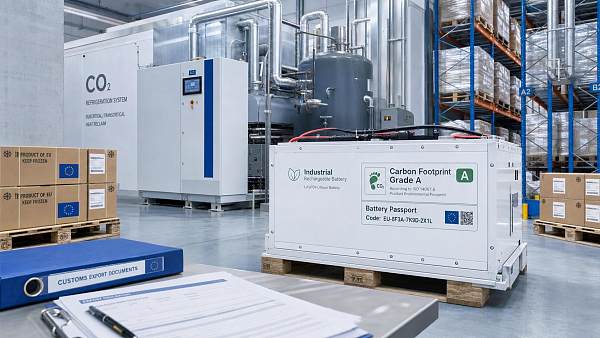
 Jun 21, 2026EU Battery Rule Tightens CO2 Cold Room ExportsEU Battery Rule Tightens CO2 Cold Room Exports: learn how carbon footprint labels, certified declarations, and the 2027 battery passport could impact customs clearance and market access.
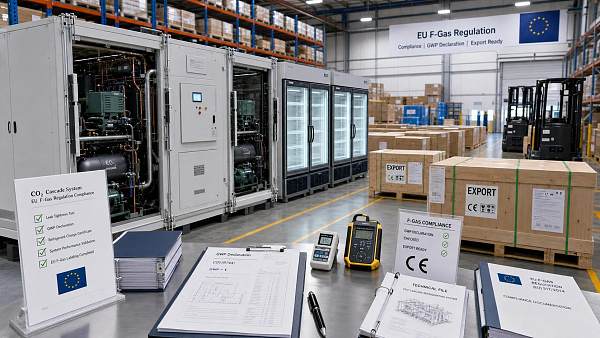
 Jun 20, 2026EU F-Gas Rule Takes Effect for CO2 Cascade Cold RoomsEU F-Gas Rule takes effect for CO2 Cascade Cold Rooms, raising new EU import, CE, and leak-monitoring document demands. See key compliance risks and what exporters should check now.
 Jun 19, 2026EU F-Gas Transition Tightens Export WindowEU F-Gas transition tightens the export window for CO2 Cascade Cold Rooms. Learn how FEDS certification and lifecycle GWP declarations may impact EU shipments, compliance timing, and project delivery.
 Jun 19, 2026Commercial Cold Rooms vs Upright Freezers: Which Fits High-Turnover Food Operations?Commercial cold rooms vs upright freezers: discover which option best supports high-turnover food operations with better workflow, compliance, and long-term cost control.
 Jun 18, 2026Haier Cold Chain Starts Indonesia CO2 AssemblyHaier Cold Chain starts Indonesia CO2 assembly with localized CO2 Cascade Cold Rooms built for tropical conditions, grid fluctuations, and F-Gas transition readiness—see what this means for ASEAN buyers.
 Jun 18, 2026New Outbound Investment Rules Take Effect July 1New Outbound Investment Rules take effect July 1, reshaping compliance, logistics, certification, and local service for equipment exporters. See what businesses should prepare now.
 Jun 17, 2026Pinghu Supply Chain Push in Shenzhen Signals New Export ControlsPinghu supply chain update in Shenzhen links AI visual inspection with export cold-chain packaging, signaling tighter controls for Industrial Ice Makers, Ultra-low Temp Freezers, and high-value equipment shipments.
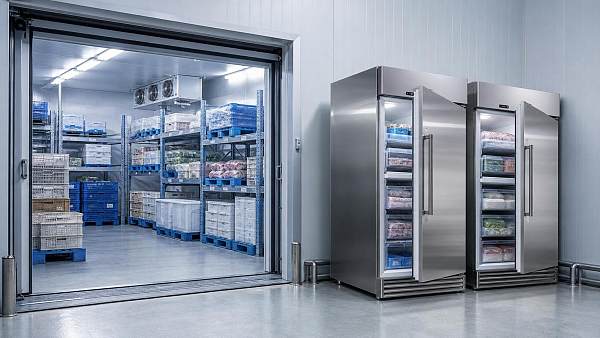
 Jun 17, 2026Commercial Freezers for Cold Storage: How to Size Capacity and Temperature RangeCommercial freezers for cold storage: learn how to size capacity and temperature range correctly to reduce energy costs, protect inventory, and choose the best fit for your operation.
 Jun 16, 2026EU F-Gas Transition Gives CO₂ Cold Rooms a 3-Year WindowCO2 Cascade Cold Rooms gain a crucial 3-year EU F-Gas transition window to June 2029. Learn how the new rule affects CE certification, export planning, delivery timelines, and EU market access.
 Jun 15, 2026EU Starts F-Gas Transition Relief for CO2 Cold RoomsEU Starts F-Gas Transition Relief for CO2 Cold Rooms: learn how the 2026–2029 exemption affects compliance, certification, procurement, and delivery planning.
 Jun 15, 2026Commercial Freezers for Cold Storage: Key Temperature, Capacity, and Compliance ChecksCommercial freezers for cold storage: learn how to verify temperature stability, usable capacity, and compliance checks to protect inventory, reduce risk, and choose with confidence.
 Jun 14, 2026EUDR Fast-Track Opens for CO2 Cold RoomsEUDR fast-track for CO2 cold rooms is now live, linking faster customs clearance to carbon footprint declarations and supply chain traceability. See what exporters and buyers should prepare now.
 Jun 14, 2026How to Choose Commercial Freezers for Cold Storage by Temperature Range and LoadCommercial freezers for cold storage: learn how to match temperature range, load, and workflow to cut energy waste, protect product quality, and choose the right unit with confidence.
 Jun 12, 2026EU F-Gas Rules Tighten Cold Room Import CertificationEU F-Gas Rules tighten cold room import certification from July 1, 2026. Learn how dual certification for CO2 Cascade Cold Rooms may impact customs clearance, delivery timelines, and EU market access.
 Jun 11, 2026EU F-Gas Rule Tightens Cold Room Export CertificationEU F-Gas Rule tightens cold room export certification from July 1, 2026. Learn how CO2 Cascade Cold Rooms, customs clearance, and EU shipment compliance will impact exporters and buyers.
 Jun 10, 2026EU Tightens F-Gas Rules for CO2 Cascade Cold RoomsCO2 Cascade Cold Rooms face stricter EU F-Gas rules from July 1, 2026. Learn how new GWP caps, leakage verification, and CE filing risks could impact exports and buyers.
 Jun 09, 2026EU Tightens Certification for CO2 Cascade Cold RoomsEU tightens certification for CO2 Cascade Cold Rooms from July 1, 2026. Learn how EERtemp verification, third-party type certification, and customs compliance will impact EU exports.
![]() Jun 09, 2026Energy-Efficient Refrigeration Solutions: Key Technologies, Savings Drivers, and Trade-OffsEnergy-efficient refrigeration solutions explained: compare key technologies, savings drivers, and trade-offs to cut energy costs, improve compliance, and protect cooling performance.
Jun 09, 2026Energy-Efficient Refrigeration Solutions: Key Technologies, Savings Drivers, and Trade-OffsEnergy-efficient refrigeration solutions explained: compare key technologies, savings drivers, and trade-offs to cut energy costs, improve compliance, and protect cooling performance. Jun 08, 2026NHTSA Proposal Tightens CO2 Cascade Cold Room CertificationCO2 Cascade Cold Room compliance faces new pressure as the NHTSA proposal tightens certification rules. Learn how longer lead times and stricter measured efficiency standards may affect exporters.
 Jun 07, 2026EU Drops Broad REACH Rewrite, Easing CO2 Freezer Export PressureEU Drops Broad REACH Rewrite eases near-term pressure on CO2 freezer export planning. Learn how REACH, PFAS, and EU border checks may reshape compliance priorities and risk.
 Jun 06, 2026Commercial Refrigeration Systems for Food Retail: Which Configuration Fits Your Store Layout?Commercial refrigeration systems should match your store layout, traffic flow, and product mix. Discover the best-fit setup to improve efficiency, food safety, and shopper experience.
![]() Jun 06, 2026GB/T 22918-2025 Takes Effect, Raising Export Cold Chain RequirementsGB/T 22918-2025 takes effect on May 1, 2026, tightening export cold chain rules for Industrial Ice Makers, CO2 Cascade Cold Rooms, and Ultra-low Temp Freezers. See key compliance impacts now.
Jun 06, 2026GB/T 22918-2025 Takes Effect, Raising Export Cold Chain RequirementsGB/T 22918-2025 takes effect on May 1, 2026, tightening export cold chain rules for Industrial Ice Makers, CO2 Cascade Cold Rooms, and Ultra-low Temp Freezers. See key compliance impacts now. Jun 05, 2026EU FSR Review Tightens Europe M&A Path for Cold Chain and POSEU FSR Review tightens Europe M&A planning for cold chain and smart POS. See how subsidy scrutiny may reshape procurement, supplier records, and cross-border compliance.
 Jun 05, 2026Commercial Refrigeration Systems Explained: Types, Components, and Best-Fit ApplicationsCommercial refrigeration systems explained clearly: compare types, key components, refrigerant paths, and best-fit applications to choose efficient, compliant solutions with confidence.


Editor's Selection
The Archive Newsletter
Critical industrial intelligence delivered every Tuesday. Peer-reviewed summaries of the week's most impactful logistics and market shifts.