Commercial Refrigeration Systems Explained: Types, Components, and Best-Fit Applications
by
Published
Views:
Commercial refrigeration systems are the backbone of food safety, product presentation, and energy efficiency across modern retail and service environments. From display freezers and cold rooms to restaurant back-of-house cooling, understanding their types, core components, and best-fit applications helps buyers, operators, and researchers make smarter decisions in performance, compliance, and total cost of ownership.
What are commercial refrigeration systems, and why do they matter so much?
Commercial refrigeration systems are engineered cooling solutions designed for continuous-duty operation in supermarkets, convenience stores, restaurants, hotels, foodservice kitchens, vending environments, and cold-chain storage. Unlike household units, they must handle heavier loads, faster door openings, stricter temperature control, and far more demanding hygiene expectations.
For information researchers, the real challenge is not defining the term. It is understanding how different system architectures affect energy bills, food compliance, uptime risk, maintenance planning, and future refrigerant transitions. A freezer that looks similar on the sales floor can behave very differently in a humid, high-traffic, 24/7 retail environment.
This is where CRSS brings practical value. By observing supermarket display cold chains, unmanned retail terminals, kitchen equipment ecosystems, and operational data flows together, CRSS frames refrigeration not as a standalone machine category, but as part of a commercial asset network where thermal efficiency, labor strategy, compliance, and digital operations intersect.
- Food safety depends on stable holding temperatures during repeated customer interaction and peak trading hours.
- Product presentation affects basket size, especially in open multideck displays and impulse-purchase frozen merchandising.
- Energy consumption often represents one of the largest equipment-related operating costs in modern retail facilities.
- Refrigerant choices increasingly shape export readiness, environmental compliance, and long-term retrofit planning.
Main types of commercial refrigeration systems by application
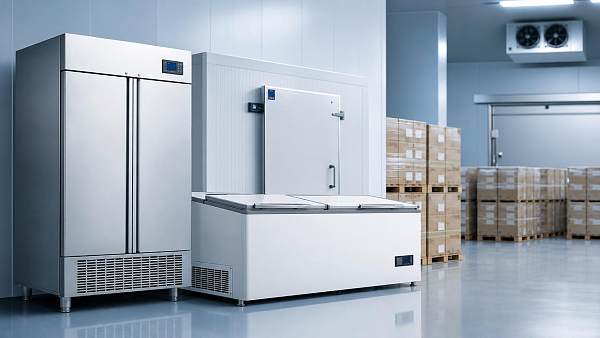
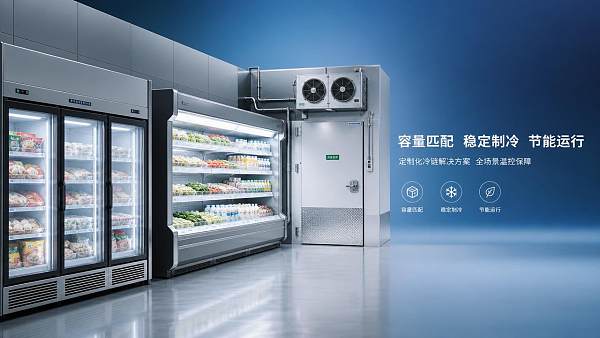
The best way to compare commercial refrigeration systems is to group them by operational scenario rather than by appearance alone. The same buyer may evaluate a walk-in cold room for back-of-house storage, a glass-door merchandiser for customer visibility, and an integrated cooling module for a smart vending cabinet.
Display refrigeration for retail merchandising
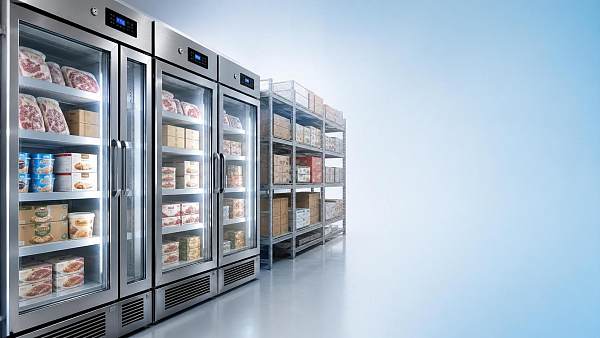
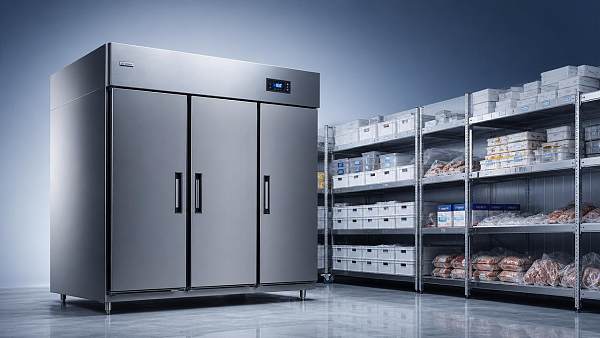
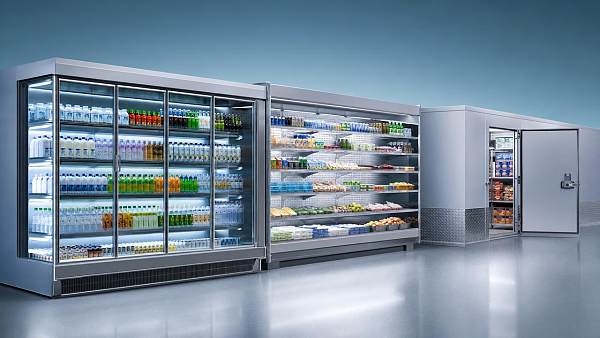
These systems prioritize product visibility and fast customer access. They include open multideck chillers, island freezers, serve-over counters, upright glass-door cabinets, and impulse merchandisers. Their cooling design must balance thermal retention with selling performance, which is why air curtain behavior, door opening frequency, and shelf loading matter.
Cold rooms and walk-in storage
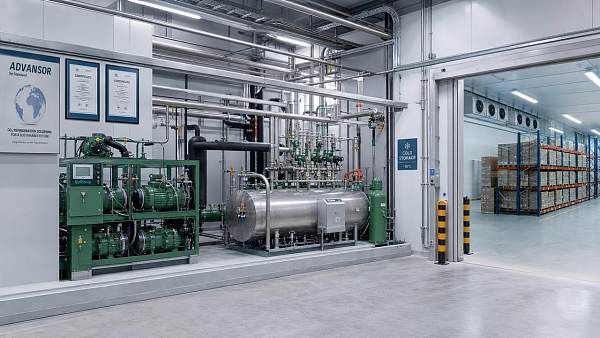
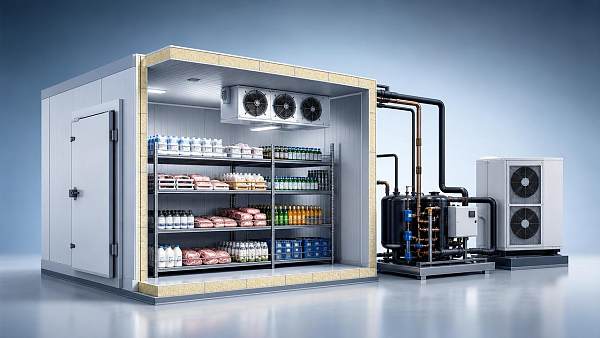
Cold rooms serve as the inventory buffer for supermarkets, restaurants, hotels, and central kitchens. They are selected by room volume, product pull-down needs, insulation quality, ambient conditions, and stocking frequency. In many facilities, poor cold room design causes hidden product loss long before a breakdown becomes obvious.
Foodservice and kitchen refrigeration
Undercounter refrigerators, prep tables, reach-ins, blast chill support units, and ingredient holding cabinets are common in restaurant and institutional kitchens. Here, service rhythm matters as much as nominal temperature. Doors open constantly, staff work fast, and equipment must recover temperature quickly without disrupting workflow.
Specialized refrigeration for vending and unmanned retail
Smart fridges and unmanned retail terminals combine refrigeration with sensors, edge computing, access control, and billing logic. In this category, thermal stability cannot be separated from door events, camera visibility, anti-fog strategies, and low-noise operation in public spaces.
The table below helps information researchers compare common commercial refrigeration systems by use case, temperature range, and selection logic.
A practical takeaway is that “best” commercial refrigeration systems are always scenario-dependent. Display units sell products, cold rooms protect inventory, and unmanned cabinets must coordinate refrigeration with digital retail logic. Comparing them under a single checklist usually leads to poor procurement decisions.
Core components that determine performance, stability, and service life
To evaluate commercial refrigeration systems properly, researchers need to look past cabinet size and list price. Performance is built around a small number of core components, and each one influences temperature consistency, maintenance complexity, and lifetime cost.
Refrigeration circuit
- Compressor: the primary driver of the cooling cycle and a major factor in noise, efficiency, and service interval planning.
- Condenser: responsible for heat rejection; poor ventilation or dirty coils quickly increase power draw.
- Evaporator: absorbs heat from the cabinet or room and must match airflow design to prevent hot spots.
- Expansion device: regulates refrigerant flow and strongly affects control precision under changing loads.
Control and monitoring layer
Controllers, sensors, defrost logic, alarms, and remote monitoring tools are no longer secondary. In chain retail and distributed vending, digital visibility is essential for early fault detection, HACCP-related record support, and coordinated maintenance. A stable cabinet with weak monitoring can still become a management problem.
Mechanical and thermal structure
Insulation thickness, door gasket quality, fan layout, drain design, anti-condensation measures, and cabinet material choice all shape real-world results. For open displays, airflow geometry is especially important. CRSS pays close attention to these details because a disrupted air curtain can sharply affect product temperature and energy waste in live retail conditions.
How to compare commercial refrigeration systems for procurement decisions
Researchers and procurement teams often ask the wrong first question: “Which model is cheapest?” A better question is: “Which system delivers the right temperature control, compliance path, and TCO for this operating environment?” The table below provides a procurement-focused comparison framework.
For supermarkets and convenience chains, CRSS often emphasizes TCO over purchase price because refrigeration runs continuously, interacts with customer behavior, and affects both utility costs and sell-through performance. In many cases, a lower initial quote masks higher lifetime cost through weak airflow design, poor controls, or difficult servicing access.
A practical shortlisting checklist
- Define the exact application: display selling, inventory storage, kitchen holding, or unmanned retail operation.
- Confirm temperature band, ambient conditions, product loading pattern, and daily access frequency.
- Review refrigerant strategy against target market rules, especially where F-Gas pressure or hydrocarbon safety practices matter.
- Ask for operating logic, alarm functions, and remote visibility options, not only basic specification sheets.
- Estimate lifecycle cost, including cleaning, service calls, downtime exposure, and power consumption.
Which applications fit which system best?
Best-fit application analysis is where many information researchers gain the most clarity. Commercial refrigeration systems should be matched to thermal behavior, customer interaction, and operational tempo. A supermarket aisle, a hotel kitchen, and a smart vending station may all require chilled storage, but they do not need the same solution.
Supermarkets and grocery chains
Open displays and glass-door cases dominate customer-facing zones, while walk-in cold rooms support replenishment and stock buffering. Here, airflow control, display visibility, and energy optimization are key. CRSS particularly tracks how retail traffic and ambient store conditions influence temperature drift and compressor workload.
Convenience stores and unmanned retail
Space is limited, turnover is fast, and labor strategy matters. Compact multideck units, glass-door freezers, and smart refrigerated cabinets are often better fits than large centralized arrangements. In unmanned scenarios, refrigeration performance must coexist with door sensors, image capture, and frictionless purchase flows.
Restaurants, cafés, and chain foodservice
Prep refrigeration, undercounter units, and reach-ins support speed and sanitation. The key is not just holding temperature but maintaining it during rush periods. Kitchen operators should assess recovery time, cleanability, and how equipment fits adjacent cooking and dishwashing processes.
Hotels, institutions, and central service sites
Larger cold rooms and distributed storage zones are common, often paired with high-frequency laundry and service logistics in the same facility. That broader facility context matters. Refrigeration decisions may affect electrical load planning, service corridors, hygiene workflows, and maintenance staffing.
Compliance, refrigerants, and the hidden risk of choosing only for today
A growing share of commercial refrigeration systems decisions now depends on refrigerant strategy. Buyers who focus only on immediate availability may create problems for export compliance, installation practice, future servicing, or sustainability reporting. This issue is especially important in international procurement.
CRSS closely watches changes related to F-Gas pressure, low-GWP alternatives, and the practical use of refrigerants such as CO2 and R290 in suitable applications. The right path depends on geography, technician readiness, equipment design, and safety procedures, not marketing language alone.
- Check whether the target market restricts certain high-GWP refrigerants.
- Review site readiness for natural refrigerants, including ventilation and servicing practices.
- Confirm documentation support for installation, maintenance, and traceability needs.
- Align environmental targets with real operating conditions and not only brochure claims.
Common mistakes researchers and buyers make
Even experienced teams can misread commercial refrigeration systems when the project includes multiple stakeholders, compressed timelines, or mixed-use spaces. Most mistakes are not technical in isolation; they come from incomplete system thinking.
- Using cabinet dimensions as the main comparison point while ignoring heat load, stocking behavior, and ambient temperature.
- Comparing list prices without estimating electricity, maintenance access, and probable downtime cost.
- Assuming all display freezers or cold rooms perform similarly under constant customer disturbance.
- Overlooking compliance pathways until late-stage export, installation, or chain rollout.
- Ignoring digital monitoring requirements in distributed sites such as convenience stores or unmanned retail points.
In practical terms, the strongest procurement outcomes usually come from scenario modeling: what is stored, how often doors open, how fast temperature must recover, how much the unit costs to run, and what compliance roadmaps apply in the target market.
FAQ: key questions about commercial refrigeration systems
How do I choose between a display unit and a cold room for retail operations?
They serve different purposes. Display units support product visibility and impulse sales on the shop floor, while cold rooms store backup inventory with higher thermal efficiency per stored volume. Most supermarkets need both: one for selling, one for replenishment and stock protection.
What matters more: initial price or operating cost?
For most commercial refrigeration systems, operating cost matters more over the life of the asset, especially in 24/7 retail. Energy use, service frequency, temperature-related product loss, and downtime often outweigh the purchase price difference. This is why TCO-based comparison is more reliable than quote-based comparison.
Are natural refrigerants always the right choice?
Not automatically. Natural refrigerants can support environmental goals and regulatory alignment, but the right fit depends on application, site conditions, technician competence, safety practice, and local rules. A sound refrigerant strategy is technical and operational, not just promotional.
What should researchers request from suppliers during early evaluation?
Ask for temperature performance logic, refrigerant details, expected ambient operating conditions, component accessibility, control functions, and maintenance recommendations. If the project involves chain deployment or unmanned retail, also request remote monitoring options, alarm structure, and rollout support details.
Why work with CRSS when evaluating commercial refrigeration systems?
CRSS approaches commercial refrigeration systems through the wider lens of modern retail and service infrastructure. That matters because refrigeration performance is linked to merchandising, unmanned operations, hygiene requirements, facility energy pressure, and asset intelligence. The result is more useful guidance for researchers who need decision clarity, not just generic product summaries.
If you are comparing display freezers, cold rooms, smart refrigerated cabinets, or broader retail equipment ecosystems, CRSS can support practical evaluation across parameters, application fit, refrigerant pathways, and TCO logic. You can consult on temperature requirements, configuration selection, delivery timing, export-oriented compliance considerations, customization direction, sample feasibility, and quotation alignment for multi-site procurement or pilot rollout planning.
For teams under pressure to balance food hygiene, energy efficiency, and scalable operations, a structured discussion early in the process can reduce rework and avoid costly mismatches later. That is often the fastest way to move from broad research into a shortlist that is technically defensible and commercially realistic.
Recommended News
 Jun 17, 2026Pinghu Supply Chain Push in Shenzhen Signals New Export ControlsPinghu supply chain update in Shenzhen links AI visual inspection with export cold-chain packaging, signaling tighter controls for Industrial Ice Makers, Ultra-low Temp Freezers, and high-value equipment shipments.
 Jun 17, 2026Commercial Freezers for Cold Storage: How to Size Capacity and Temperature RangeCommercial freezers for cold storage: learn how to size capacity and temperature range correctly to reduce energy costs, protect inventory, and choose the best fit for your operation.
 Jun 16, 2026EU F-Gas Transition Gives CO₂ Cold Rooms a 3-Year WindowCO2 Cascade Cold Rooms gain a crucial 3-year EU F-Gas transition window to June 2029. Learn how the new rule affects CE certification, export planning, delivery timelines, and EU market access.
 Jun 15, 2026EU Starts F-Gas Transition Relief for CO2 Cold RoomsEU Starts F-Gas Transition Relief for CO2 Cold Rooms: learn how the 2026–2029 exemption affects compliance, certification, procurement, and delivery planning.
 Jun 15, 2026Commercial Freezers for Cold Storage: Key Temperature, Capacity, and Compliance ChecksCommercial freezers for cold storage: learn how to verify temperature stability, usable capacity, and compliance checks to protect inventory, reduce risk, and choose with confidence.
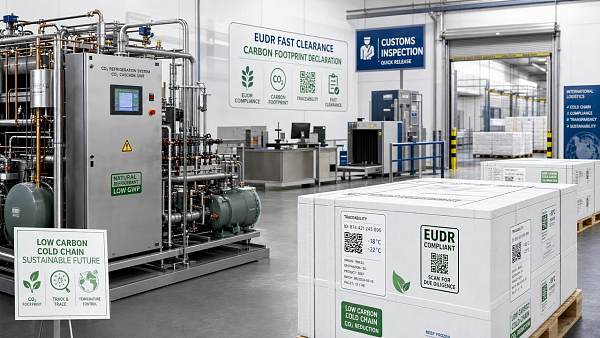
 Jun 14, 2026EUDR Fast-Track Opens for CO2 Cold RoomsEUDR fast-track for CO2 cold rooms is now live, linking faster customs clearance to carbon footprint declarations and supply chain traceability. See what exporters and buyers should prepare now.
 Jun 14, 2026How to Choose Commercial Freezers for Cold Storage by Temperature Range and LoadCommercial freezers for cold storage: learn how to match temperature range, load, and workflow to cut energy waste, protect product quality, and choose the right unit with confidence.
 Jun 12, 2026EU F-Gas Rules Tighten Cold Room Import CertificationEU F-Gas Rules tighten cold room import certification from July 1, 2026. Learn how dual certification for CO2 Cascade Cold Rooms may impact customs clearance, delivery timelines, and EU market access.
 Jun 11, 2026EU F-Gas Rule Tightens Cold Room Export CertificationEU F-Gas Rule tightens cold room export certification from July 1, 2026. Learn how CO2 Cascade Cold Rooms, customs clearance, and EU shipment compliance will impact exporters and buyers.
 Jun 10, 2026EU Tightens F-Gas Rules for CO2 Cascade Cold RoomsCO2 Cascade Cold Rooms face stricter EU F-Gas rules from July 1, 2026. Learn how new GWP caps, leakage verification, and CE filing risks could impact exports and buyers.
 Jun 09, 2026EU Tightens Certification for CO2 Cascade Cold RoomsEU tightens certification for CO2 Cascade Cold Rooms from July 1, 2026. Learn how EERtemp verification, third-party type certification, and customs compliance will impact EU exports.
![]() Jun 09, 2026Energy-Efficient Refrigeration Solutions: Key Technologies, Savings Drivers, and Trade-OffsEnergy-efficient refrigeration solutions explained: compare key technologies, savings drivers, and trade-offs to cut energy costs, improve compliance, and protect cooling performance.
Jun 09, 2026Energy-Efficient Refrigeration Solutions: Key Technologies, Savings Drivers, and Trade-OffsEnergy-efficient refrigeration solutions explained: compare key technologies, savings drivers, and trade-offs to cut energy costs, improve compliance, and protect cooling performance. Jun 08, 2026NHTSA Proposal Tightens CO2 Cascade Cold Room CertificationCO2 Cascade Cold Room compliance faces new pressure as the NHTSA proposal tightens certification rules. Learn how longer lead times and stricter measured efficiency standards may affect exporters.
 Jun 07, 2026EU Drops Broad REACH Rewrite, Easing CO2 Freezer Export PressureEU Drops Broad REACH Rewrite eases near-term pressure on CO2 freezer export planning. Learn how REACH, PFAS, and EU border checks may reshape compliance priorities and risk.
 Jun 06, 2026Commercial Refrigeration Systems for Food Retail: Which Configuration Fits Your Store Layout?Commercial refrigeration systems should match your store layout, traffic flow, and product mix. Discover the best-fit setup to improve efficiency, food safety, and shopper experience.
![]() Jun 06, 2026GB/T 22918-2025 Takes Effect, Raising Export Cold Chain RequirementsGB/T 22918-2025 takes effect on May 1, 2026, tightening export cold chain rules for Industrial Ice Makers, CO2 Cascade Cold Rooms, and Ultra-low Temp Freezers. See key compliance impacts now.
Jun 06, 2026GB/T 22918-2025 Takes Effect, Raising Export Cold Chain RequirementsGB/T 22918-2025 takes effect on May 1, 2026, tightening export cold chain rules for Industrial Ice Makers, CO2 Cascade Cold Rooms, and Ultra-low Temp Freezers. See key compliance impacts now. Jun 05, 2026EU FSR Review Tightens Europe M&A Path for Cold Chain and POSEU FSR Review tightens Europe M&A planning for cold chain and smart POS. See how subsidy scrutiny may reshape procurement, supplier records, and cross-border compliance.
 Jun 05, 2026Commercial Refrigeration Systems Explained: Types, Components, and Best-Fit ApplicationsCommercial refrigeration systems explained clearly: compare types, key components, refrigerant paths, and best-fit applications to choose efficient, compliant solutions with confidence.
 Jun 05, 2026How to Choose Commercial Freezers for Cold Storage by Capacity, Temperature, and LoadCommercial freezers for cold storage: learn how to compare capacity, temperature stability, and load performance to cut energy costs, protect products, and choose the right unit with confidence.
![]() Jun 04, 2026Hormuz Disruption Hits R290 and Ammonia ShippingHormuz disruption hits R290 and ammonia shipping, delaying exports and raising freight risk. See how cold chain, refrigerant, and logistics firms can respond fast.
Jun 04, 2026Hormuz Disruption Hits R290 and Ammonia ShippingHormuz disruption hits R290 and ammonia shipping, delaying exports and raising freight risk. See how cold chain, refrigerant, and logistics firms can respond fast. Jun 03, 2026Commercial Cold Rooms Buying Guide: Sizing, Insulation and Refrigeration LoadCommercial cold rooms buying guide: learn how to size storage, choose insulation, calculate refrigeration load, and reduce energy costs with CRSS project insights.
 Jun 02, 2026ICS2 ENS Filing Now Mandatory for China-Europe RailICS2 ENS Filing is now mandatory for China-Europe Rail shipments to the EU. Learn key compliance risks, affected cargo, and how to avoid delays or detention.
 Jun 01, 2026What raises costs in commercial refrigeration systems?Commercial refrigeration systems can hide costly energy waste, refrigerant risks, downtime, and maintenance issues. Learn what drives costs and how to improve ROI.
 May 29, 2026How should retail cold chain equipment be sized?Learn how to size retail cold chain equipment for safe temperatures, lower energy costs, smarter layouts, and better ROI across modern stores.


Editor's Selection
The Archive Newsletter
Critical industrial intelligence delivered every Tuesday. Peer-reviewed summaries of the week's most impactful logistics and market shifts.