
Commercial freezers can hide food safety risks
by
Published
Views:
Commercial freezers can hide food safety risks
Commercial freezers are often treated as reliable last-mile guardians of food safety, yet hidden temperature drift can quietly create risk zones.
Air-curtain disruption, poor loading, delayed maintenance, and weak monitoring can compromise frozen products before visible spoilage appears.
For any retail, catering, vending, or cold-chain operation, commercial freezers must support both product quality and defensible hygiene control.
The real challenge is not only keeping food cold, but proving every shelf, sensor, door event, and defrost cycle remains controlled.
Basic role of commercial freezers in food safety
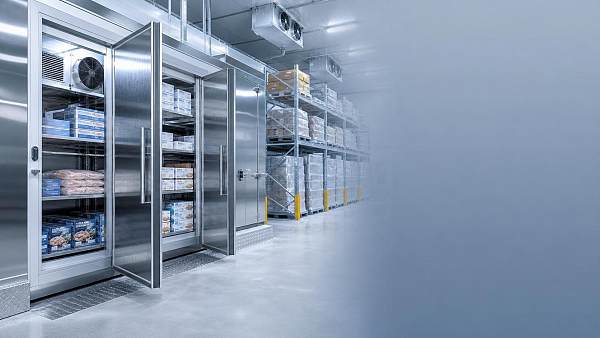
Commercial freezers are engineered to hold frozen goods within safe temperature ranges during storage, display, and short-term customer interaction.
Unlike household appliances, commercial freezers face frequent door openings, dense loading, bright lighting, and continuous thermal pressure.
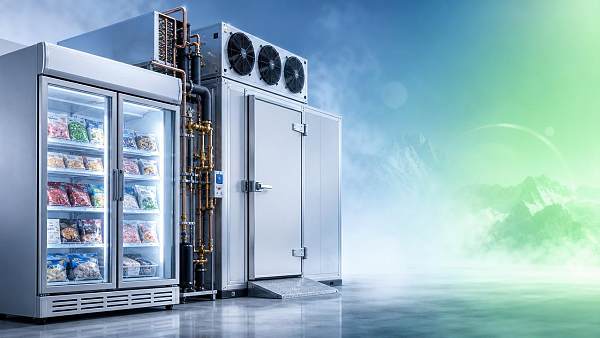
In supermarkets, open display cases rely on invisible air curtains to separate frozen products from warmer sales floors.
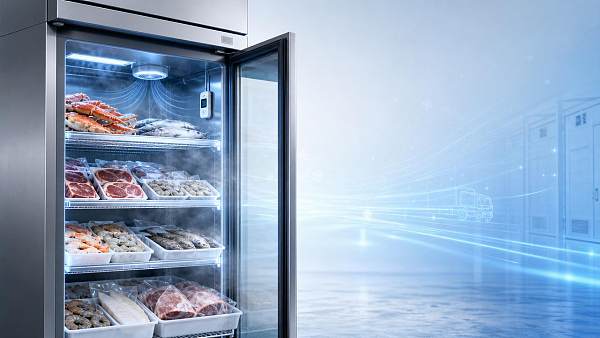
In restaurants, upright commercial freezers protect ingredients that may move quickly between storage, preparation, and service.
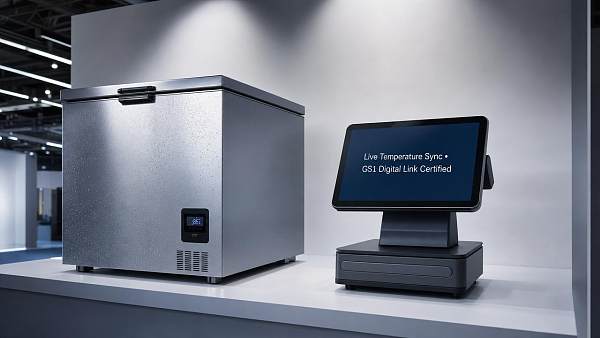
In unmanned retail, smart commercial freezers combine refrigeration, cameras, locks, and sensors to support automated purchasing.
These systems appear simple to users, but their safety performance depends on airflow, compressor health, controls, and human behavior.
A freezer can show a normal panel reading while a warm pocket develops behind blocked vents or overloaded shelves.
That gap between displayed temperature and product temperature is where many food safety risks begin.
Current industry concerns around hidden freezer failure
Commercial sites increasingly depend on refrigerated assets that operate continuously, often with limited direct supervision during low-traffic hours.
Energy prices, labor shortages, and stricter hygiene expectations make the condition of commercial freezers more commercially significant.
The problem is subtle because many failures are intermittent rather than dramatic.
A compressor may recover after strain, a door may reseal, and an alarm may clear before inspection.
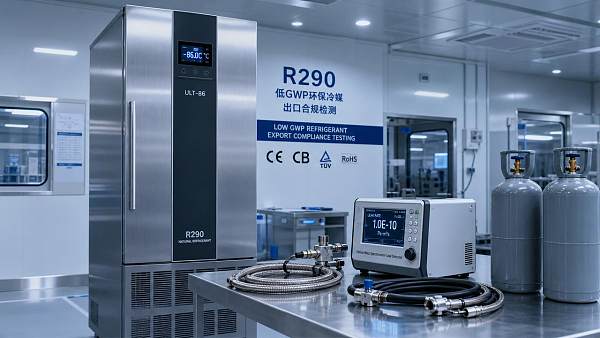
Commercial freezers also face regulatory and environmental pressure as refrigerants shift toward lower-GWP alternatives.
CO2 and R290 systems can deliver strong performance, but they require correct design, servicing, and compliance discipline.
Digital monitoring adds visibility, yet data without interpretation can still miss real product exposure.
How commercial freezers create invisible risk zones
A commercial freezer does not fail only when it stops cooling completely.
Food safety can be affected by small deviations that repeat across hours, shifts, and restocking cycles.
Airflow obstruction
Commercial freezers need clear airflow paths around evaporators, shelves, and product stacks.
Overloading blocks circulation and causes product temperature differences between front rows, rear corners, and lower shelves.
Open display commercial freezers are especially sensitive because air curtains can collapse when merchandise crosses load lines.
Door and gasket leakage
Door freezers are vulnerable to worn gaskets, misaligned hinges, and repeated opening during busy periods.
Warm humid air enters, condenses, freezes, and gradually reduces cooling efficiency.
The result may be frost, longer compressor runtime, and higher risk of localized thawing.
Defrost and recovery gaps
Defrost cycles are necessary, but poorly timed cycles can coincide with restocking or peak door activity.
Commercial freezers should recover quickly after defrost, but aging components often extend recovery time.
A short spike may not look serious until product probes reveal repeated exposure.
Sensor placement errors
Many commercial freezers use sensors that reflect cabinet air, not the warmest product position.
If sensors sit near cold discharge air, temperature readings may appear safer than actual merchandise conditions.
Verification with calibrated probes helps connect equipment data with real food safety evidence.
Business value of stronger freezer control
Better control of commercial freezers reduces spoilage, product withdrawal, customer complaints, and emergency service costs.
It also improves confidence during audits because records show consistent control, corrective action, and equipment accountability.
For multi-site operations, freezer data can reveal patterns that single inspections often miss.
One store may suffer from poor loading, while another needs gasket replacement or control recalibration.
Energy performance is another practical benefit.
Commercial freezers working against leaks, frost, and blocked airflow consume more electricity to deliver weaker protection.
A disciplined freezer program can therefore support food safety, sustainability, and total cost control together.
This alignment matters as commercial assets become connected, sensor-rich, and increasingly judged by lifecycle performance.
Typical freezer scenarios and risk priorities
Different commercial freezers present different food safety challenges, even when temperature targets appear similar.
A useful assessment starts by separating the freezer type, operating pattern, and product sensitivity.
High-risk products deserve more attention because texture damage may appear before safety concerns are obvious.
Seafood, ready-to-cook meals, ice cream, meat, and premium frozen bakery items respond differently to temperature abuse.
Commercial freezers holding these products should be assessed by product temperature, not cabinet readings alone.
Practical controls that reduce food safety exposure
A strong freezer program combines equipment design, daily routines, maintenance, and data review.
The following practices help turn commercial freezers from assumed safeguards into verified safeguards.
- Map temperatures across shelves, corners, and high-load positions after installation.
- Verify product temperature with calibrated probes, especially after defrost cycles.
- Keep products below load lines and away from evaporator discharge zones.
- Inspect door gaskets, hinges, handles, and closers on a planned schedule.
- Set alarm thresholds that reflect food risk, not only equipment convenience.
- Link temperature alarms to clear escalation steps and corrective documentation.
- Review recovery time after peak activity, restocking, cleaning, and defrost events.
- Clean condensers and evaporators before efficiency loss becomes safety exposure.
Commercial freezers should also be protected from operational shortcuts.
Temporary storage beyond load limits, blocked vents, and unplugged alarms can undermine even well-designed systems.
Digital dashboards are valuable when they highlight exceptions, trends, and root causes rather than only showing current temperature.
Edge sensors, door-event logs, and compressor runtime data can expose patterns before product loss occurs.
Maintenance and compliance considerations
Preventive maintenance is not only a reliability activity for commercial freezers.
It is also a food safety control that supports traceable evidence during audits and incident reviews.
Records should show inspection dates, calibration status, repairs, abnormal events, and product disposition decisions.
When records are incomplete, it becomes harder to prove that frozen goods stayed protected.
Refrigerant transitions add another layer of responsibility.
Commercial freezers using natural refrigerants may need specific ventilation, charge limits, leak procedures, and trained servicing.
Compliance should therefore connect refrigeration engineering with hygiene, energy, and asset management requirements.
This integrated view is essential as retail environments move toward connected assets and lower-carbon infrastructure.
Action path for safer commercial freezers
Improving commercial freezers begins with a practical baseline, not a complex overhaul.
Start by identifying all freezer assets, product categories, alarm methods, and recent maintenance history.
Next, compare displayed temperatures with product temperatures during normal operations and stress periods.
Then prioritize corrective action for units with slow recovery, repeated alarms, visible frost, or uneven shelf readings.
Finally, build a routine review cycle that connects data, maintenance, loading practices, and documented decisions.
Commercial freezers protect food only when their performance is visible, verified, and maintained under real operating conditions.
A measured approach reduces hidden food safety risks while supporting energy efficiency, compliance confidence, and reliable retail service.
For ongoing insight into commercial freezers, cold-chain assets, and intelligent retail systems, CRSS tracks the engineering signals that matter.
Recommended News
 Jul 19, 2026How to Evaluate a Commercial Freezers Supplier for Quality, Lead Time, and Total CostCommercial freezers supplier evaluation starts with quality, lead time, compliance, and total cost. Learn how to compare suppliers, reduce risk, and choose with confidence.
 Jul 12, 2026EU Requires R290 for ULT Freezers After 2027EU requires R290 for ULT freezers after 2027. Learn how the new F-Gas amendment affects exports, customs clearance, and compliant buying for EU medical, biotech, and research markets.
 Jul 08, 2026EU F-Gas Phase-out Moves Up for New FreezersEU F-Gas phase-out moves up for new freezers, forcing EU-bound models after Jan 1, 2027 to use R744, R290 or A2L/A3 refrigerants. Learn the compliance, customs and supply chain risks now.
 Jun 23, 2026Commercial Freezers Explained: Upright vs Chest vs Display Models for Food Service UseCommercial freezers compared: upright, chest, and display models for food service. Learn how each affects access, temperature control, energy use, and smarter buying decisions.
 Jun 22, 2026China Opens Fast-Track Customs for Green Cold Chain ExportsChina opens fast-track customs for green cold chain exports, speeding Ultra-low Temp Freezers and CO2 Cascade Cold Rooms with R290/CO2 through pilot ports. See who benefits.
 Jun 19, 2026How to Choose Commercial Freezers for Cold Storage: Capacity, Temperature, and Energy UseCommercial freezers for cold storage: learn how to compare real capacity, temperature stability, and energy use to reduce spoilage, control costs, and choose the right unit with confidence.
 Jun 16, 2026RCEP Fast-Track Opens for Ultra-low Temp FreezersUltra-low Temp Freezers gain faster RCEP customs clearance under the new fast-track. Learn how ISO 23453, origin certificates, and energy documents can cut release time to 48 hours.
 Jun 15, 2026RCEP Fast Track Gives Ultra-Low Temp Freezers 48-Hour ReleaseRCEP Fast Track accelerates Ultra-Low Temp Freezers clearance to 48 hours. Learn how compliant CO2/R290 models can speed market entry and cut inventory pressure across Asia-Pacific.
 Jun 14, 2026RCEP Fast-Track Opens for Ultra-low Temp FreezersUltra-low Temp Freezers gain a 48-hour RCEP fast-track via EN 16829 certification and carbon footprint documents. See what exporters, buyers, and logistics teams must prepare now.
 Jun 13, 2026RCEP Fast-Track Clears Ultra-Low Temp Freezers in 48 HoursRCEP fast-track helps Ultra-low Temp Freezers clear customs in 48 hours at key hub ports. See how ISO 23439:2025 compliance can speed delivery, reduce delays, and improve market access.
 Jun 12, 2026How to Choose Commercial Freezers for Retail or Foodservice: Size, Temperature, and Energy UseCommercial freezers buying guide for retail and foodservice: learn how to compare size, temperature stability, and energy use to reduce costs and choose the right unit with confidence.
 Jun 11, 2026R290 ULT freezer export approvals enter fast trackR290 ULT freezer export approvals enter fast track as China’s first whitelist links dual-standard compliance to faster inspection, market access, and smoother overseas delivery.
 Jun 10, 2026R290 Ultra-Low Temp Freezers Gain Export Fast-TrackR290 ultra-low temp freezers gain export fast-track support in China, opening new opportunities in medical cold-chain exports with faster certification and tax rebate advantages.
 Jun 09, 2026R290 ULT Freezer Export Certification Path OpensR290 ULT Freezer export certification path opens with a new dual-standard route and green channel. Learn what UL 61010-2-040 and IEC 60335-2-24 mean for faster compliance and export planning.
 Jun 08, 2026R290 Shift Gains Pace as ULT Freezer Export Window OpensR290 shift accelerates as the ULT freezer export window opens. Learn how R290 certification, R404A/R507 risks, and 2027 EU, Australia, and Singapore rules may impact market access.
 Jun 05, 2026WTO Cuts 2026 Trade Growth; Delivery Times StretchWTO cuts 2026 trade growth to 1.9% as delivery times stretch and freight surcharges rise. Learn how FOB/CIF terms, lead times, and cold-chain export contracts should adapt now.
![]() Jun 04, 2026EU ICS2 Rule Hits Cold Chain Equipment on June 1EU ICS2 rule hits cold chain equipment on June 1, 2026. Learn how ENS filing affects EU-bound shipments, customs timing, costs, and delivery reliability.
Jun 04, 2026EU ICS2 Rule Hits Cold Chain Equipment on June 1EU ICS2 rule hits cold chain equipment on June 1, 2026. Learn how ENS filing affects EU-bound shipments, customs timing, costs, and delivery reliability. Jun 03, 2026EU F-Gas Revision Raises R290 Export RequirementsEU F-Gas Revision raises R290 export requirements for commercial refrigeration. Learn key certification, labeling, and customs risks before shipping to the EU.
 Jun 03, 2026Eco-Refrigerant Freezers: How to Compare GWP, Safety Class and Energy UseEco-refrigerant freezers explained: compare GWP, safety class, and real-world energy use to cut costs, stay compliant, and protect food quality.
 Jun 02, 2026EU F-Gas Rule Hits Ultra-Low Freezer ExportsEU F-Gas Rule reshapes ultra-low freezer exports: learn how R290 certification, 0.5 g/year leakage tests, and CE access affect EU market readiness.
 Jun 01, 2026Commercial freezers can hide food safety risksCommercial freezers can hide temperature drift, airflow issues, and food safety risks. Learn how smarter monitoring and maintenance protect products, audits, and profits.
![]() May 31, 2026Are commercial freezers raising your energy bills?Commercial freezers may be driving up energy bills. Learn how to cut hidden kWh waste, reduce downtime, and make smarter TCO-based refrigeration decisions.
May 31, 2026Are commercial freezers raising your energy bills?Commercial freezers may be driving up energy bills. Learn how to cut hidden kWh waste, reduce downtime, and make smarter TCO-based refrigeration decisions. May 22, 2026Chemspec Europe 2026 Highlights Commercial Cold Chain & Smart POSChemspec Europe 2026 spotlighted Commercial Cold Chain & Smart POS — driving EU food safety, traceability & retail efficiency. Discover key compliance and integration insights.
 May 22, 2026When do commercial freezers for cold storage pay back?Commercial freezers for cold storage pay back faster when energy savings, lower spoilage, and reduced downtime align. Explore ROI by retail, foodservice, logistics, and healthcare scenarios.


Editor's Selection
The Archive Newsletter
Critical industrial intelligence delivered every Tuesday. Peer-reviewed summaries of the week's most impactful logistics and market shifts.