
How to Choose Commercial Freezers for Retail or Foodservice: Size, Temperature, and Energy Use
by
Published
Views:
How to Choose Commercial Freezers for Retail or Foodservice: Size, Temperature, and Energy Use
Choosing commercial freezers is not just a price comparison exercise.
The better decision usually comes from matching equipment to workload, product type, and operating hours.
For retail and foodservice sites, freezer selection affects food safety, labor efficiency, electricity cost, and service continuity.
That also means a poor choice can quietly raise total cost of ownership for years.
This guide explains how to compare commercial freezers by size, temperature performance, and energy use.
The goal is simple: make freezer buying decisions with fewer surprises after installation.
Start with the real operating scenario
Many buyers begin with external dimensions.
That matters, but it is rarely the best first filter.
A smarter starting point is the daily operating scenario behind the freezer.
A supermarket backroom freezer faces different pressure than a convenience store display case.
A restaurant prep area also behaves differently from a central kitchen or bakery production line.
Before comparing commercial freezers, define these basics:
- What products will be stored, displayed, or accessed most often
- Expected delivery frequency and stock turnover speed
- Peak door openings during rush hours
- Ambient conditions, including kitchen heat or store entrance drafts
- Available floor area, clearance, and loading path
- Food safety rules or internal temperature logging requirements
This first step helps narrow the field quickly.
It also prevents buying commercial freezers that look efficient on paper but struggle in live conditions.
Choose the right freezer size, not the biggest cabinet
Oversizing is a common procurement mistake.
It seems safer, but it often wastes floor space and raises energy use.
Undersizing is just as risky because it creates overloading, poor airflow, and unstable temperatures.
The right size depends on usable storage volume, not just gross liters.
When sizing commercial freezers, focus on:
- Net internal capacity after shelves, baskets, and airflow space
- Packaging dimensions of your actual products
- Required reserve capacity for promotions or seasonal spikes
- Ergonomic loading height and staff access speed
- Future menu or SKU expansion over the next two to three years
In real operations, 80 percent useful capacity is often healthier than filling a freezer completely.
That gap supports airflow and faster temperature recovery after door openings.
For high-turnover sites, two smaller commercial freezers may work better than one oversized unit.
Match size to format
Different applications call for different freezer formats:
- Upright freezers support fast access and better product organization
- Chest freezers usually offer stronger holding efficiency and lower air loss
- Display freezers prioritize visibility, impulse sales, and customer reach
- Undercounter units fit tight kitchens where speed matters more than capacity
- Walk-in cold rooms suit centralized storage with larger inventory swings
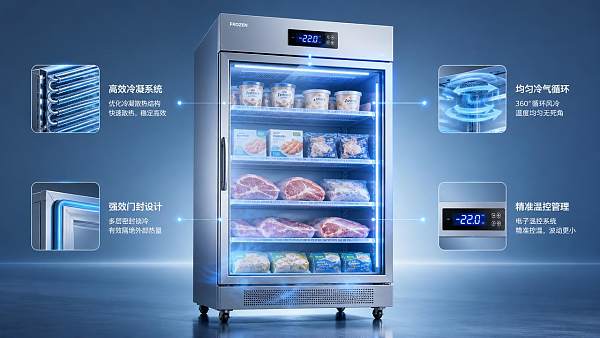
Temperature performance matters more than setpoint alone
A displayed setpoint does not tell the full story.
The real question is whether commercial freezers hold safe product temperature during actual operating stress.
Door openings, restocking, warm product loads, and nearby heat sources can all disrupt performance.
Evaluate these temperature indicators:
- Operating range under full load and partial load
- Temperature uniformity from top to bottom
- Recovery time after frequent openings
- Defrost method and its effect on stored product
- Controller accuracy and alarm functionality
For frozen food, consistency often matters more than chasing the lowest number.
Large swings can damage texture, increase ice buildup, and shorten product life.
That is why commercial freezers should be assessed during realistic door-opening cycles, not just idle showroom conditions.
Do not ignore the ambient environment
Ambient temperature changes freezer behavior dramatically.
A unit beside fryers or direct sunlight will work harder than the same model in a cooler backroom.
If the site runs hot, verify the climate class and performance rating before approval.
Energy use should be measured over years, not months
Energy cost is one of the biggest lifetime variables in commercial freezers.
A cheaper unit can become more expensive within one or two years.
This is especially true for stores or kitchens that run equipment around the clock.
When comparing energy performance, review:
- Annual or daily energy consumption under test conditions
- Compressor type and control logic
- Insulation quality and door seal design
- Fan motor efficiency and lighting load for display units
- Defrost frequency and anti-condensation heating demand
Numbers should always be linked to operating conditions.
For example, open display commercial freezers face very different loads than closed-door storage cabinets.
That is why energy labels alone should not decide the purchase.
Estimate total cost of ownership
A practical TCO view includes:
- Purchase price
- Installation and site preparation
- Annual electricity cost
- Maintenance visits and spare parts
- Downtime risk and lost inventory exposure
- Expected service life and replacement timing
For many operations, the best commercial freezers are the ones that reduce operating friction every day.
Check construction, refrigerant, and service support
Procurement decisions should not stop at capacity and kilowatt-hours.
Build quality and support access have direct impact on uptime.
This becomes even more important for chain sites with standardized maintenance plans.
Review these practical points:
- Interior and exterior material durability
- Shelf strength, caster quality, and door hinge lifespan
- Ease of condenser cleaning and service access
- Spare part lead time and technician coverage
- Refrigerant type and local compliance requirements
Natural refrigerants and higher-efficiency systems are gaining attention across global retail equipment planning.
That trend is tied to regulation, corporate sustainability targets, and future operating risk.
In short, commercial freezers should fit both present workflow and future compliance expectations.
Use a simple evaluation matrix before final selection
A structured scoring table helps keep decisions objective.
It is especially useful when several commercial freezers look similar at first glance.
This kind of matrix helps balance visible price against hidden operational consequences.
It also makes internal approvals easier when finance, operations, and maintenance teams need common criteria.
Final takeaway for better commercial freezer decisions
The best commercial freezers are not always the largest or the lowest-priced models.
They are the units that fit product flow, protect temperature integrity, and keep energy use under control.
A strong decision usually comes from checking site conditions, useful capacity, recovery performance, and lifetime operating cost together.
In practice, that creates fewer food safety issues, less maintenance disruption, and more predictable budgeting.
When reviewing commercial freezers, use a shortlist built around operating reality instead of catalog claims alone.
That approach leads to more confident selection and better long-term performance across retail or foodservice environments.
Recommended News
 Jun 19, 2026How to Choose Commercial Freezers for Cold Storage: Capacity, Temperature, and Energy UseCommercial freezers for cold storage: learn how to compare real capacity, temperature stability, and energy use to reduce spoilage, control costs, and choose the right unit with confidence.
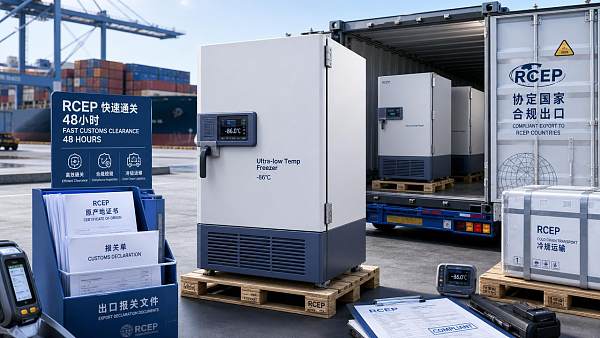
 Jun 16, 2026RCEP Fast-Track Opens for Ultra-low Temp FreezersUltra-low Temp Freezers gain faster RCEP customs clearance under the new fast-track. Learn how ISO 23453, origin certificates, and energy documents can cut release time to 48 hours.
 Jun 15, 2026RCEP Fast Track Gives Ultra-Low Temp Freezers 48-Hour ReleaseRCEP Fast Track accelerates Ultra-Low Temp Freezers clearance to 48 hours. Learn how compliant CO2/R290 models can speed market entry and cut inventory pressure across Asia-Pacific.
 Jun 14, 2026RCEP Fast-Track Opens for Ultra-low Temp FreezersUltra-low Temp Freezers gain a 48-hour RCEP fast-track via EN 16829 certification and carbon footprint documents. See what exporters, buyers, and logistics teams must prepare now.
 Jun 13, 2026RCEP Fast-Track Clears Ultra-Low Temp Freezers in 48 HoursRCEP fast-track helps Ultra-low Temp Freezers clear customs in 48 hours at key hub ports. See how ISO 23439:2025 compliance can speed delivery, reduce delays, and improve market access.
 Jun 12, 2026How to Choose Commercial Freezers for Retail or Foodservice: Size, Temperature, and Energy UseCommercial freezers buying guide for retail and foodservice: learn how to compare size, temperature stability, and energy use to reduce costs and choose the right unit with confidence.
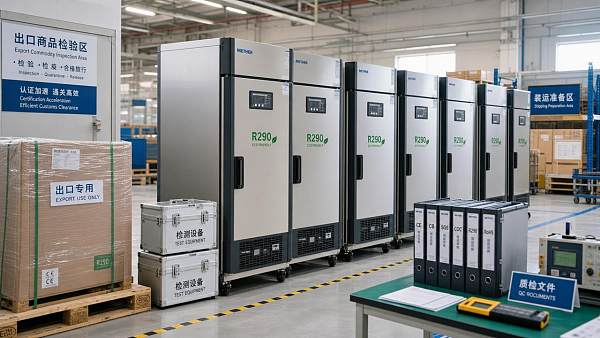
 Jun 11, 2026R290 ULT freezer export approvals enter fast trackR290 ULT freezer export approvals enter fast track as China’s first whitelist links dual-standard compliance to faster inspection, market access, and smoother overseas delivery.
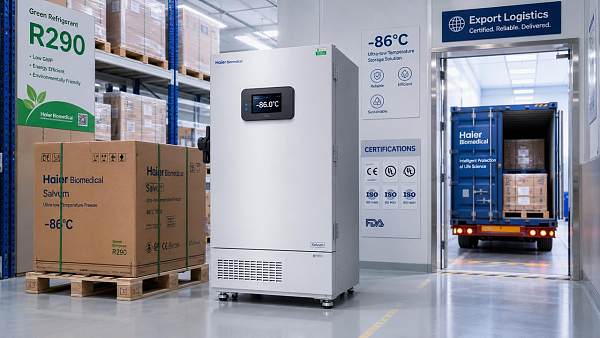
 Jun 10, 2026R290 Ultra-Low Temp Freezers Gain Export Fast-TrackR290 ultra-low temp freezers gain export fast-track support in China, opening new opportunities in medical cold-chain exports with faster certification and tax rebate advantages.
 Jun 09, 2026R290 ULT Freezer Export Certification Path OpensR290 ULT Freezer export certification path opens with a new dual-standard route and green channel. Learn what UL 61010-2-040 and IEC 60335-2-24 mean for faster compliance and export planning.
 Jun 08, 2026R290 Shift Gains Pace as ULT Freezer Export Window OpensR290 shift accelerates as the ULT freezer export window opens. Learn how R290 certification, R404A/R507 risks, and 2027 EU, Australia, and Singapore rules may impact market access.
 Jun 05, 2026WTO Cuts 2026 Trade Growth; Delivery Times StretchWTO cuts 2026 trade growth to 1.9% as delivery times stretch and freight surcharges rise. Learn how FOB/CIF terms, lead times, and cold-chain export contracts should adapt now.
![]() Jun 04, 2026EU ICS2 Rule Hits Cold Chain Equipment on June 1EU ICS2 rule hits cold chain equipment on June 1, 2026. Learn how ENS filing affects EU-bound shipments, customs timing, costs, and delivery reliability.
Jun 04, 2026EU ICS2 Rule Hits Cold Chain Equipment on June 1EU ICS2 rule hits cold chain equipment on June 1, 2026. Learn how ENS filing affects EU-bound shipments, customs timing, costs, and delivery reliability. Jun 03, 2026EU F-Gas Revision Raises R290 Export RequirementsEU F-Gas Revision raises R290 export requirements for commercial refrigeration. Learn key certification, labeling, and customs risks before shipping to the EU.
 Jun 03, 2026Eco-Refrigerant Freezers: How to Compare GWP, Safety Class and Energy UseEco-refrigerant freezers explained: compare GWP, safety class, and real-world energy use to cut costs, stay compliant, and protect food quality.
 Jun 02, 2026EU F-Gas Rule Hits Ultra-Low Freezer ExportsEU F-Gas Rule reshapes ultra-low freezer exports: learn how R290 certification, 0.5 g/year leakage tests, and CE access affect EU market readiness.
 Jun 01, 2026Commercial freezers can hide food safety risksCommercial freezers can hide temperature drift, airflow issues, and food safety risks. Learn how smarter monitoring and maintenance protect products, audits, and profits.
![]() May 31, 2026Are commercial freezers raising your energy bills?Commercial freezers may be driving up energy bills. Learn how to cut hidden kWh waste, reduce downtime, and make smarter TCO-based refrigeration decisions.
May 31, 2026Are commercial freezers raising your energy bills?Commercial freezers may be driving up energy bills. Learn how to cut hidden kWh waste, reduce downtime, and make smarter TCO-based refrigeration decisions. May 22, 2026Chemspec Europe 2026 Highlights Commercial Cold Chain & Smart POSChemspec Europe 2026 spotlighted Commercial Cold Chain & Smart POS — driving EU food safety, traceability & retail efficiency. Discover key compliance and integration insights.
 May 22, 2026When do commercial freezers for cold storage pay back?Commercial freezers for cold storage pay back faster when energy savings, lower spoilage, and reduced downtime align. Explore ROI by retail, foodservice, logistics, and healthcare scenarios.
 May 20, 2026Commercial Freezers: How to Avoid Temperature DriftCommercial freezers need stable performance to protect food quality and margins. Learn a practical checklist to stop temperature drift, reduce loss, and improve reliability.


Editor's Selection
The Archive Newsletter
Critical industrial intelligence delivered every Tuesday. Peer-reviewed summaries of the week's most impactful logistics and market shifts.