
EU F-Gas Regulation Update Takes Effect 1 June 2026: CO₂ Cold Room Exports Require Pre-Certification
by
Published
Views:
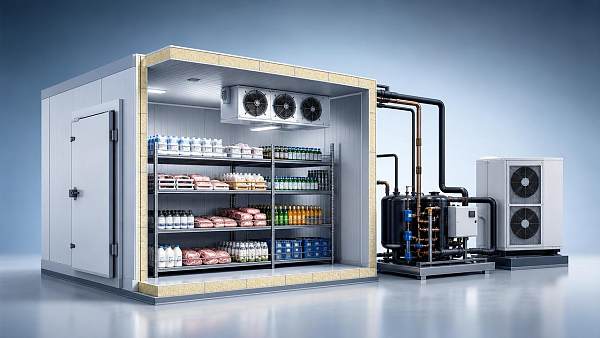
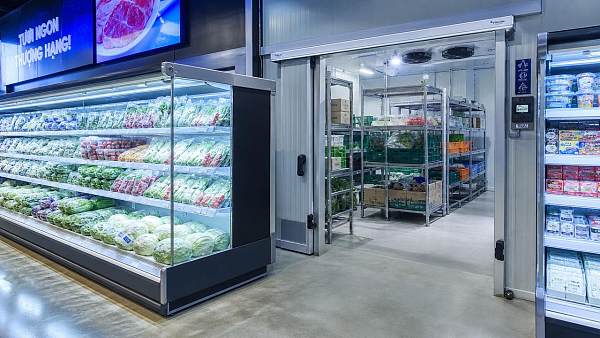
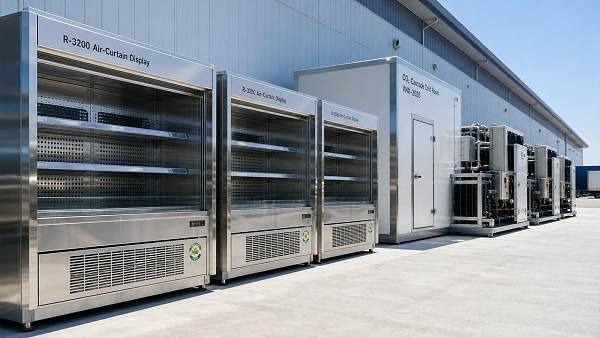
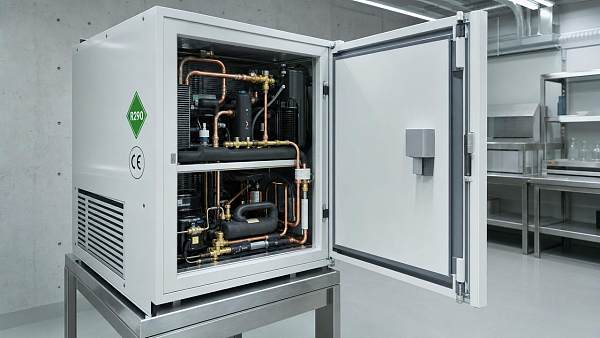
The revised EU F-Gas Regulation (EU) 2024/573 enters into full mandatory application on 1 June 2026, introducing new technical compliance requirements for commercial refrigeration equipment exported to the European Union — particularly impacting manufacturers and exporters of CO₂-based systems such as cascade cold rooms and open air-curtain display cases.
Regulatory Requirements Effective 1 June 2026
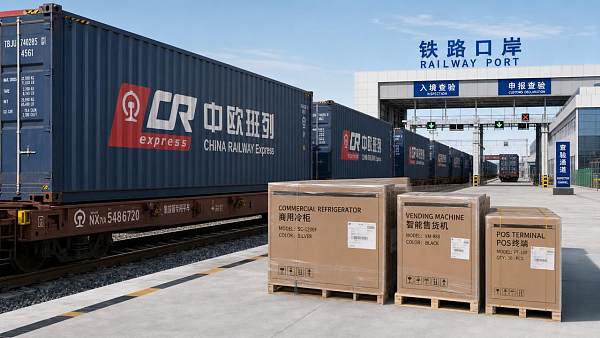
The European Commission has officially announced that, as of 1 June 2026, all new commercial refrigeration equipment placed on the EU market must comply with EN 378-2:2025+A1:2026. This includes mandatory leak-rate verification and electronic declaration of refrigerant charge quantities. Products lacking a valid EU type-approval certificate will be denied customs clearance upon entry into the EU.
Impact Across the Refrigeration Supply Chain
Export-Oriented Manufacturers
Manufacturers supplying CO₂ cascade cold rooms and open air-curtain display cases to EU markets face direct operational impact: production timelines must now accommodate pre-market certification cycles, and delivery schedules may shift if testing or documentation is delayed.
Component and Material Suppliers
Suppliers of compressors, pressure vessels, seals, and refrigerant handling systems must ensure their parts meet updated material compatibility and leakage performance criteria under EN 378-2:2025+A1:2026 — especially where CO₂ operates at high pressures.
Contract Manufacturers and Assemblers
Firms engaged in OEM or ODM production for EU-bound cold rooms must integrate certified design validation early in the engineering phase — including refrigerant charge calculation traceability and system-level leak testing protocols.
Logistics and Certification Service Providers
Certification bodies, notified bodies, and export compliance consultants are seeing increased demand for EN 378-2:2025+A1:2026 verification support, particularly for electronic refrigerant charge reporting and audit-ready technical dossiers.
Key Compliance Priorities for Exporters
Secure EU Type-Approval Before Shipment
Obtaining an EU type-approval certificate is no longer optional — it is a prerequisite for customs release. Applications must include full test reports aligned with EN 378-2:2025+A1:2026, covering both leakage rate verification and refrigerant charge documentation.
Validate System Design Against High-Pressure CO₂ Requirements
CO₂ cascade systems operate under elevated pressures; designs must demonstrate compliance with updated mechanical integrity, safety valve sizing, and pressure relief provisions in EN 378-2:2025+A1:2026 — not just legacy standards.
Prepare Electronic Refrigerant Charge Records
Manufacturers must implement internal systems to generate, store, and submit electronic declarations of refrigerant charge data — a new requirement tied directly to the EU’s F-Gas digital monitoring framework.
Align Production Schedules with Certification Lead Times
Given that over 70% of China’s commercial cold room exporters are affected, lead times for third-party testing and certification should be factored into order planning — particularly for first-time submissions or design variants.
Industry Perspective: Beyond Compliance to Systemic Readiness
Analysis shows this regulation marks a structural shift — from verifying individual components to validating integrated refrigeration systems under real-world operating conditions. What deserves closer attention is the growing emphasis on digital traceability: electronic refrigerant reporting signals tighter integration between product certification and EU environmental monitoring infrastructure. From an industry perspective, the 2026 deadline is less about isolated testing and more about embedding compliance into engineering workflows, supplier management, and quality documentation systems.
Strategic Implications for Global Cold Chain Suppliers
This update reinforces that regulatory readiness is now a core element of competitive positioning in the EU commercial refrigeration market. It is more appropriate to understand this as a catalyst for upstream investment in design validation capabilities, rather than merely a procedural hurdle. Companies that proactively align with EN 378-2:2025+A1:2026 — and treat certification as part of R&D, not post-production — are better positioned to maintain delivery reliability and tender eligibility.
Source Information and Verification Guidance
This article is generated based solely on the provided title, effective date (1 June 2026), and event summary. Specific official source links were not provided in the input and should be verified continuously. Stakeholders are advised to monitor updates from the European Commission, EU Notified Bodies, and CEN regarding implementation guidance, interpretation of EN 378-2:2025+A1:2026, and evolving customs enforcement practices ahead of the 2026 deadline.
Recommended News
 Jun 03, 2026Steel and Aluminum Tariffs Raise Kitchen Equipment CostsSteel and aluminum tariffs are raising commercial kitchen equipment costs. See how combi ovens, induction ranges, and ice makers may face pricing pressure.
 Jun 03, 2026ICS2 ENS Rule Hits EU-Bound Rail FreightICS2 ENS rules for EU-bound rail freight start 2026-06-01. Learn how exporters can avoid border detention, penalties, and shipment delays.
 Jun 03, 2026Vietnam Ends 3.5% Tariff on Smart Cold Chain GearVietnam’s removal of the 3.5% tariff on Chinese smart cold chain gear under RCEP reshapes import costs, retail refrigeration, and kitchen automation opportunities.
 Jun 03, 2026FDA Tightens BPA Rules for Labels and POS HousingsFDA tightens BPA rules for thermal labels and POS housings. See who is affected, what testing is required, and how to prepare U.S.-bound shipments.
 Jun 03, 2026EU F-Gas Revision Raises R290 Export RequirementsEU F-Gas Revision raises R290 export requirements for commercial refrigeration. Learn key certification, labeling, and customs risks before shipping to the EU.
 Jun 03, 2026Commercial Cold Rooms Buying Guide: Sizing, Insulation and Refrigeration LoadCommercial cold rooms buying guide: learn how to size storage, choose insulation, calculate refrigeration load, and reduce energy costs with CRSS project insights.
 Jun 03, 2026Eco-Refrigerant Freezers: How to Compare GWP, Safety Class and Energy UseEco-refrigerant freezers explained: compare GWP, safety class, and real-world energy use to cut costs, stay compliant, and protect food quality.
 Jun 03, 2026Food Hygiene Equipment Checklist for Commercial Kitchens and Cold StorageFood hygiene equipment checklist for commercial kitchens and cold storage—discover essential tools, inspections, and controls to improve safety and compliance.
 Jun 03, 2026Thermodynamic Energy Squeezing in Refrigeration: What Gains Are Real?Thermodynamic energy squeezing in refrigeration: discover which efficiency gains are real, how to verify savings, and how smarter cooling can cut costs.
 Jun 03, 2026Retail Weak-Network Concurrency: How POS Systems Keep Orders SyncedRetail weak-network concurrency keeps POS orders, payments, inventory, and receipts synced during unstable connections—learn how resilient systems prevent costly errors.
 Jun 02, 2026Vietnam Ends 3.5% RCEP Duty on Cold Chain GearVietnam ends 3.5% RCEP duty on eligible China-origin cold chain gear, boosting cost advantages for supermarkets, convenience stores, and import partners.
 Jun 02, 2026FDA Sets BPA-Free Tests for Food-Contact POS DevicesFDA BPA-free tests for food-contact POS devices now affect thermal barcode printers and smart terminals. Learn compliance steps, testing limits, and supply chain risks.
 Jun 02, 2026EU F-Gas Rule Hits Ultra-Low Freezer ExportsEU F-Gas Rule reshapes ultra-low freezer exports: learn how R290 certification, 0.5 g/year leakage tests, and CE access affect EU market readiness.
 Jun 02, 2026ICS2 ENS Filing Now Mandatory for China-Europe RailICS2 ENS Filing is now mandatory for China-Europe Rail shipments to the EU. Learn key compliance risks, affected cargo, and how to avoid delays or detention.
 Jun 02, 2026Thermal Transfer Printers vs Direct Thermal: Which Barcode Labels Last Longer?Thermal transfer printers help barcode labels outlast direct thermal options, resisting fading, moisture, and abrasion for safer compliance, traceability, and scanning.
 Jun 02, 2026AI Vending Technology Explained: Vision, Inventory Control, and PaymentsAI vending technology explained: discover how vision recognition, inventory control, secure payments, and smart deployment strategies improve unattended retail ROI.
 Jun 02, 2026Industrial Dishwashers Price: What Drives Cost for High-Volume KitchensIndustrial dishwashers price depends on capacity, energy use, hygiene compliance, installation, and service. Learn how high-volume kitchens compare true lifecycle value.
 Jun 02, 2026New Retail Revolution: How AI, Self-Checkout, and Smart POS Change StoresNew retail revolution insights: see how AI vision, self-checkout, smart POS, and connected cold-chain systems cut labor, improve hygiene, and boost store profitability.
 Jun 02, 2026Unmanned Retail Systems: Store Formats, Costs, and Deployment RisksUnmanned retail systems explained: compare store formats, real costs, AI/payment risks, and deployment strategies to build scalable, profitable retail operations.
 Jun 01, 2026TÜV Rheinland Launches AI Vision Smart Fridges CertificationAI Vision Smart Fridges certification by TÜV Rheinland — mandatory for Lidl & Aldi procurement from June 2026. Validate performance, compliance & market access now.
 Jun 01, 2026RCEP Tariff Cut: Vietnam Eliminates 3.5% MFN Surcharge on Chinese Commercial Cold Chain EquipmentRCEP tariff cut: Vietnam removes 3.5% MFN surcharge on Chinese commercial cold chain equipment from 1 June 2026—boost import margins & accelerate Southeast Asia cold chain expansion.
 Jun 01, 2026FDA Updates 21 CFR §177.1520: BPA-Free Migration Testing Required for Thermal Labels and POS Food-Contact ComponentsBPA-free migration testing now required for thermal labels & POS food-contact components under FDA’s updated 21 CFR §177.1520 — act before July 1, 2026.
 Jun 01, 2026EU F-Gas Revision Enforces R290 Compatibility for Ultra-Low-Temp FreezersR290 compatibility is now mandatory for EU ultra-low-temp freezers by June 2026 — discover how the new F-Gas revision impacts compliance, certification & market access.
 Jun 01, 2026ICS2 ENS Mandate Takes Effect for China-Europe Rail at EU Entry Points on June 1, 2026ICS2 ENS mandate kicks in June 1, 2026 for China-Europe rail freight at Małaszewicze—avoid delays & penalties with accurate, pre-arrival declarations.







Editor's Selection
The Archive Newsletter
Critical industrial intelligence delivered every Tuesday. Peer-reviewed summaries of the week's most impactful logistics and market shifts.