Commercial Cold Rooms Buying Guide: Sizing, Insulation and Refrigeration Load
by
Published
Views:
For project managers responsible for food retail, hospitality, or service facilities, choosing commercial cold rooms is not just a procurement decision—it is a long-term energy, hygiene, and uptime commitment. The right specification depends on accurate sizing, insulation performance, refrigeration load calculations, door traffic, product turnover, and future expansion needs. This guide breaks down the key engineering and commercial factors behind reliable cold room selection, helping teams reduce total cost of ownership, avoid capacity mistakes, and build refrigeration infrastructure that supports safe, efficient, and scalable operations.
Why Commercial Cold Rooms Are Project-Critical Assets
Commercial cold rooms sit at the intersection of building services, food safety, energy management, and operational continuity. A wrong specification can create daily losses, not just installation inconvenience.
In supermarkets, hotels, restaurants, convenience stores, and service hubs, the cold room is often connected to display freezers, POS-driven inventory flow, kitchen preparation, and delivery schedules.
CRSS studies these physical dispatch hubs as integrated commercial systems. A cold room is not isolated equipment; it is part of a wider retail thermodynamic chain.
What project teams must clarify before procurement
- The product category, because chilled dairy, frozen meat, fresh produce, and beverage stock all require different temperature stability.
- The operating pattern, including delivery frequency, staff access, peak door openings, and night-time replenishment.
- The site constraints, including ceiling height, drainage, ventilation, condensing unit location, and maintenance access.
- The financial target, because the lowest installed price may produce higher electricity bills and shorter service life.
How to Size Commercial Cold Rooms Without Overbuilding
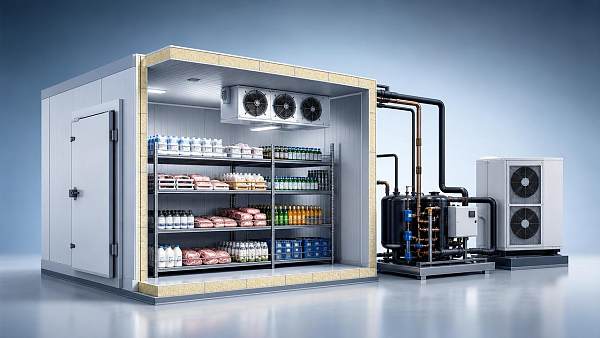
Sizing commercial cold rooms starts with usable storage volume, not only external dimensions. Shelving, airflow gaps, pallet routes, evaporator clearance, and door swing reduce real capacity.
A practical project rule is to calculate stock volume by peak holding requirement, then add planned expansion, but avoid excessive empty space that increases cooling demand.
For retail chains, one store may need rapid turnover storage, while another requires buffer capacity for weekend delivery delays. The same footprint rarely fits every branch.
The table below gives a procurement-oriented sizing view for commercial cold rooms used in common service and retail facilities.
The best size is not the largest affordable room. It is the volume that supports stock flow, hygiene separation, airflow circulation, and future operational changes.
Sizing checklist for project managers
- Define maximum daily stock holding by product family, not by a single average inventory number.
- Reserve airflow space around evaporators, walls, shelves, and stacked products to prevent warm zones.
- Confirm door dimensions against trolleys, crates, roll cages, and pallet movement requirements.
- Plan drainage, floor finish, and cleaning access early, especially for food preparation environments.
Insulation: The Hidden Driver of Energy and Temperature Stability
Insulation quality determines how hard the refrigeration system must work. For commercial cold rooms running every day, panel performance affects both energy cost and compressor cycling.
Project teams often focus on refrigeration capacity first. In practice, weak panels, thermal bridges, poor door seals, and floor heat gain can damage system performance.
Cold room panels are commonly specified by core material, thickness, density, fire behavior, joint design, and surface finish. Each choice has commercial consequences.
Key insulation decisions
- Chilled rooms usually require less insulation thickness than freezer rooms, but door traffic can change the calculation.
- Freezer floors need attention to heat gain, frost prevention, structural load, and safe walking surfaces.
- Panel joints should limit air leakage, because uncontrolled infiltration adds moisture and increases defrost workload.
- Internal finishes should match cleaning chemicals, food hygiene routines, and impact risk from handling equipment.
When comparing commercial cold rooms, the following insulation parameters help translate supplier quotations into operational consequences.
A slightly better envelope can reduce refrigeration stress for years. That is why insulation should be evaluated as a lifecycle investment, not a line-item accessory.
Refrigeration Load: What Must Be Calculated Before Ordering
Refrigeration load is the total heat the system must remove. For commercial cold rooms, it comes from transmission, infiltration, products, people, lighting, fans, and defrost.
A common mistake is sizing only by room volume. Two rooms with identical dimensions can have very different loads because of door traffic and incoming product temperature.
For project managers, the load calculation should be transparent enough to challenge assumptions. Ask suppliers to state design ambient temperature, product pull-down load, and safety margin.
Main load components to verify
- Transmission load from heat passing through walls, ceiling, floor, and thermal bridges.
- Air infiltration load caused by door openings, gaps, pressure differences, and loading activity.
- Product load from warm goods entering the room and needing temperature reduction within a defined time.
- Internal load from lights, evaporator fans, people, forklifts, sensors, and other electrical devices.
- Defrost and recovery load, especially in freezer rooms or humid commercial kitchens.
The following comparison helps teams recognize how different refrigeration approaches affect commercial cold rooms in real projects.
Capacity should not be oversized blindly. Oversizing may increase cycling, reduce humidity control, and raise capital cost without improving food safety.
Procurement Criteria That Separate Reliable Projects from Costly Retrofits
Procurement teams need comparable data, not just catalog descriptions. Commercial cold rooms should be evaluated through performance, compliance, installation, maintenance, and digital monitoring.
For multi-site rollouts, standardization is valuable. However, standardization must still allow climate, store format, delivery model, and local regulations to be reflected.
A practical evaluation framework
- Request design assumptions, including ambient temperature, target room temperature, product load, and expected door openings.
- Review insulation specifications, panel joints, door hardware, floor load, and internal hygiene finishes.
- Confirm refrigeration capacity, compressor technology, defrost control, fan selection, and service accessibility.
- Check monitoring options such as temperature logging, alarms, IoT gateways, and integration with facility systems.
- Compare total cost of ownership, including energy, maintenance, downtime exposure, and expected component replacement.
CRSS encourages project managers to use a scoring approach when comparing suppliers of commercial cold rooms, especially in chain retail procurement.
A quotation that lacks design assumptions is difficult to defend internally. Transparent data helps engineering, finance, and operations make the same decision.
Compliance, Refrigerants, and Future-Proofing
Commercial cold rooms increasingly sit under environmental and safety scrutiny. Refrigerant choice, electrical safety, food contact hygiene, and energy efficiency all influence acceptance.
Project teams should consider regional requirements, including F-Gas direction in Europe, local building codes, pressure equipment rules, and applicable food safety obligations.
Low-GWP options such as CO2 and R290 can support carbon strategies, but they require competent design, ventilation assessment, installation quality, and technician training.
Compliance questions to raise early
- Does the refrigeration design align with local rules for refrigerant type, charge size, ventilation, and leak management?
- Are electrical components suitable for the expected environment, including moisture, washdown, and heavy door traffic?
- Can the cold room support traceable temperature records for food safety audits and incident investigation?
- Are panel materials, floor finishes, and seals appropriate for cleaning chemicals and hygiene routines?
Implementation Plan: From Site Survey to Handover
Even well-specified commercial cold rooms can fail project expectations if installation planning is weak. Coordination between civil works, MEP, refrigeration, and operations is essential.
The installation sequence should be agreed before equipment arrives. Late changes to drainage, door location, or condensing unit placement can delay opening schedules.
Recommended project workflow
- Conduct a site survey covering room dimensions, ambient conditions, access routes, electrical supply, drainage, and ventilation.
- Finalize storage categories, target temperatures, product loading assumptions, and door traffic expectations.
- Review drawings with facilities, operations, food safety, and maintenance teams before fabrication.
- Commission the refrigeration system under realistic operating conditions, including temperature pull-down and alarm checks.
- Train staff on loading limits, door discipline, cleaning procedures, defrost awareness, and alarm escalation.
A disciplined handover protects uptime. It also gives facility managers the documentation needed for maintenance planning and future expansion decisions.
FAQ: Practical Questions Before Buying Commercial Cold Rooms
How do I know if the cold room is undersized?
Warning signs include blocked evaporator airflow, products stacked against walls, frequent temperature alarms, slow recovery after deliveries, and staff leaving doors open while rearranging stock.
Should I choose one large room or several smaller rooms?
Several rooms are better when products need different temperatures or hygiene separation. One large room may reduce construction cost but can increase handling conflict.
What is the most overlooked cost?
Energy is often underestimated, but downtime can be more damaging. Spoilage, emergency service, staff disruption, and lost sales should be considered in TCO.
How long does procurement usually take?
Lead time depends on size, panel specification, refrigeration choice, compliance review, and site readiness. Early confirmation of drawings and utilities shortens delivery risk.
Can commercial cold rooms support smart monitoring?
Yes. Temperature sensors, door alarms, energy meters, and IoT gateways can support preventive maintenance, food safety records, and remote operational visibility.
Why Choose CRSS for Cold Room Decision Support
CRSS helps project managers interpret commercial cold rooms as part of a complete retail and service infrastructure, not as isolated boxes with refrigeration units.
Our perspective connects thermodynamic design, food hygiene, unmanned retail operation, POS-linked stock movement, and lifecycle cost pressure in modern commercial facilities.
Consult CRSS when you need to verify
- Sizing assumptions for chilled rooms, freezer rooms, supermarket backrooms, hotel kitchens, or convenience store networks.
- Insulation thickness, panel material, door configuration, and floor design for hygiene and energy goals.
- Refrigeration load calculations, system alternatives, low-GWP refrigerant direction, and maintenance access requirements.
- Supplier comparison, quotation clarification, delivery schedule risks, sample requirements, and customized project parameters.
If your team is preparing a new facility, retrofit, or multi-site rollout, contact CRSS to discuss parameters, selection logic, compliance concerns, delivery planning, and quotation review for commercial cold rooms.
Recommended News
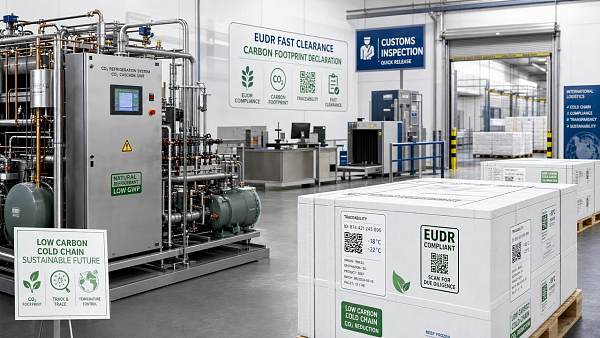
 Jun 14, 2026EUDR Fast-Track Opens for CO2 Cold RoomsEUDR fast-track for CO2 cold rooms is now live, linking faster customs clearance to carbon footprint declarations and supply chain traceability. See what exporters and buyers should prepare now.
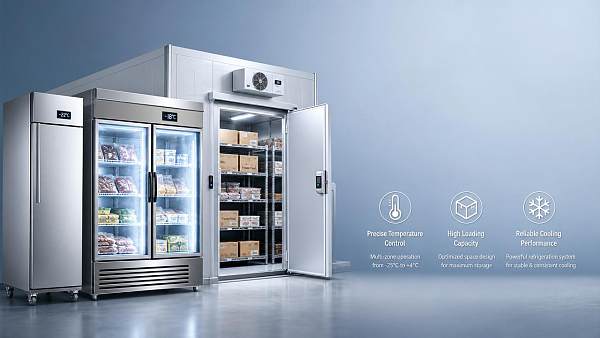
 Jun 14, 2026How to Choose Commercial Freezers for Cold Storage by Temperature Range and LoadCommercial freezers for cold storage: learn how to match temperature range, load, and workflow to cut energy waste, protect product quality, and choose the right unit with confidence.
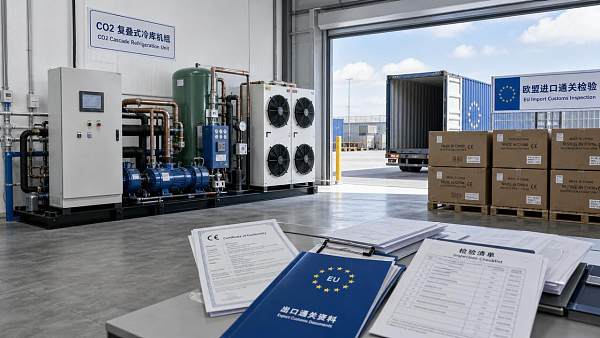
 Jun 12, 2026EU F-Gas Rules Tighten Cold Room Import CertificationEU F-Gas Rules tighten cold room import certification from July 1, 2026. Learn how dual certification for CO2 Cascade Cold Rooms may impact customs clearance, delivery timelines, and EU market access.
 Jun 11, 2026EU F-Gas Rule Tightens Cold Room Export CertificationEU F-Gas Rule tightens cold room export certification from July 1, 2026. Learn how CO2 Cascade Cold Rooms, customs clearance, and EU shipment compliance will impact exporters and buyers.
 Jun 10, 2026EU Tightens F-Gas Rules for CO2 Cascade Cold RoomsCO2 Cascade Cold Rooms face stricter EU F-Gas rules from July 1, 2026. Learn how new GWP caps, leakage verification, and CE filing risks could impact exports and buyers.
 Jun 09, 2026EU Tightens Certification for CO2 Cascade Cold RoomsEU tightens certification for CO2 Cascade Cold Rooms from July 1, 2026. Learn how EERtemp verification, third-party type certification, and customs compliance will impact EU exports.
![]() Jun 09, 2026Energy-Efficient Refrigeration Solutions: Key Technologies, Savings Drivers, and Trade-OffsEnergy-efficient refrigeration solutions explained: compare key technologies, savings drivers, and trade-offs to cut energy costs, improve compliance, and protect cooling performance.
Jun 09, 2026Energy-Efficient Refrigeration Solutions: Key Technologies, Savings Drivers, and Trade-OffsEnergy-efficient refrigeration solutions explained: compare key technologies, savings drivers, and trade-offs to cut energy costs, improve compliance, and protect cooling performance. Jun 08, 2026NHTSA Proposal Tightens CO2 Cascade Cold Room CertificationCO2 Cascade Cold Room compliance faces new pressure as the NHTSA proposal tightens certification rules. Learn how longer lead times and stricter measured efficiency standards may affect exporters.
 Jun 07, 2026EU Drops Broad REACH Rewrite, Easing CO2 Freezer Export PressureEU Drops Broad REACH Rewrite eases near-term pressure on CO2 freezer export planning. Learn how REACH, PFAS, and EU border checks may reshape compliance priorities and risk.
 Jun 06, 2026Commercial Refrigeration Systems for Food Retail: Which Configuration Fits Your Store Layout?Commercial refrigeration systems should match your store layout, traffic flow, and product mix. Discover the best-fit setup to improve efficiency, food safety, and shopper experience.
![]() Jun 06, 2026GB/T 22918-2025 Takes Effect, Raising Export Cold Chain RequirementsGB/T 22918-2025 takes effect on May 1, 2026, tightening export cold chain rules for Industrial Ice Makers, CO2 Cascade Cold Rooms, and Ultra-low Temp Freezers. See key compliance impacts now.
Jun 06, 2026GB/T 22918-2025 Takes Effect, Raising Export Cold Chain RequirementsGB/T 22918-2025 takes effect on May 1, 2026, tightening export cold chain rules for Industrial Ice Makers, CO2 Cascade Cold Rooms, and Ultra-low Temp Freezers. See key compliance impacts now. Jun 05, 2026EU FSR Review Tightens Europe M&A Path for Cold Chain and POSEU FSR Review tightens Europe M&A planning for cold chain and smart POS. See how subsidy scrutiny may reshape procurement, supplier records, and cross-border compliance.
 Jun 05, 2026Commercial Refrigeration Systems Explained: Types, Components, and Best-Fit ApplicationsCommercial refrigeration systems explained clearly: compare types, key components, refrigerant paths, and best-fit applications to choose efficient, compliant solutions with confidence.
 Jun 05, 2026How to Choose Commercial Freezers for Cold Storage by Capacity, Temperature, and LoadCommercial freezers for cold storage: learn how to compare capacity, temperature stability, and load performance to cut energy costs, protect products, and choose the right unit with confidence.
![]() Jun 04, 2026Hormuz Disruption Hits R290 and Ammonia ShippingHormuz disruption hits R290 and ammonia shipping, delaying exports and raising freight risk. See how cold chain, refrigerant, and logistics firms can respond fast.
Jun 04, 2026Hormuz Disruption Hits R290 and Ammonia ShippingHormuz disruption hits R290 and ammonia shipping, delaying exports and raising freight risk. See how cold chain, refrigerant, and logistics firms can respond fast. Jun 03, 2026Commercial Cold Rooms Buying Guide: Sizing, Insulation and Refrigeration LoadCommercial cold rooms buying guide: learn how to size storage, choose insulation, calculate refrigeration load, and reduce energy costs with CRSS project insights.
 Jun 02, 2026ICS2 ENS Filing Now Mandatory for China-Europe RailICS2 ENS Filing is now mandatory for China-Europe Rail shipments to the EU. Learn key compliance risks, affected cargo, and how to avoid delays or detention.
 Jun 01, 2026What raises costs in commercial refrigeration systems?Commercial refrigeration systems can hide costly energy waste, refrigerant risks, downtime, and maintenance issues. Learn what drives costs and how to improve ROI.
 May 29, 2026How should retail cold chain equipment be sized?Learn how to size retail cold chain equipment for safe temperatures, lower energy costs, smarter layouts, and better ROI across modern stores.
![]() May 25, 2026SWHY Warns: US-Iran Tensions May Trigger Tariff Risks for CO2 Cascade Cold Rooms Exported to US, Mexico, CanadaCO2 cascade cold rooms exporters: US-Iran tensions may trigger IEEPA tariffs to US, Mexico, Canada—especially with U.S.-origin compressors or controllers. Act now.
May 25, 2026SWHY Warns: US-Iran Tensions May Trigger Tariff Risks for CO2 Cascade Cold Rooms Exported to US, Mexico, CanadaCO2 cascade cold rooms exporters: US-Iran tensions may trigger IEEPA tariffs to US, Mexico, Canada—especially with U.S.-origin compressors or controllers. Act now. May 24, 2026What to check before investing in commercial cold roomsCommercial cold rooms: learn what to check before investing, from temperature stability and energy efficiency to compliance, maintenance, and lifecycle cost.
 May 23, 2026How to compare commercial cooling systems by riskCommercial cooling systems should be compared by risk, not just price. Learn how to assess uptime, food safety, energy use, compliance, and service fit for smarter selection.
 May 23, 2026EU CBAM Carbon Tariff Reporting Refined for Commercial Refrigeration ExportsEU CBAM carbon tariff reporting for commercial refrigeration exports starts May 2026—learn key compliance steps, affected subsectors & how to prepare now.
 May 22, 2026Norwegian LCO2 Vessel 'Northern Purpose' Enters ServiceNorwegian LCO2 vessel 'Northern Purpose' enters service—boosting global food-grade CO2 supply for China's CO2 Cascade Cold Rooms manufacturers with reliable, high-purity logistics.


Editor's Selection
The Archive Newsletter
Critical industrial intelligence delivered every Tuesday. Peer-reviewed summaries of the week's most impactful logistics and market shifts.